




Georgian businesses need an alternative to debt
Main summary BTU’s analytical assessment is that prospective international share listings could give Georgian businesses greater access to capital that shares the risks of growth. Realising that opportunity and building

Where the extra household spending goes?
Main summary BTU calculations show that roughly one third of the increase in average monthly household expenditure in Georgia between 2024 and 2025 occurred outside direct consumption. Assessing consumers’ economic
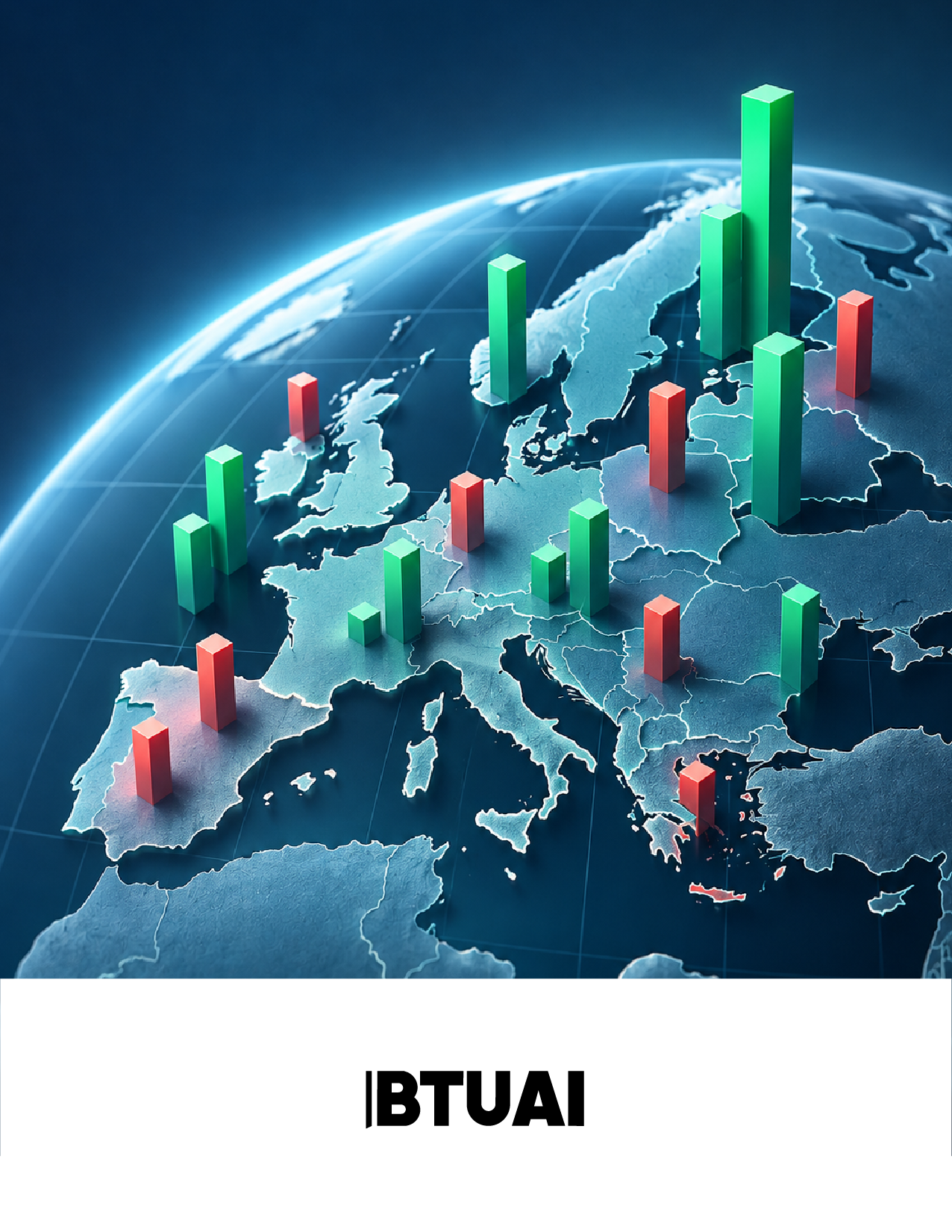
Europe’s price surge is not uniform
Main summary BTU’s analytical assessment finds that the sharp increase in European producer prices is a broad warning for Georgian importers, not a uniform price increase across European goods. Distinguishing

What a Gas Meter Cannot Tell Us?
Main summary Georgia has enabled consumption-based differentiation of household gas tariffs, but cubic metres alone cannot describe a family’s financial capacity. BTU connects dwelling size, heated space, heating duration and

The hidden change in Georgia’s electricity balance
Main summary BTU’s calculations show that about 83% of the increase in Georgia’s net electricity imports in January–September 2026 reflects lower exports, while 17% reflects higher imports. Comparing domestic generation,

The currency of a loan matters
Main summary BTU’s calculation finds a 46.9-percentage-point difference between the exchange-rate-adjusted foreign-currency loan shares of legal entities and individuals in Georgia in September 2026. This contrast explains why a business