
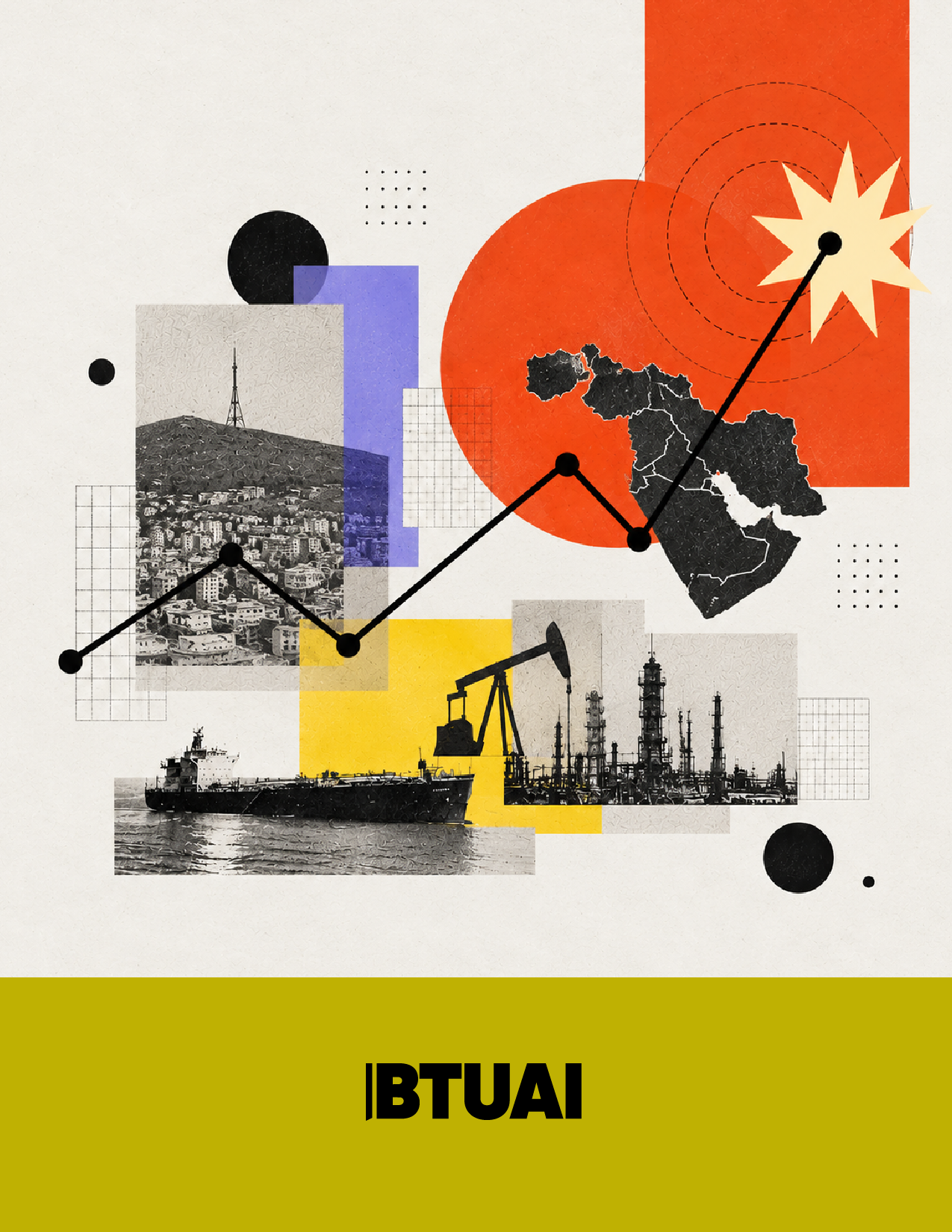



Forecasting the future is becoming increasingly difficult. The reason is not only that technologies are changing quickly. The deeper challenge is that changes are now connected: artificial intelligence is reshaping work, energy prices affect business costs, demographics change education and labor markets, regional security affects trade and logistics, while climate and infrastructure pressures make planning more expensive and complex.
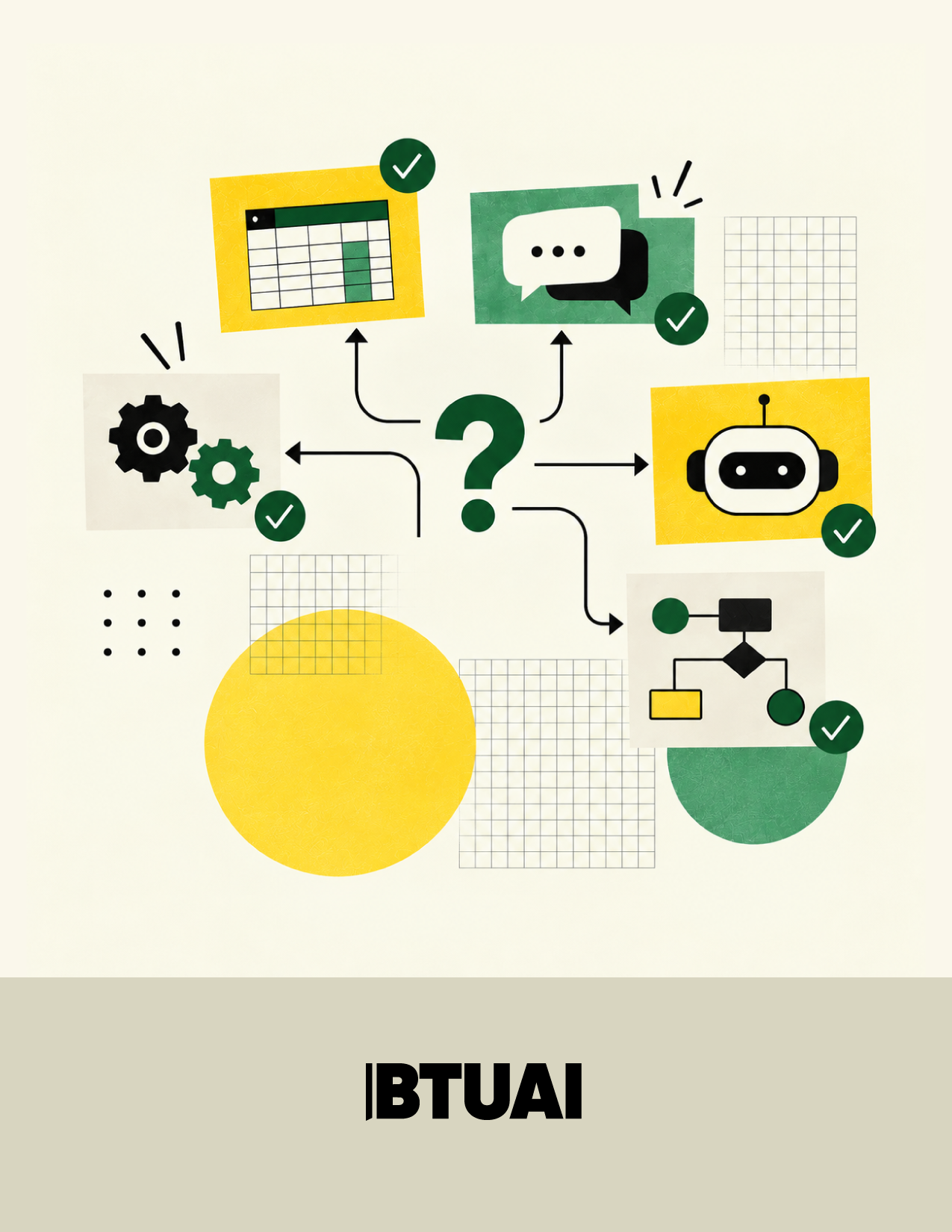
In such an environment, one forecast can mislead. The question “What will happen?” is no longer enough. The more important question is: “What could happen under several different scenarios, and how should we prepare for each one?”
This approach can be called scenario thinking. It is not about predicting the future. It is about rehearsing possible futures – testing different situations in advance so that a country, business, university or public institution does not meet change unprepared.
For Georgia, this is especially important. A small and open economy feels external shocks quickly: energy prices, regional war, migration, technology change, tourism flows, trade disruptions and investor sentiment. At the same time, Georgia has an opportunity to turn flexibility into an advantage – if decisions are based not only on current data, but also on possible future scenarios.
BTU researchers assess that Georgia’s key future-management capability is no longer only forecasting. It is readiness: seeing several possible paths, assessing risks early, using opportunities in time and making decisions that work across more than one future.
Georgia context: a country living through several changes at once
Georgia is currently living through several major changes at the same time. Artificial intelligence is changing work, education and business productivity. Regional geopolitics is reshaping transport corridors, investor risk perception and energy security. Migration affects the labor market, housing demand and city pressure. Climate and energy costs affect construction, agriculture and municipal infrastructure. The digital economy gives the country a new opportunity, but also increases technological dependence.
In this environment, a single forecast – for example, “the economy will grow” or “AI will change work” – is too general. The real questions are more specific: What happens if AI is adopted quickly but education cannot adapt? What happens if energy becomes more expensive and construction costs rise? What happens if demand for transport corridors increases but logistics infrastructure is not ready? What happens if the Georgian language remains weak in AI systems?
Scenario thinking is needed precisely to answer these questions.
Why one forecast is no longer enough
A forecast often thinks in one line: if today’s trend looks like this, tomorrow will probably continue in a similar direction. This works when the environment is relatively stable. But when several major forces change at the same time, past trends do not always provide the right picture.
A business may forecast sales growth, but import prices, interest rates, customer behavior or a competitor’s technological advantage may suddenly change. A university may forecast student numbers, but AI may change demand for professions. A government may have an infrastructure plan, but construction costs, energy prices or demographic changes may force that plan to be redesigned.
Forecasting is still necessary, but it is not enough. A forecast shows one likely path. Scenarios show several possible paths and force us to ask: which decisions remain valuable in different futures?
What scenario thinking means
Scenario thinking is a method that does not search for one answer about the future. It creates several possible pictures and tests how a strategy would work in each of them.
For example, Georgia’s AI future may include three scenarios.
The first is rapid adaptation. Business, education and the public sector adopt AI quickly, employees are reskilled, the Georgian language becomes digitally stronger and productivity grows.
The second is partial adaptation. Companies use AI for texts, marketing and reporting, but data remains messy, employees are not prepared, the Georgian language remains weak and benefits appear only partially.
The third is dependent adaptation. The country actively uses foreign AI platforms but does not develop its own data, Georgian-language resources, talent or safety standards. In this case, Georgia becomes an AI user, but not a builder of technological capability.
Scenario thinking does not claim that one of these futures will definitely happen. It helps identify what is needed in any case: talent development, Georgian data, AI-ready business processes, data protection and education renewal.
Why this matters for the state
For the state, scenario thinking means that policy is not designed around only one optimistic version of the future. Budgeting, infrastructure, education, energy, labor markets and digital transformation should be tested against several possible futures.
Infrastructure planning, for example, should not include only one cost estimate. It should include scenarios: if fuel becomes more expensive; if construction costs rise; if regional transit demand increases; if climate risks become more frequent; if urban migration intensifies.
Labor-market policy also needs scenarios: if AI quickly automates routine work; if companies adopt AI slowly; if entry-level positions shrink; if remote work grows in the regions; if vocational education cannot update skills quickly enough.
This approach gives the state a more realistic view. It does not wait for one future. It prepares for several possible futures.
Why this matters for business
For business, scenario thinking is a tool for survival and growth. Small and medium-sized companies in particular need to understand what happens if major costs rise, customer demand changes, technology gives a competitor an advantage or supply chains are disrupted.
For Georgian business, three scenarios are especially practical.
The first is a cost scenario. What happens if energy, transport, credit or imports become more expensive?
The second is a technology scenario. What happens if a competitor adopts AI and performs the same work faster and at lower cost?
The third is a customer scenario. What happens if customers become more price-sensitive, move online or demand faster service?
A company that relies on only one forecast is confused when conditions change. A company that has rehearsed scenarios can make decisions faster.
Why this matters for education
Scenario thinking is essential for education because professions are changing quickly. If a university looks only at current demand, it may prepare students for work that will change significantly in a few years.
In the AI era, education needs to ask several questions:
What skills will be needed if AI reduces routine work?
What should students learn if entry-level jobs become harder to obtain?
How should practical learning change if companies require AI-ready employees?
What role will the Georgian language play if AI systems enter education widely?
How should critical thinking, data literacy and ethical responsibility be strengthened?
Scenario thinking helps education prepare students not only for one profession, but for change itself.
Five key scenarios for Georgia
- AI and the labor market
The first scenario is related to AI. If companies adopt AI quickly, many routine tasks will change. Demand will grow for people who can work with AI, check outputs, manage data and take responsibility.
If education and reskilling do not keep pace, skill shortages will appear. Some workers will become more valuable, while others will lose competitiveness.
- Energy and infrastructure
The second scenario concerns energy and infrastructure. If energy, transport and construction costs rise, this will affect real estate, municipal projects, business operating costs and regional development.
In this scenario, energy efficiency, local infrastructure quality and early cost management become especially important.
- Migration and demographics
The third scenario concerns people. Migration, internal mobility, urbanization and age structure will directly affect schools, universities, housing markets, labor supply and regional economies.
If demographic change is not assessed early, the country may notice too late where skills are missing, where infrastructure is overloaded and which regions need new economic functions.
- Regional logistics and geopolitics
The fourth scenario concerns Georgia’s geography. If regional transit corridors become more important, Georgia gains an opportunity. But this requires ports, roads, railways, customs procedures, digital logistics and reliable rules.
If the country is not ready, geographic advantage may remain only potential.
- Georgian language and digital sovereignty
The fifth scenario concerns the Georgian language. If AI enters daily work, education, public services and business, the digital quality of the Georgian language becomes strategic.
If AI works poorly in Georgian, the country will depend on foreign-language systems. If Georgian data, terminology and language resources become stronger, Georgia will be able to manage technological change in its own language as well.
How the scenario method should work
Scenario thinking should be practical, not only theoretical.
The first step is identifying the main forces: what is changing the environment? Examples include AI, energy, demographics, geopolitics, climate, financial conditions, education and customer behavior.
The second step is seeing interconnections. AI is not only technology; it affects the labor market. Energy prices are not only an energy issue; they affect construction, transport and business costs. Demographics are not only population statistics; they affect schools, labor, regions and consumption.
The third step is building scenarios. At least three versions should exist: optimistic, inertial and risk-based.
The fourth step is testing decisions. Which decisions work in all scenarios? Data quality, talent development, energy efficiency and digital security are useful in almost every future.
The fifth step is monitoring early signals. Institutions need to know which indicators show which scenario is approaching: labor-market demands, ICT investment, energy costs, migration, education choices, business AI adoption and export structure.
Where the opportunity is
Scenario thinking creates opportunities for Georgia in several directions.
First, better public planning. Decisions become less dependent on short-term reaction and more grounded in prepared alternatives.
Second, more resilient businesses. Companies can move from crisis reaction to readiness.
Third, education renewal. Universities and vocational education can better identify which skills will be valuable across different futures.
Fourth, regional development. Scenarios help identify what economic function each region may have in tourism, logistics, energy, agriculture or digital work.
Fifth, technological independence. If Georgia sees early the risk of overdependence on foreign platforms, it can begin earlier to develop Georgian data, the Georgian language and local AI competence.
Where the risks are
The largest risk is that the country continues to rely on one forecast and responds to change too late.
The second risk is short-term thinking. If policy, business and education focus only on current-year problems, long-term change will be recognized late.
The third risk is poor data. Scenario thinking cannot work if the country does not collect quality data on labor markets, education, regions, business, technology and customer behavior.
The fourth risk is institutional inertia. Sometimes the problem is not that we cannot see the future. The problem is that we see it, but cannot change decisions.
The fifth risk is a deficit of public trust. In complex change, people need an explanation of why decisions are being made and which scenario the country is preparing for.
BTUAI assessment
BTUAI assesses that Georgia needs a new culture of future management. This culture should not depend on belief in one forecast. It should depend on scenario thinking, data-based reasoning, early-signal monitoring and fast adaptation.
This is especially important for Georgia because the country is small, open, flexible and sensitive to external shocks. That means the cost of being wrong is high, but the benefit of being prepared can also be significant.
BTU researchers assess that the future should not be predicted through one line. It should be rehearsed through several scenarios so that decisions become more resilient, flexible and human-centered.
The main conclusion is simple: if forecasting gives us one possible answer, scenarios give us readiness. Georgia needs readiness today.
Key findings
- In a fast-changing environment, one forecast is no longer enough.
- Georgia is simultaneously affected by AI, energy, demographics, migration, geopolitics, climate and labor-market change.
- Scenario thinking is not prediction; it is preparation for possible futures.
- For business, scenarios reduce surprise and improve decision speed.
- For the state, scenarios support better budgeting, infrastructure planning and labor-market policy.
- For education, scenario thinking is essential because professions and skills are changing quickly.
- Five strategic scenario areas for Georgia are AI, energy, demographics, logistics and the digital sovereignty of the Georgian language.
- The most resilient decisions are those that work across several different futures.
Data snapshot
In the first quarter of 2026, the information and communication sector accounted for 11.7% of Georgia’s business sector output.
In the same quarter, the information and communication sector received USD 37.2 million in foreign direct investment.
This represented 13.7% of total FDI in Georgia in the first quarter of 2026.
Information and communication ranked third in the sectoral structure of FDI.
Georgia needs additional research on the pace of AI adoption in companies, emerging labor-market skills, regional demographics, energy and logistics costs, the digital quality of the Georgian language and scenario-planning practices in the public sector.
Methodology
This report was prepared as part of BTUAI Research. The analysis is based on demographic, regional, economic and behavioral data, as well as general trends observed in publicly available sources. The materials are processed using analytical methods applied by BTU researchers, with the support of BTUAI.
The purpose of the research is not to provide personal assessments, but to identify broader trends and practical directions for business, education and society.
This material uses an international analytical framework on future rehearsal and scenario thinking, economic data on Georgia’s ICT sector and BTUAI assessment in the context of Georgian business, education, public planning, the labor market, the Georgian language and digital competitiveness.
Limitations
This material is analytical and educational in nature. It does not constitute financial, investment, legal, public-policy, business-strategy or technology-procurement advice. Before making specific decisions, consultation with a relevant specialist is required.
Scenario thinking does not provide an exact forecast. Its purpose is to identify possible pathways, assess risks and opportunities early and test the resilience of decisions. Real events may develop as a mixture of several scenarios.
Georgia needs additional local research on the AI-ready condition of companies, scenario-planning practices in the public sector, the quality of regional data and the adaptation of the education system.
Sources
TIME International Edition, April 6, 2026, essay on future rehearsal, scenario thinking and possibility chains.
National Statistics Office of Georgia – Business Sector Results, Q1 2026.
National Statistics Office of Georgia – Foreign Direct Investment, Q1 2026.
BTUAI analytical processing for the context of Georgia’s economy, education, AI, labor market, Georgian language and digital transformation.
Frequently asked questions
What is scenario thinking?
Scenario thinking means considering several possible futures in advance and testing how decisions would work in each of them.
Is this forecasting?
No. Forecasting usually presents one likely path. Scenarios show several possible paths and create readiness.
Why does Georgia need this?
Georgia is a small and open economy that feels external shocks quickly. It therefore needs preparation for several possible futures, not only one forecast.
Where can businesses use this approach?
Businesses can use scenarios to assess changes in costs, customer behavior, AI, logistics, talent shortages and competition.
What does this mean for education?
Education should prepare students not only for today’s professions, but for skills needed across several futures: data literacy, AI collaboration, critical thinking and adaptability.
What is the main risk?
The main risk is relying on one forecast, responding late to change and losing adaptation time.
Keywords
scenario thinking Georgia; future rehearsal; strategic foresight Georgia; possibility chains; AI and labor market; digital transformation in Georgia; Georgian business; education future; Georgian language AI; digital sovereignty; BTUAI; Business and Technology University.
Citation format
BTUAI Research Team. “When Prediction Is No Longer Enough: Why Georgia Needs Scenario Thinking.” Business and Technology University, BTUAI.ge, 2026.
Prepared by the academic team of Business and Technology University and the BTUAI Research Team.
Tbilisi, Georgia
BTUAI is an analytical platform of Business and Technology University that studies the impact of artificial intelligence, digital transformation, innovation, startup ecosystems, data analytics and emerging technologies on business, the economy, education and society. BTUAI materials are designed to explain complex technological and economic changes in a clear, reliable and Georgia-focused way.