

Executive summary
City cameras used to record what happened. Today, with the development of artificial intelligence, a camera can become a system that recognizes faces, movement, behavioral patterns, license plates, routes of movement and sometimes even possible risks. This means that security infrastructure is changing. A camera is no longer only a device on a wall. It can become a data-collecting and decision-support system.
International experience shows that AI surveillance is no longer an abstract future issue. It is already a real political, security, legal and human-rights challenge. Artificial intelligence can help cities prevent crime, find missing people, manage traffic, protect critical infrastructure and respond faster to emergencies. But the same technology can also create risks of permanent control, political targeting, mistaken identification and the restriction of personal freedom.
BTU scientists and researchers explain that for Georgia, the central question is not simply whether cameras should exist. Cameras already exist, and their role will likely grow. The real question is: under what rules, what oversight, what transparency and what rights-based safeguards should AI surveillance operate?
This issue will become increasingly important for Georgia in the coming years. Cities will be covered by more cameras, transport systems will become more digital, public services will rely on more data, and demand for security will increase. But the key boundary remains clear: how can Georgia preserve the balance between public safety and individual freedom when cameras can see more than humans?
Georgia context: a camera in the street is no longer just a camera
In Tbilisi or other Georgian cities, a citizen may pass dozens of cameras every day: on streets, in shops, in metro stations, on buses, near schools, banks, public buildings, residential complexes or road intersections. For many people, this has become normal. Cameras seem to be part of the city’s natural environment.
But there is a major difference between an ordinary camera and an AI-enabled camera. A traditional camera records images. An AI-enabled camera may recognize, compare, classify, evaluate and send signals. It may no longer be only a “seeing” device. It may become a system that turns a person into data.
A citizen may not know whether they are simply being recorded or whether their face is being recognized, their movement analyzed, their vehicle number linked to another dataset or their behavior evaluated as unusual. This is where the main democratic question begins: in the name of safety, how deeply should technology be allowed to enter everyday life?
What changes in the age of AI cameras
A conventional camera is a passive device. It records visual information, and the recording can later be reviewed by a person. An AI camera is no longer passive. It recognizes, classifies, compares, predicts and sends alerts.
This can be technically useful. An AI camera can help find a missing child, detect a road accident, support police in preventing violence, improve traffic management, identify dangerous movement, protect critical infrastructure and increase the operational efficiency of a city.
But the same technology can also be used for constant monitoring of citizens. If a system tracks movement, faces, meetings and behavioral patterns without transparency, then a tool designed for security can become a tool for limiting freedom.
The difference is not only in the technology. The real difference lies in rules, oversight, transparency, purpose and trust. The same camera can be part of public safety or become a heavy instrument of surveillance. This depends on who manages the system, under what legal authority, for how long, with what oversight and with what accountability.
Why this matters for Georgia
Urban safety is a real need in Georgia. Road traffic, crime prevention, public order, critical infrastructure, tourism, protection of schools and public spaces, major events and emergency situations all require technological support.
For this reason, the debate about AI surveillance should not be reduced to a simple “good” or “bad.” The issue is more complex. AI surveillance can be useful if it has a clear purpose, legal basis, limited use, independent oversight and safeguards for citizens’ rights.
But it can become dangerous if society does not know:
Who owns the data?
How long are recordings stored?
Is facial recognition being used?
Can a citizen’s movement history be reconstructed?
Who has access to the data?
Can citizens know how their data was used?
Is there independent oversight?
Can mistakes be appealed?
In the age of AI, a camera’s mistake is no longer only a technical error. If a system wrongly identifies a person, wrongly links them to an incident or mistakenly treats behavior as suspicious, the consequences can be legal, social and rights-related.
BTU scientists and researchers emphasize that the main challenge for Georgia is not to reject technology, but to govern it democratically. A country that develops security infrastructure must strengthen its rights infrastructure at the same time.
Security without freedom is not sustainable
It is often assumed that security and freedom stand against each other: more security means less freedom, or more freedom means less security. In a democratic society, this is not the right framing. Security should protect freedom, not replace it.
If citizens feel that the city is safer but do not know who is watching, why they are watching, what data is stored and how that data may later be used against them, trust declines. Without trust, the security system itself becomes weaker, because citizens no longer see it as a public good.
The main principle of AI surveillance should be this: technology should be as strong as necessary for safety and as limited as necessary for freedom.
This means that the number of cameras is not the main indicator. The real questions are: what purpose does the system serve? What data does it collect? Who audits its operation? How accurate is it? What happens in case of error? When is data deleted? Who is responsible?
Where the benefits are
If used responsibly, AI surveillance can create real public value in several areas.
- Public safety
AI can help security services detect violence, disorder, missing persons, suspicious objects or fast-developing incidents. This is especially important during large events, in transport hubs, near schools, in tourist zones and in crowded public places.
- Road traffic and transport
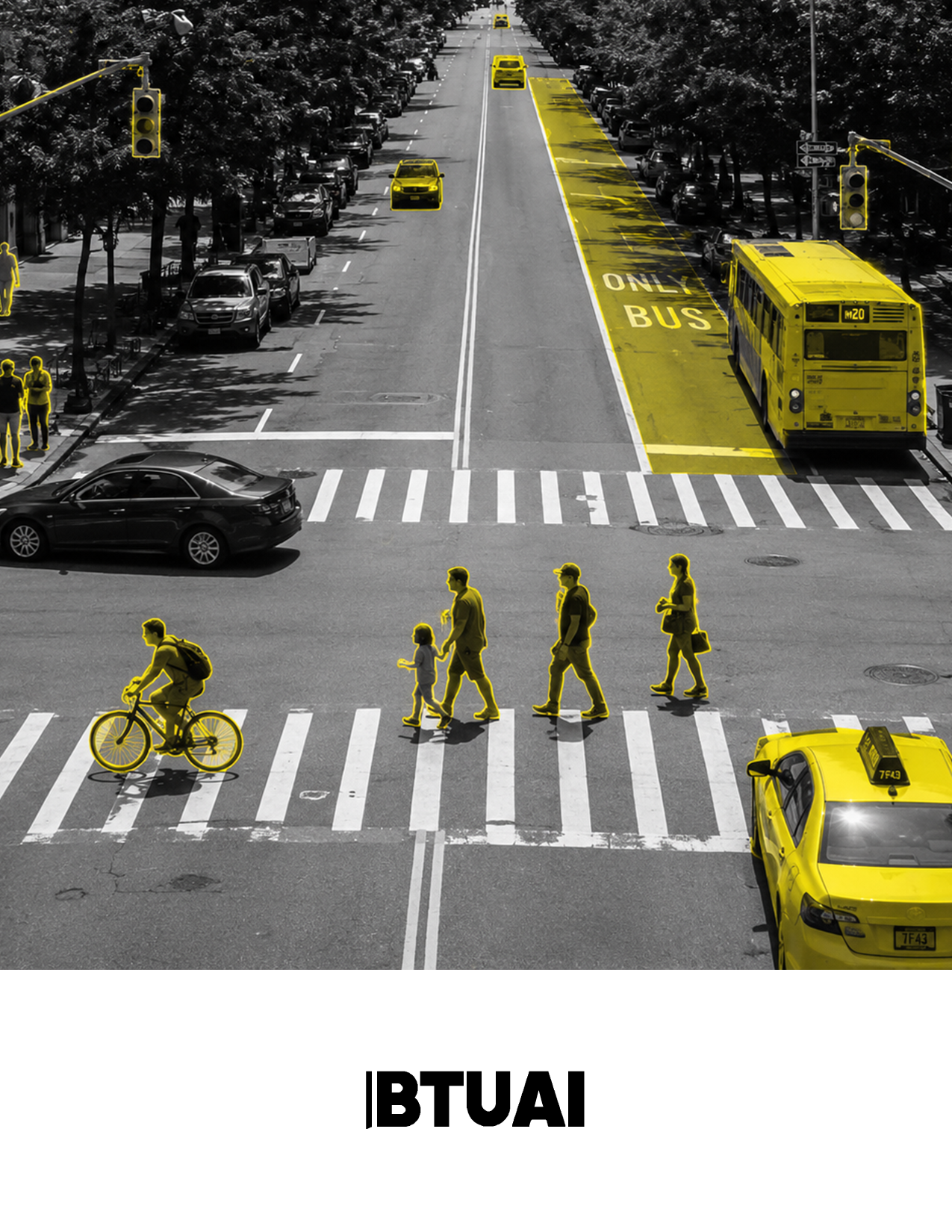
AI-enabled cameras can support traffic management by analyzing congestion, detecting accidents, monitoring public transport lanes, identifying dangerous maneuvers and improving road safety. For a city, this can mean less time on roads, fewer accidents and better transport policy.
- Protection of critical infrastructure
Power stations, water facilities, bridges, tunnels, airports, ports, data centers and other important infrastructure require modern security systems. AI surveillance can be used to detect risks quickly, but such systems must be subject to especially strict control.
- Urban operations
AI cameras may help a city not only in security, but also in everyday management: which streets are most crowded, where pedestrians face risks, where lighting is insufficient and where better infrastructure is needed. In this case, a camera can become not a tool of citizen control, but a tool of better urban planning.
- Emergency response
Fire, flood, traffic accidents, missing persons and other emergencies often require fast reaction. AI can help detect relevant signals quickly and inform responsible services.
Where the risks are
The risks of AI surveillance are as serious as its benefits.
- Normalization of permanent control
If citizens become used to the idea that their face, movement and behavior may be analyzed at every step, the space for free behavior becomes smaller. People begin to act not only according to law, but also under the feeling of constant observation.
- Political or social targeting
The most serious risk of AI surveillance is its use against specific individuals, groups, activists, journalists, political opponents or social movements. In such cases, a security system no longer protects democratic order; it concentrates power.
- Mistaken identification
Facial recognition and behavioral analysis are not error-free. A mistake may expose a person to unfounded suspicion, legal procedures, social harm or public stigma. This is why there must be a clear rule: an AI signal should not be a final decision. It should only be a basis for human verification.
- Data accumulation and secondary use
If a city collects large volumes of video and biometric data, a key question appears: can this data later be used for another purpose? For example, a system initially created for transport management may later become a tool of political surveillance. Purpose limitation is therefore one of the central principles.
- The role of private companies
AI surveillance systems often depend on technologies supplied by private companies. This raises additional questions: where is data stored? Who has access? What are the contractual conditions? Does the company use the data to improve its own systems? Does the state have enough technical capacity to audit the system?
What rules Georgia needs
Georgia should address AI surveillance before the technology spreads widely. It is better to create rules before systems become deeply embedded and difficult to change.
The first principle is clear purpose. Every AI surveillance system should answer the question: what exactly is it used for? Road safety? Finding a missing person? Protecting critical infrastructure? A specific threat to public order? The more vague the purpose, the higher the risk of misuse.
The second principle is necessity and proportionality. A system should collect only the data needed for a specific purpose. If movement analysis is sufficient without facial recognition, facial recognition should not be activated.
The third principle is storage limitation. Video, biometric data and movement history should not be stored indefinitely. Retention periods should be defined in advance and publicly explained.
The fourth principle is independent oversight. AI surveillance systems should be reviewed by an independent body with technical, legal and human-rights assessment capacity.
The fifth principle is public information. Citizens should know where AI surveillance is operating, what data it processes and what rights they have.
The sixth principle is human verification. An AI signal should not become the basis for automatic punishment or legal action. Final decisions, especially in rights-sensitive cases, must be made by responsible humans.
The seventh principle is audit and accountability. Systems should be regularly checked for accuracy, bias, errors and compliance. The public should have access to non-personal reports: how often the system was used, what results it produced, how many errors were found and how they were corrected.
What this means for business and the technology sector
AI surveillance is not only a state issue. Businesses already use cameras for security, customer-flow analysis, warehouse control, office management and service-quality assessment.
If a business uses AI-enabled cameras, it also needs clear rules. Customers should know whether only video recording is taking place or whether facial, behavioral or movement analysis is also being conducted. In the case of employees, the issue is even more sensitive, because constant monitoring in the workplace can become psychological pressure.
For technology companies, a new responsibility appears: building a system is not enough. Companies need to explain how the model works, what data it uses, how accurate it is, where it may fail, how it protects data and how its use can be limited.
The AI surveillance market may grow in Georgia. But if this growth is not connected to ethical standards, data protection and rights-based oversight, public trust in technology will decline.
BTUAI assessment
BTUAI assesses that AI surveillance is both a public-safety opportunity and a test of freedom for Georgia. The city has the right and duty to protect citizens. But citizens also have the right to know when, why and how a system processes their data.
BTU scientists and researchers argue that Georgia’s main task is to develop security technologies in parallel with a rights-based framework. The wrong approach would be to deploy systems widely first and think about rules later. The right approach is clear rules in advance, limited purposes, independent oversight and regular audits.
An AI camera can help a city protect citizens better, but only if citizens themselves do not become permanent objects of suspicion. Security that destroys trust is weak security in the long run.
BTUAI’s view is that the best model for Georgia is responsible surveillance: technology used for a specific safety purpose, under transparent rules, with human verification, minimal data collection and protection of citizens’ rights. A camera may see more than a human, but society must decide where that vision should stop.
Key findings
- An AI camera is no longer only a recording device; it can become a system of recognition, analysis and alerts.
- AI surveillance can improve public safety, traffic management, critical infrastructure protection and emergency response.
- The same technology can be used for permanent citizen control if clear rules and oversight are absent.
- Georgia’s main challenge is not rejecting technology, but governing it through a rights-based framework.
- Facial recognition, movement history and behavioral analysis involve especially sensitive data processing.
- An AI signal should not become the basis for automatic punishment or legal action without human verification.
- AI surveillance systems need independent audits, purpose limitation, retention periods and public information.
- Security without freedom is not sustainable; trust is part of the security system itself.
Methodology
This report was prepared as part of BTUAI Research. The analysis is based on demographic, regional, economic and behavioral data, as well as general trends observed in publicly available sources. The materials are processed using analytical methods applied by BTU researchers, with the support of BTUAI.
The purpose of the research is not to provide personal assessments, but to identify broader trends and practical directions for business, education and society.
In this specific material, international trends in AI surveillance are analyzed in the context of Georgia’s public safety, urban governance, data protection, citizens’ rights, technology policy and public trust.
Limitations
This material is analytical and educational in nature. It does not constitute legal, security, public policy or technology procurement advice. Before deploying any specific system, legal, technical, rights-based, security and data-protection assessments are necessary.
The article does not claim that AI surveillance is always bad or always good. Its evaluation depends on purpose, scale of use, type of data, oversight, transparency and safeguards for citizens.
International examples are used as indicators of broader trends, not as direct models for Georgia.
Sources
Financial Times, 9 June 2026 – material on AI surveillance and the use of CCTV cameras for identifying specific individuals in the context of security.
International discussions on AI surveillance, facial recognition, data protection, biometric data and public safety.
BTUAI analytical processing for the context of public safety, urban governance, citizens’ rights, data protection and technology policy in Georgia.
Frequently asked questions
Is an AI camera more dangerous than an ordinary camera?
An AI camera is not automatically dangerous, but it is a much more sensitive system. An ordinary camera records video, while an AI camera may recognize, compare, analyze and send alerts.
Can AI surveillance be useful for public safety?
Yes. It can help find missing people, improve road safety, protect critical infrastructure, prevent crime and support faster emergency response.
What is the main risk?
The main risk is opaque and uncontrolled use, especially in the case of facial recognition, movement history and targeted monitoring of specific individuals.
What should be the main principle?
The main principle should be purpose limitation: the system should be used only for a specific, legally defined purpose and not for general control.
Should AI make final decisions?
No. An AI signal should only be a basis for verification. Final decisions, especially in legal or rights-sensitive contexts, should be made by responsible humans.
Why is this important for Georgia?
Georgia’s cities, transport systems, security infrastructure and public services will become more digital. Clear rules are needed in advance so that technology serves safety without limiting freedom.
Keywords
AI surveillance; facial recognition; biometric data; public safety; smart cities Georgia; data protection; civil liberties; AI ethics; urban security; public trust; CCTV analytics; responsible surveillance; BTUAI; Business and Technology University.
Citation format
BTUAI Research Team. “When Cameras See More Than Humans: AI Surveillance, Public Safety and Civil Liberties in Georgia.” Business and Technology University, BTUAI.ge, 2026.
Prepared by the academic team of Business and Technology University and the BTUAI Research Team.
Tbilisi, Georgia
BTUAI is an analytical platform of Business and Technology University that studies the impact of artificial intelligence, digital transformation, innovation, startup ecosystems, data analytics and emerging technologies on business, the economy, education and society. BTUAI materials are designed to explain complex technological and economic changes in a clear, reliable and Georgia-focused way.