


For many years, building a startup meant a difficult sequence: an idea, finding a team, creating a first product, hiring developers, designing the user experience, researching customers, looking for investors, selling, supporting clients and constantly wondering whether the company had enough time, money and people to enter the market.
Agentic AI is changing this model. The new generation of AI systems no longer only writes text or answers questions. They perform tasks: planning steps, using digital tools, generating code, preparing financial models, processing customer data, testing marketing messages, organizing workflows and, in some cases, managing parts of business functions with limited human involvement.
This creates a new reality: small teams can do work that previously required larger teams, more time and more capital. International experience shows that a conventional technology product team often needed six to eight people and six to 12 months to build a minimum viable product. In the AI-native model, an early-stage team may sometimes begin with only two people: a domain expert who understands the business problem and an AI engineer who can build agentic systems around it.
For Georgia, this may become a new opportunity for the startup ecosystem. A small market, limited capital and small teams have often been barriers. But if agentic AI reduces the cost of product development, market testing, customer communication and operations, Georgian startups can enter local and international markets faster.
BTU researchers assess that the key question is this: can Georgia use agentic AI so that Georgian startups are not only users of foreign tools, but creators of their own products – solutions based on Georgian data, local problems, regional markets and global demand?
Georgia context: When two people can already become a small company
Imagine two young founders in Georgia. One understands a tourism problem: hotels struggle with guest messages, review analysis, seasonal demand forecasting and multilingual communication. The other can build AI agents, connect data and automate a simple workflow.
A few years ago, such an idea would have required a team of developers, a designer, a sales specialist, a customer-support person, a financial-modeling expert and significant time. Today, with agentic AI, the same team may consist of two or three people using AI agents for early code, customer research, pitch materials, CRM processes, marketing campaigns and product testing.
This does not mean that building a startup has become easy. Competition is increasing, technology requirements are becoming more complex, data security matters and AI outputs must be checked. But the type of barrier is changing. The main problem is no longer only “Do we have enough people?” The main problem becomes: Do we have a clear problem, good data, fast testing capability, domain knowledge and a responsible AI-use culture?
What agentic AI means for startups
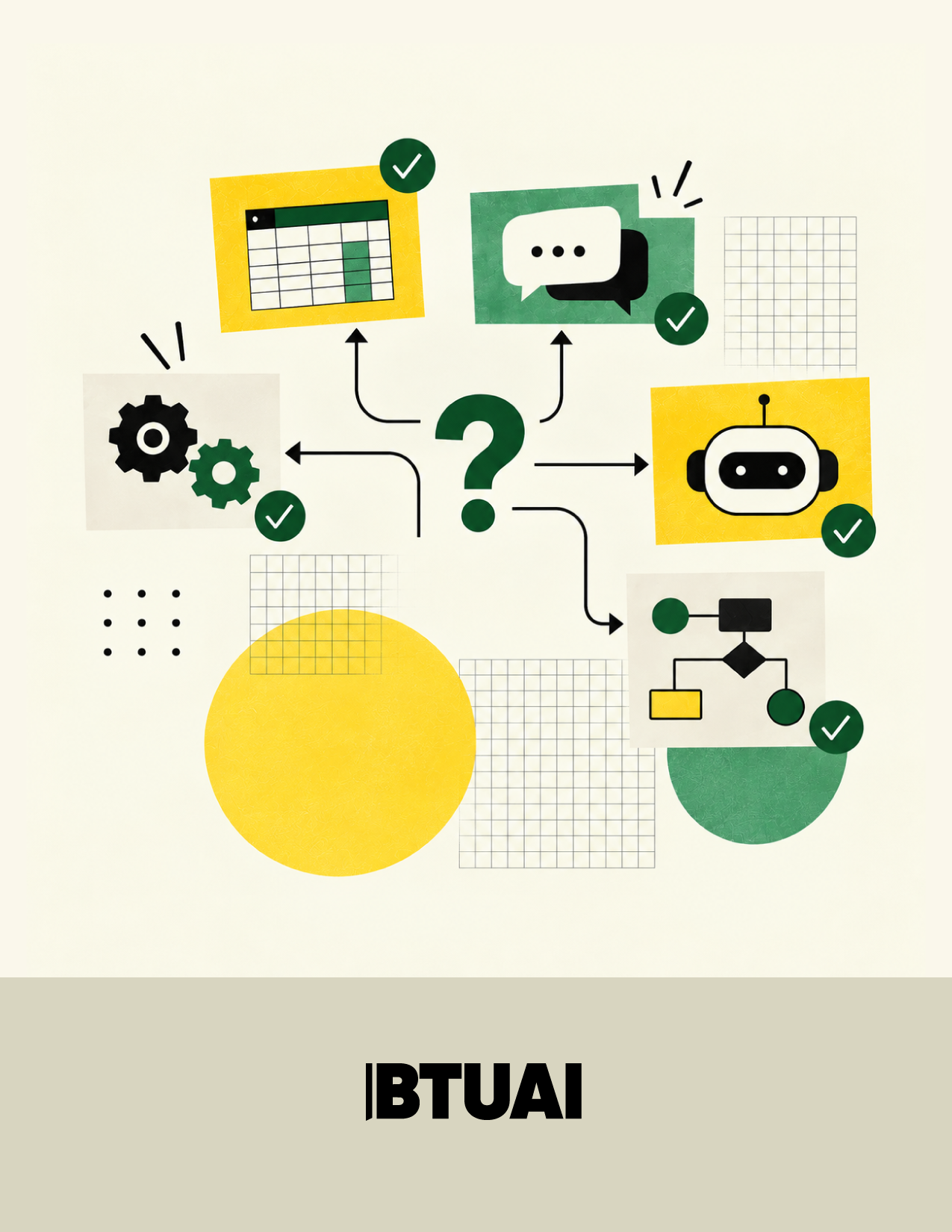
Agentic AI is a system that can plan and perform several steps to reach a goal. A conventional AI assistant can help a founder shape an idea or write text. Agentic AI can enter the workflow as a digital colleague.
A financial agent, for example, can generate five-year projections based on a business plan and market research. A marketing agent can test different messages, images and channels, then show which performed better. A customer-support agent can summarize complaints, detect repeated problems and send a change request to the product team. A technical agent can generate code, tests, documentation and the first layer of bug checking.
For a startup, this means that many early business functions no longer require a large full-time team. A founder can use AI as research, technical, financial, marketing and operational support.
Why this is a new startup operating model
Traditionally, startups grew in stages: first product, then customers, then team, then investment, then scaling. Agentic AI accelerates and partially changes this sequence.
The first change is product-development speed. AI agents reduce the time required for prototyping, design, coding, testing and customer feedback.
The second change is the cost of market testing. A startup can test different segments, pricing models, communication channels and product versions with limited resources.
The third change is customer acquisition. AI agents can generate content, optimize campaigns, classify customer questions and automate parts of sales.
The fourth change is operational scaling. Onboarding, support, documentation, reporting and internal workflows can be organized much faster.
The fifth change is capital need. If product testing and first customer acquisition require less money, founders gain more freedom: they either need less investment or meet investors with stronger early evidence.
Why this matters for Georgia
Georgian startups often face three recurring barriers: a small market, limited capital and talent constraints. Agentic AI directly affects all three.
A small market previously meant that testing products was difficult and entering international markets was expensive. AI can now support rapid market research, competitor analysis, multilingual communication and adaptation to global customers.
Limited capital previously meant that startups could not build sufficient teams. AI agents now reduce part of the work that previously required additional people.
Talent constraints previously slowed product development. Now a small team can become more productive if it combines domain knowledge, data and AI engineering properly.
This is especially important because Georgia’s ICT sector is becoming economically visible. If the technology sector grows but product-building capacity remains weak, the country may remain at the level of services and outsourcing. If agentic AI helps Georgian teams build their own products, the economic opportunity becomes different.
Where Georgian AI-native startups may emerge
Agentic AI is especially relevant in sectors where Georgia has data, local problems and opportunities for fast testing by small teams.
In tourism, agents can help hotels, tour operators and restaurants manage bookings, reviews, guest messages, seasonal demand and multilingual communication.
In retail and FMCG, agents can track inventory, prices, customer behavior, loyalty and sales trends.
In education, Georgian-language AI assistants can help students and teachers with personalized learning, project evaluation and explanations in Georgian.
In finance, digital support can be built for small-business reporting, expense analysis, basic risk assessment and cash-flow planning.
In media and communications, AI agents can support topic monitoring, early fact-checking processes, source comparison and audience-interest analysis.
In agriculture, products can connect price, weather, logistics, harvest and supply data.
In public-service-related startups, agents can classify citizen questions, support document preparation and simplify municipal services, although data protection and human oversight are essential.
The new advantage of small teams
Agentic AI gives small teams three new advantages.
The first is speed. A small team can decide quickly, while AI agents provide additional operational capacity.
The second is the lower cost of experimentation. Testing an idea no longer requires a large budget. Teams can quickly create several versions, test with users and change direction.
The third is international reach. Georgian teams can work in Georgian, English and other languages from the beginning, test regional markets and build products not only for Georgia, but also for the Caucasus, the Black Sea region, Eastern Europe or other small markets.
But this advantage works only if the team does not confuse AI use with real business understanding. AI does not replace deep understanding of a problem. AI does not replace customer conversations. AI does not replace responsibility. AI accelerates a team that already has a clear direction.
A warning for large companies
Agentic AI is not only an opportunity for startups. It is also a warning for large companies.
Large companies often have capital, brands, customers and data. But they also have difficulties: old processes, silos, inconsistent data, slow decision cycles, bureaucracy and technical debt.
If a large company simply automates an old process, it may do something faster that was poorly designed in the first place. This is the main mistake: automating first and redesigning architecture later. The right approach is the opposite – rethinking the workflow first and then embedding AI.
For large Georgian companies, this is especially relevant. Banks, retailers, telecom operators, logistics companies, insurers, education providers and tourism players already own data and many customer touchpoints. But if that data is not organized, AI agents will not work reliably.
Risks for AI-native startups
Agentic AI is an opportunity for startups, but not a guarantee.
The first risk is quality. An AI agent may make mistakes, misunderstand a customer request or generate an inaccurate or unreliable result.
The second risk is data protection. A startup working with customer emails, financial data or business documents must protect confidentiality clearly.
The third risk is over-automation. If humans exit the process too early, errors may appear too late.
The fourth risk is dependence on technology platforms. If a startup is fully dependent on one foreign model or API, changes in pricing, rules or technical access can make the business vulnerable.
The fifth risk is weak understanding of the Georgian context. A foreign AI tool may work well in English but fail to understand the Georgian language, local legal environment, customer habits, regional differences or cultural nuance.
What Georgian startups should do
The first step for a Georgian AI-native startup is not choosing an AI tool. It is defining a real problem clearly. A good question sounds like this: Which task in the Georgian market is painful, repetitive and data-based enough for an AI agent to meaningfully reduce the burden?
The second step is a data map. What data is needed? Who owns it? How clean is it? Is it in Georgian? Does it contain personal information?
The third step is a small prototype. The team should build the simplest version that produces one specific outcome: for example, classifying hotel guest messages, summarizing small-business expenses or analyzing Georgian-language customer complaints.
The fourth step is human oversight. At the early stage, AI agents should not make high-impact decisions without human review.
The fifth step is rapid market testing. The product should be tested by real users, not only by friends of the founders or by answers generated in an AI chat.
The sixth step is reducing platform risk. A startup should know what happens if model prices rise, an API changes or a specific service becomes restricted.
The seventh step is Georgian-language quality control. If the product works in the Georgian market, the Georgian language cannot be a secondary feature.
What universities should do
In the age of agentic AI, universities should not be only providers of knowledge for startups. They should become testing environments where students, researchers, businesses and AI tools create real products together.
Universities should teach:
- the logic of AI agents;
- rapid product prototyping;
- data quality;
- Georgian-language AI resource development;
- cybersecurity;
- AI ethics;
- business-model testing;
- customer interviews;
- financial modeling;
- early international market-entry strategy.
For Georgia, it is especially important that students do not use AI only to complete assignments. They need to learn how to build products with AI, check outputs and protect users.
What investors and the ecosystem should do
In the age of agentic AI, investment criteria change. Previously, team size, technical resources and the cost of fast growth were often necessary signals. Now the more important questions are: How well is the problem selected? How clean is the data? How reliably does the AI agent work? What is the safety architecture? Is customer demand real?
Georgia’s startup ecosystem needs:
- AI-native accelerators;
- Georgian data sandboxes;
- sector pilots in tourism, retail, education, finance and public services;
- joint university-business projects;
- Georgian-language AI quality standards;
- minimum cybersecurity requirements;
- AI risk-assessment frameworks for investors.
This can help startups move from ideas to real products.
Where the opportunity is
For Georgia, the opportunity appears on three levels.
First, strengthening small teams. If a startup previously needed a large team, now a domain expert and an AI engineer may become a new type of founding team.
Second, digital solutions for Georgian problems. Tourism, retail, education, agriculture, regional services and the Georgian language create niches that global companies often understand only superficially.
Third, export potential. If a Georgian team builds a product for a small market, a complex language, multilingual customers or regional logistics, it may be adaptable to other small markets as well.
Where the risks are
The main risk is that Georgian startups become only wrappers around foreign AI tools – superficial products that add a pleasant interface to someone else’s model but do not own data, domain knowledge, customer relationships or technological advantage.
The second risk is the illusion created by AI. Building a product quickly does not mean there is a market. A polished pitch does not mean a customer will pay.
The third risk is data security. A small team may not see how risky it is to work with customer or business data.
The fourth risk is talent depth. An AI-native startup may begin with two people, but quality scaling still requires competence in product, data, safety, sales and customer support.
The fifth risk is neglecting the Georgian language. If an AI product created for the Georgian market is unreliable in Georgian, users will not trust it for long.
BTUAI assessment
BTUAI assesses that agentic AI may become one of the most important turning points for Georgian startups in the last decade. It lowers early barriers, increases the productivity of small teams, accelerates experimentation and gives Georgia a chance to partly offset the limitations of a small market through flexibility and technological speed.
But agentic AI does not create a successful startup by itself. Success comes from a clear problem, good data, domain knowledge, rapid testing, safety standards, Georgian-language quality and a team that uses AI not as a magic tool but as part of work architecture.
For Georgia, the key choice is whether to remain a user market for AI products or use agentic AI to create its own products. This choice is especially important for universities, startups, investors and businesses.
BTU researchers assess that in the future startup, team size will matter less than before. More important will be how clearly the team sees the problem, how well it prepares data and how responsibly it manages AI agents.
The main conclusion is simple: agentic AI gives small Georgian teams a large opportunity, but only if that opportunity is paired with knowledge, data, ethics and real market understanding.
Key findings
- Agentic AI reduces the time, cost and initial team size required to build startups.
- Small Georgian teams can perform functions that previously required larger technical and operational teams.
- The main advantage is not merely using AI, but embedding AI agents properly into business processes.
- Natural Georgian niches include tourism, retail, education, finance, media, agriculture, public services and the Georgian language.
- For large companies, the main challenge is not buying AI tools but redesigning old workflows.
- The main risk for Georgian startups is becoming a superficial wrapper around foreign AI models.
- The Georgian language and Georgian data can become sources of differentiation for AI-native products.
- Universities and the ecosystem should create environments where students and founders use AI not only for answers, but for product creation.
Data snapshot
In the traditional technology model, building a minimum viable product often required a team of six to eight people and six to 12 months.
In the AI-native model, in some cases an early team may consist of only two people: a domain expert and an AI engineer.
With agentic AI, some companies can prepare live demos using customer data within hours.
With the support of agentic systems, full implementation can in some cases be completed in roughly one-quarter of the time required by traditional SaaS implementations.
In the first quarter of 2026, the information and communication sector accounted for 11.7% of Georgia’s business sector output.
In the same quarter, the information and communication sector received USD 37.2 million in foreign direct investment.
This represented 13.7% of total FDI in Georgia in the first quarter of 2026.
Georgia needs additional research on how many startups use AI agents, which sectors produce AI-native products, how accessible Georgian data is, what AI skills founders have and how ready investors are to assess AI-related risks.
Methodology
This report was prepared as part of BTUAI Research. The analysis is based on demographic, regional, economic and behavioral data, as well as general trends observed in publicly available sources. The materials are processed using analytical methods applied by BTU researchers, with the support of BTUAI.
The purpose of the research is not to provide personal assessments, but to identify broader trends and practical directions for business, education and society.
This material uses an international analytical framework on agentic AI, AI-native startups, new models of product development, automated go-to-market capabilities and the challenges facing incumbent companies. In the Georgian context, the analysis relies on economic data from the ICT sector, the needs of the Georgian startup ecosystem, the digital significance of the Georgian language and BTUAI assessment.
Limitations
This material is analytical and educational in nature. It does not constitute financial, investment, legal, tax, technology procurement or startup investment advice. Before making specific business, investment or technology decisions, consultation with a relevant specialist is required.
Agentic AI is a rapidly developing field. Platform capabilities, prices, data-use rules, API conditions and safety requirements may change quickly. This material explains the strategic significance of the trend and does not provide instructions for using any specific product.
Georgia needs additional local research on the number of AI-native startups, the use of AI agents, the quality of Georgian data, investment structures and customer readiness.
Sources
Harvard Business Review, July–August 2026, “How Agentic AI Supercharges Startups and Threatens Incumbents,” materials on AI-native startups, agentic AI systems, automated go-to-market capabilities and incumbent-company risks.
National Statistics Office of Georgia – Business Sector Results, Q1 2026.
National Statistics Office of Georgia – Foreign Direct Investment, Q1 2026.
BTUAI analytical processing for the context of agentic AI, Georgian startups, the ICT sector, the Georgian language, data and the digital economy.
Frequently asked questions
What is an AI-native startup?
An AI-native startup is a company that does not use AI only as a supporting tool, but builds its product and operations from the beginning around AI agents, data and automated workflows.
Why does agentic AI matter for startups?
Because it reduces the cost of product development, customer acquisition, implementation and operations. A small team can test an idea and real market demand faster.
Does this mean startups no longer need teams?
No. Teams are still needed, but their early structure changes. Domain knowledge, AI engineering, data quality, safety and market understanding become more important.
Where is Georgia’s main opportunity?
Georgia’s opportunity lies in niches where local context matters: the Georgian language, tourism, education, retail, small-business operations, financial support, regional markets and public services.
What is the main risk?
The main risk is building a superficial AI product that depends only on a foreign model and does not own data, domain knowledge or a reliable workflow.
What should universities do?
Universities should create environments where students and founders learn to build products with AI agents, protect data, control Georgian-language quality, test business models and work with real users.
Keywords
agentic AI Georgia; Georgian startups; AI-native startups; startup ecosystem Georgia; AI agents; digital economy; Georgian language AI; Georgian data; AI and business; AI productivity; ICT sector Georgia; startup innovation; AI entrepreneurship; BTUAI; Business and Technology University.
Citation format
BTUAI Research Team. “Agentic AI and the New Opportunity for Georgian Startups.” Business and Technology University, BTUAI.ge, 2026.
Prepared by the academic team of Business and Technology University and the BTUAI Research Team.
Tbilisi, Georgia
BTUAI is an analytical platform of Business and Technology University that studies the impact of artificial intelligence, digital transformation, innovation, startup ecosystems, data analytics and emerging technologies on business, the economy, education and society. BTUAI materials are designed to explain complex technological and economic changes in a clear, reliable and Georgia-focused way.