


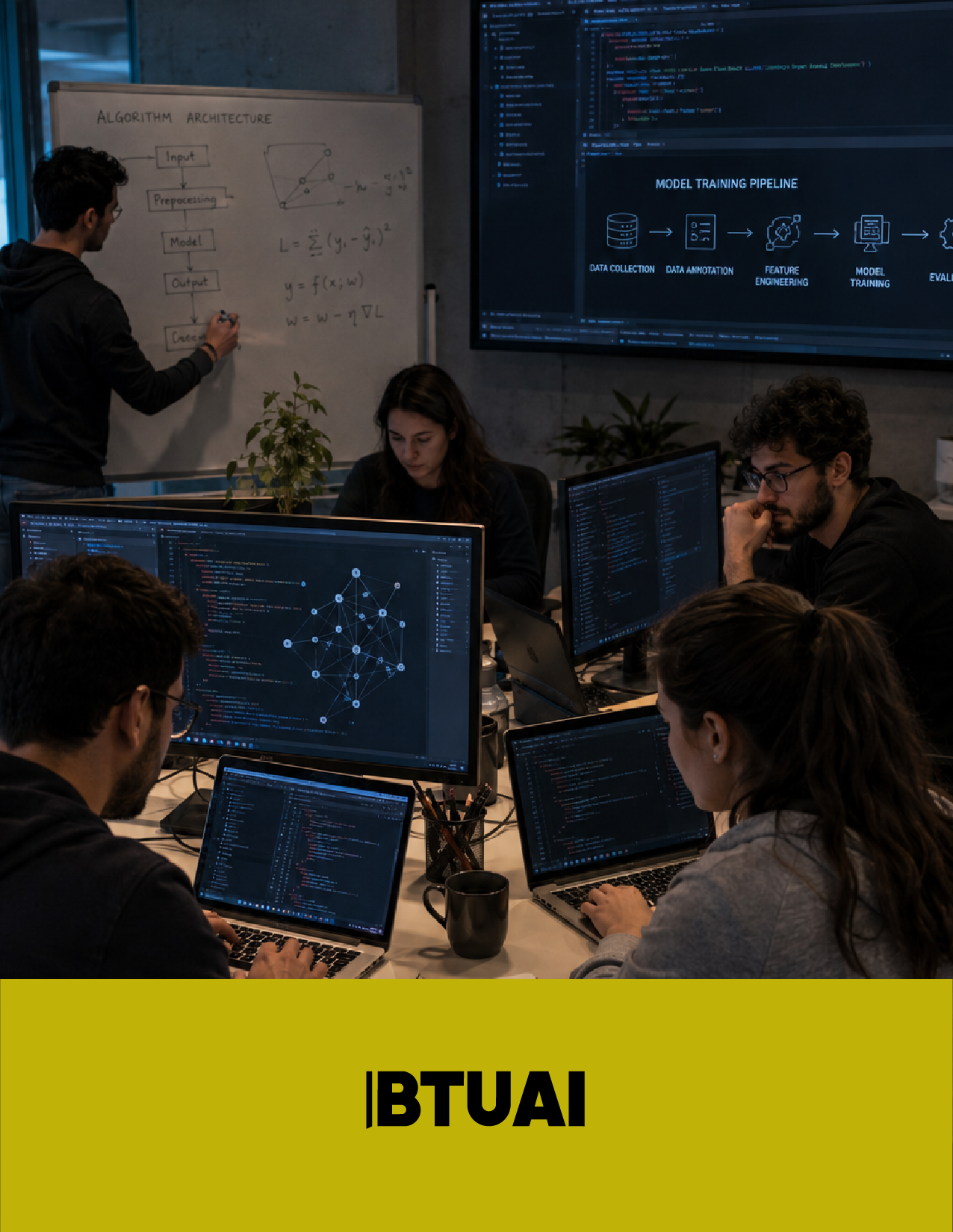
Artificial intelligence is often presented as if it learns, thinks and produces answers on its own. But behind AI systems there is a large amount of human labor: people evaluate outputs, correct errors, label images, describe videos, assess tone, identify unsafe responses, prepare data and teach systems how to behave.
This work is called data annotation and AI training. In simple terms, it is the process of preparing data so that AI can understand it: marking objects in an image, evaluating chatbot answers, transcribing audio, time-stamping video, or showing the system which answer is accurate, natural, safe or useful.
International experience shows that AI development is creating a new digital labor market. On one side, there are highly paid specialist tasks – for example, evaluating code, medicine, law, language or safety. On the other side, there are unstable, fragmented and often low-paid tasks that may last for only hours, days or weeks.
In recent international reporting on AI and work, AI trainers are described as working across platforms: assessing chatbot tone, annotating videos, testing safety responses, correcting model errors and often not knowing when a project will begin or end. The same examples show a sharp contrast in digital labor: some expert AI training work is advertised at around USD 150 per hour, some generalist evaluation tasks appear in the USD 35–75 range, while low-level annotation tasks can fall as low as USD 16 per hour.
For Georgia, this issue is especially important. The country has an opportunity to become not only a user of AI, but a center for processing Georgian language, Georgian data, texts, audio, video, business documents and cultural context. But this requires a dignified standard for digital labor: fair compensation, quality control, data protection, ethics, Georgian-language competence and professional development.
BTU researchers assess that the key question is this: will Georgia become a low-cost market for invisible AI labor, or will it turn data annotation and AI training into a knowledge-based digital profession?
Georgia context: when AI answers in Georgian, someone must teach it Georgian
Imagine a Georgian user asking AI: “How should I write an official letter to a municipality?” or “How can I explain an episode of The Knight in the Panther’s Skin to a child?” or “How should I prepare a response to a customer complaint in Georgian?”
If AI answers properly, this is not only the result of technical model capacity. Someone must teach the system Georgian sentence structure, polite forms, cultural context, official language, everyday speech, local terminology and the difference between a Georgian answer that is genuinely understandable and one that is merely translated.
This work is invisible. The user sees the answer, but not the people who prepared the data, marked errors, checked Georgian sentences, corrected weak responses and trained the model to behave better.
This is where new digital labor begins. In the AI era, the Georgian language, Georgian data and Georgian context will not enter technology systems automatically. They require people who can process them with quality.
What data annotation means
Data annotation means adding meaning to data. That data may be text, image, audio, video, spreadsheets, documents or customer messages.
An annotator may:
mark a car, person, road sign or product detail in an image;
indicate what happens at a specific second in a video;
check whether audio has been transcribed correctly;
evaluate whether a text response is accurate;
compare a chatbot answer with the user’s request;
mark whether an answer is natural, rude, biased, unsafe or inaccurate;
check whether AI understood the context correctly.
This labor is as important for AI as feedback is for a student. A model learns from data, but the data must be prepared properly.
Why is this labor invisible
AI outputs are often impressive: a system writes, translates, creates images, answers questions and generates code. But behind those outputs there is a large amount of work that users do not see.
There are several reasons for this invisibility.
First, the work is fragmented. A person may complete small tasks: one image, one answer, one audio file, one video segment.
Second, platforms are global. A worker may operate from Georgia while the client is in the United States, Europe or another market. The labor happens digitally and often remains outside the visible organization.
Third, contracts are unstable. Many tasks are not full-time jobs. A project may start quickly and end just as quickly.
Fourth, authorship disappears. An AI answer does not show who labeled the data, who checked the output or who corrected an error.
Fifth, the value of the labor is often underestimated. The final product may be a high-value AI system, while data preparation is treated as a lower-level task.
What does the international experience show
International experience shows that AI training labor is highly uneven. On one side, platforms sometimes offer high hourly rates to specialized experts such as writers, lawyers, doctors, programmers or domain specialists. On the other side, many “taskers” work on unstable, fast and often stressful assignments.
The reported examples show several important figures: some AI training work is advertised at around USD 150 per hour; generalist work can appear in the USD 35–75 range; low-paid projects may fall to USD 16 per hour. In one example, workers were moved from USD 21 per hour to USD 16 per hour for similar work.
This shows that the AI labor market can split quickly: a smaller group may receive high-value, knowledge-based work, while a larger group remains in unstable, temporary and less protected digital tasks.
Scale also matters. In one international case, a company connected to AI training had about 300 full-time employees but worked with tens of thousands of independent contractors. This model shows how value may remain concentrated in the company while much of the labor is distributed globally through platforms.
What does this mean for Georgia
For Georgia, data annotation and AI training can become a new economic opportunity. The country has several advantages: educated young people, a multilingual environment, growing interest in technology, the unique value of the Georgian language and the opportunity to build datasets needed for Georgian AI.
But this opportunity will not automatically become a high-value economy. If Georgia remains only a supplier of cheap digital tasks, it will be a low value-added path. If the country develops standards for quality, ethics, Georgian-language processing, data protection and domain expertise, this can become a new professional field.
Georgian-language annotation is especially important. Georgian AI needs:
proper processing of Georgian sentences;
distinction between official and everyday language;
understanding of dialect and regional variation;
annotation of historical, cultural and literary context;
classification of business documents, educational materials and public texts;
identification of AI error types;
evaluation of high-quality Georgian responses.
This is no longer only technical work. It is the intersection of language, culture, data and technology.
New professions that may emerge
In the AI era, data annotation can become a whole system of professions.
Georgia may see the development of:
Georgian-language data annotators;
AI response quality evaluators;
Georgian AI text editors;
speech data annotators;
video and audio labeling specialists;
AI safety testers;
domain AI trainers in law, medicine, finance, education or tourism;
data quality managers;
AI ethics and bias reviewers;
Georgian AI benchmark developers;
data protection coordinators for AI projects.
Some of these roles may begin with a low barrier to entry, but higher-quality levels require education, language competence, domain knowledge, data skills and ethical responsibility.
Why quality is decisive
The quality of AI systems depends directly on the quality of data. If annotation is weak, the model learns poorly. If Georgian data is full of errors, AI will perform poorly in Georgian. If safety testing is superficial, the system may produce unsafe responses. If bias is not checked, AI may reproduce old unfairness.
This is why data annotation should not be treated as simple clicking or labeling. It is quality infrastructure.
For Georgia, this is especially important because Georgian is a smaller-language environment. In larger languages, errors may be compensated by enormous amounts of data. In Georgian, each high-quality text, annotated sentence, audio recording, document and evaluated response carries greater weight.
BTU researchers assess that the quality of Georgian AI will strongly depend on how the culture of Georgian data work is organized.
The main risk: new digital labor can be unprotected
Data annotation and AI training labor carries several serious risks.
First, instability. Projects may begin unexpectedly, stop suddenly or change compensation.
Second, invisible control. Platforms may constantly measure speed, scores, mistakes, time and availability.
Third, emotional burden. Some tasks may involve violent, offensive, traumatic or ethically difficult content.
Fourth, data security. Annotators may access sensitive text, audio, video or personal information.
Fifth, low bargaining power. In platform-based labor, workers often have little influence over conditions.
Sixth, uncertain professional development. If the work remains only a set of small tasks, workers may not accumulate knowledge that leads to better roles.
What Georgia should do
Georgia should develop data annotation and AI training not as accidental platform work, but as a professional field.
The first step is education. Universities and vocational education should teach data annotation, data quality, AI error detection, Georgian NLP, ethics and data protection.
The second step is a Georgian data standard. Clear rules are needed for how Georgian text, audio, video and documents are described, labeled, checked and stored.
The third step is a minimum labor framework. Tasks should be clear, compensation fair, content risks disclosed in advance, data protection rules defined and completed work recognized.
The fourth step is domain specialization. Georgia should not become only a general annotation market. It should develop specialized areas: Georgian language, education, tourism, law, finance, culture, media and public services.
The fifth step is local AI infrastructure. Data annotation should connect with Georgian AI models, Georgian knowledge banks, universities, business and the public sector.
What this means for business
For Georgian business, data annotation is not only an AI company issue. Any company that has customer emails, calls, complaints, sales texts, product descriptions, service records or internal documents already has data that can improve AI systems.
But this data must be used responsibly. Businesses need:
protection of confidential information;
anonymization of personal data;
high-quality labeling;
a clear purpose for data preparation;
protection of employee and customer rights;
verification of AI system outputs.
If businesses organize this process properly, they can receive better customer support, more accurate recommendations, automated Georgian text processing, service quality analysis and stronger data-based decision-making.
What this means for young people
For young people, data annotation can become an entry point into the AI economy. But it should not remain a low-paid and repetitive task.
With the right approach, it can become a pathway toward higher competencies: data science, NLP, AI quality control, model evaluation, product development, cybersecurity, digital ethics and AI research.
For this to happen, young people need to learn not only how to complete platform tasks, but also:
how data is structured;
how quality rules work;
how to identify AI errors;
how to preserve precision in Georgian;
how to add domain context;
how to protect confidentiality;
how to document results.
In this way, data annotation can become a gateway into AI – not a dead end in digital labor.
Where the opportunity is
For Georgia, the opportunity appears on three levels.
First, strengthening the Georgian language digitally. If Georgian data is processed with quality, AI systems will work better in Georgian.
Second, a new labor market. Digital professions can create opportunities for young people, regional workers and multilingual professionals.
Third, technological independence. If Georgia prepares and evaluates its own data, it becomes less dependent on foreign models and foreign data logic.
Where the risks are
The main risk is that data annotation in Georgia develops as cheap, fragmented and unprotected labor. In that case, the country receives limited income but does not create knowledge.
The second risk is low quality. Poor annotation will weaken Georgian AI.
The third risk is data security. If personal and business data is processed improperly, both individuals and companies may be harmed.
The fourth risk is loss of Georgian context. If Georgian data is processed through foreign standards without local language competence, AI will work superficially in Georgian.
The fifth risk is emotional and psychological burden for people reviewing harmful content. Such work requires advance warning, support and safety rules.
BTUAI assessment
BTUAI assesses that the invisible labor behind AI should become, for Georgia, not low-value platform work but a knowledge-based digital profession.
Data annotation is a foundation of the AI economy. If data is weak, AI is weak. If Georgian data is insufficient, AI will be limited in Georgian. If annotators’ labor is undervalued, the country will not build sustainable technological capability.
The right path for Georgia is a high standard of Georgian data work: language, quality, ethics, security, compensation and professional development. This field should be connected with universities, AI education, Georgian-language digital sovereignty, business data and the local technology ecosystem.
BTU researchers assess that in the AI era, the most important labor is often the least visible. Georgia needs to make this invisible labor visible, dignified and strategically organized.
The main conclusion is simple: if we want AI to work in Georgian, reliably and in the Georgian context, we must value the people who teach AI through data, language and quality.
Key findings
- AI depends on major human labor: annotation, evaluation, correction, safety testing and data quality control.
- Data annotation is a foundation of AI quality, not a secondary technical task.
- International experience shows large differences in compensation: high-value expert work can be well paid, while general task work can remain unstable and low paid.
- Georgia’s key opportunity is high-quality processing of Georgian language, Georgian data and local context.
- The main risk is becoming a low-cost task market without building high-value AI competence.
- Data annotation should be connected to education, professional standards, ethics, data protection and Georgian AI development.
- For young people, it can be an entry point into the AI economy if linked to professional development.
- The quality of Georgian AI will depend on how well Georgian data labor is organized.
Data snapshot
High-skill AI training tasks on international platforms can be advertised at around USD 150 per hour.
General AI annotation and evaluation work has been described in the USD 35–75 hourly range.
Some low-paid projects can fall as low as USD 16 per hour.
In one example, workers were moved from USD 21 per hour to USD 16 per hour for similar work.
In one international case, an AI-related platform company had around 300 full-time employees and around 30,000 independent contractors.
Georgia needs additional research on how many people work in data annotation, what languages they work in, how much they are paid, what quality standards are used, how data is protected and whether this work supports professional development.
Methodology
This report was prepared as part of BTUAI Research. The analysis is based on demographic, regional, economic and behavioral data, as well as general trends observed in publicly available sources. The materials are processed using analytical methods applied by BTU researchers, with the support of BTUAI.
The purpose of the research is not to provide personal assessments, but to identify broader trends and practical directions for business, education and society.
This material uses international technology and labor-market trends related to AI training, data annotation, platform labor, AI safety testing and digital work. In the Georgian context, the analysis evaluates the significance of the Georgian language, Georgian data, education, youth employment, business digital transformation and AI sovereignty.
Limitations
This material is analytical and educational in nature. It does not constitute financial, investment, legal, HR, labor, psychological, technology procurement or data-protection advice. Before making specific decisions, consultation with a relevant specialist is required.
The market for AI training and data annotation is changing rapidly. Platform conditions, compensation, requirements and project duration may vary significantly. This material explains the significance of the trend and does not evaluate the labor or legal compliance of any specific platform.
Georgia needs additional local research on the number of people involved in data annotation, working conditions, compensation, quality standards, Georgian-language data needs and professional development pathways.
Sources
WIRED, July–August 2026, Corporate AI-America special section, materials on AI trainers, data annotation, platform labor, AI safety testing and digital work.
BTUAI analytical processing for the context of AI, Georgian data, Georgian language, digital labor, education, youth employment and technological independence.
Public labor market and business sector data for Georgia – for further local analysis.
Frequently asked questions
What is data annotation?
Data annotation is the process of labeling and evaluating text, images, audio, video or documents so that AI systems can understand and learn from them.
Why is this labor invisible?
Because users see the final AI answer, but not the people who prepared the data, corrected errors and evaluated the quality of outputs.
Why does this matter for Georgia?
Georgian AI needs high-quality processing of Georgian language, local context and local data. Without this, AI will work weakly and superficially in Georgian.
Can this become a new profession?
Yes, if data annotation is connected with education, quality standards, ethics, data protection and domain expertise. Otherwise, it may remain low-paid and unstable task work.
What are the risks?
The main risks are unstable compensation, sudden project endings, harmful content exposure, data security, low bargaining power and unclear professional development.
What should universities do?
Universities should teach data annotation, AI quality control, Georgian NLP, data protection, AI ethics and domain-specific AI training so that this field develops professionally.
Keywords
data annotation Georgia; AI trainers; invisible labor AI; digital labor Georgia; platform work; Georgian data; Georgian language AI; Georgian NLP; AI quality control; AI safety testing; data protection; AI and employment Georgia; youth and AI; digital sovereignty; BTUAI; Business and Technology University.
Citation format
BTUAI Research Team. “The Invisible Workers of AI: Data Annotation and the New Digital Labor in Georgia.” Business and Technology University, BTUAI.ge, 2026.
Prepared by the academic team of Business and Technology University and the BTUAI Research Team.
Tbilisi, Georgia
BTUAI is an analytical platform of Business and Technology University that studies the impact of artificial intelligence, digital transformation, innovation, startup ecosystems, data analytics and emerging technologies on business, the economy, education and society. BTUAI materials are designed to explain complex technological and economic changes in a clear, reliable and Georgia-focused way.