



Key argument
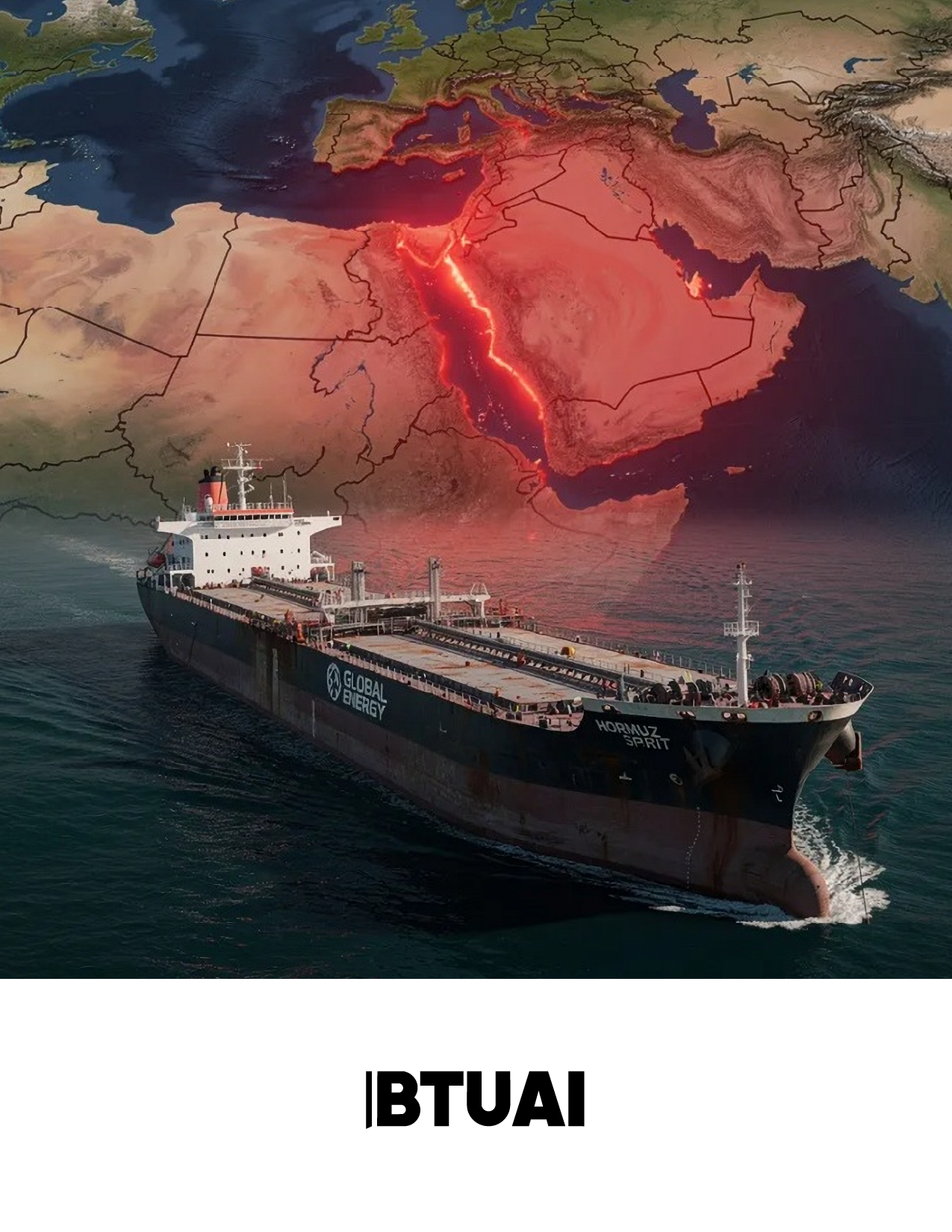
The tension around the Strait of Hormuz has exposed the global economy’s dependence on a small number of maritime chokepoints. Disrupted traffic, attacks on vessels, higher insurance costs and uncertain passage are pushing companies to build alternatives into their supply chains. For Georgia, this appears to strengthen the case for the Middle Corridor, the Black Sea ports and the national railway network.
The opportunity is real but conditional. Georgia connects cargo arriving from Central Asia across the Caspian and Azerbaijan to Europe through Black Sea services or the Baku–Tbilisi–Kars railway. Yet geographic attention does not become revenue automatically. The country must move additional cargo at a predictable price and time; otherwise, shippers will recognise the route but contract elsewhere.
Hormuz and the Middle Corridor are not direct substitutes
The Middle Corridor cannot replace the Strait of Hormuz shipment for shipment. Hormuz carries Gulf energy exports and major maritime flows, while the Trans-Caspian route links China and Central Asia to Europe by rail and short-sea crossings. An oil tanker cannot simply become a container train. The connection is indirect: as maritime risk rises, firms value a second and third route, especially for high-value, time-sensitive and containerised cargo.
The crisis also raises energy, fuel and insurance costs for every route. Georgia cannot rely on a rival route becoming more expensive. It must improve its own transit time, price and reliability.
A corridor that is already growing
The Trans-Caspian International Transport Route association reports that cargo through the relevant Kazakh and Azerbaijani ports reached 3.3 million tonnes in 2024, up 20%. Container traffic rose 176% to 56,500 TEU, while container trains dispatched from China increased 33-fold. The volumes remain small beside global shipping, but the growth shows that customers are testing the route in practice.
The World Bank estimates that coordinated policy and investment could triple freight and halve travel time by 2030. This is a conditional scenario, requiring faster borders, stronger infrastructure, common digital documents and operational coordination. Georgian Railway reported roughly 8% freight growth in the first five months of 2026, with growth exceeding 20% during March–May. Demand is emerging; the question is where the bottlenecks appear.
Georgia’s three transit assets
The first asset is rail. Georgia connects the Caspian and Black Sea spaces, while Baku–Tbilisi–Kars provides a land route through Türkiye. The second is the Black Sea: Poti and Batumi provide links to European and regional ports. The third is optionality-cargo can leave through the sea or Türkiye. But optionality creates resilience only when railway, port, customs and vessel schedules work as one system.
Where congestion can emerge
The Middle Corridor is multimodal. Cargo transfers between rail and ship across the Caspian, returns to rail, and may transfer again to a Black Sea feeder or a Türkiye-bound train. Every handover adds time, cost and failure risk. A free rail path in Georgia does not create a functioning corridor if vessels, border documents, wagons or port windows are unavailable elsewhere.
The key performance measure should therefore be door-to-door time and its variability, not tonnes alone. An uncertain ten-day journey can be less valuable than a guaranteed twelve-day one.
Turning crisis into capacity
Georgia and its partners need a unified operational picture: total price, estimated time, border status, port window and delay risk visible before booking. They also need a single commercial product-a through tariff, one timetable and one accountable operator-rather than a chain of separate contracts.
Capacity investment should target the bottleneck that most reduces total journey time: a crane, container yard, ferry frequency, border shift or digital procedure may yield more than a highly visible standalone project. Partners could also offer reservable emergency capacity for customers that need to switch routes during disruption in Hormuz, the Red Sea or another maritime chokepoint.
The potential economic gain
More cargo benefits rail, ports, terminals, warehousing, trucking, customs services and insurance. The larger prize is activity that stays: distribution centres, light processing, packaging, assembly, repair, trade finance and digital logistics. Transit becomes a higher-value economy only when the country provides services around the cargo rather than merely moving it.
According to BTU researchers, Georgia’s potential gain should be measured at three levels: diverted cargo absorbed in the short term; new regular services and contracts retained after the crisis; and logistics, financial and digital businesses created around the corridor over the long term.
The crisis also raises Georgia’s risks
Higher oil and fuel prices increase Georgia’s import bill, transport costs and inflation risk. A global slowdown may reduce total cargo. Black Sea security concerns mean that shifting away from one vulnerable maritime zone does not eliminate geopolitical exposure. There is also a temporary-effect risk: if service quality deteriorates during the surge, traffic will return to established routes when Hormuz normalises.
Conclusion
The Hormuz crisis can increase Georgia’s transit importance, but the Middle Corridor will not become a wholesale substitute for global sea trade. Its opportunity lies in high-value, containerised and time-sensitive cargo whose owners need a credible second route.
Georgia must convert attention into capacity. Rail, Black Sea ports and the Türkiye route should operate as one predictable product with a transparent price, digital tracking, guaranteed time and accountable operator. If it can provide that service, interest created by the crisis can become a durable transit function.