


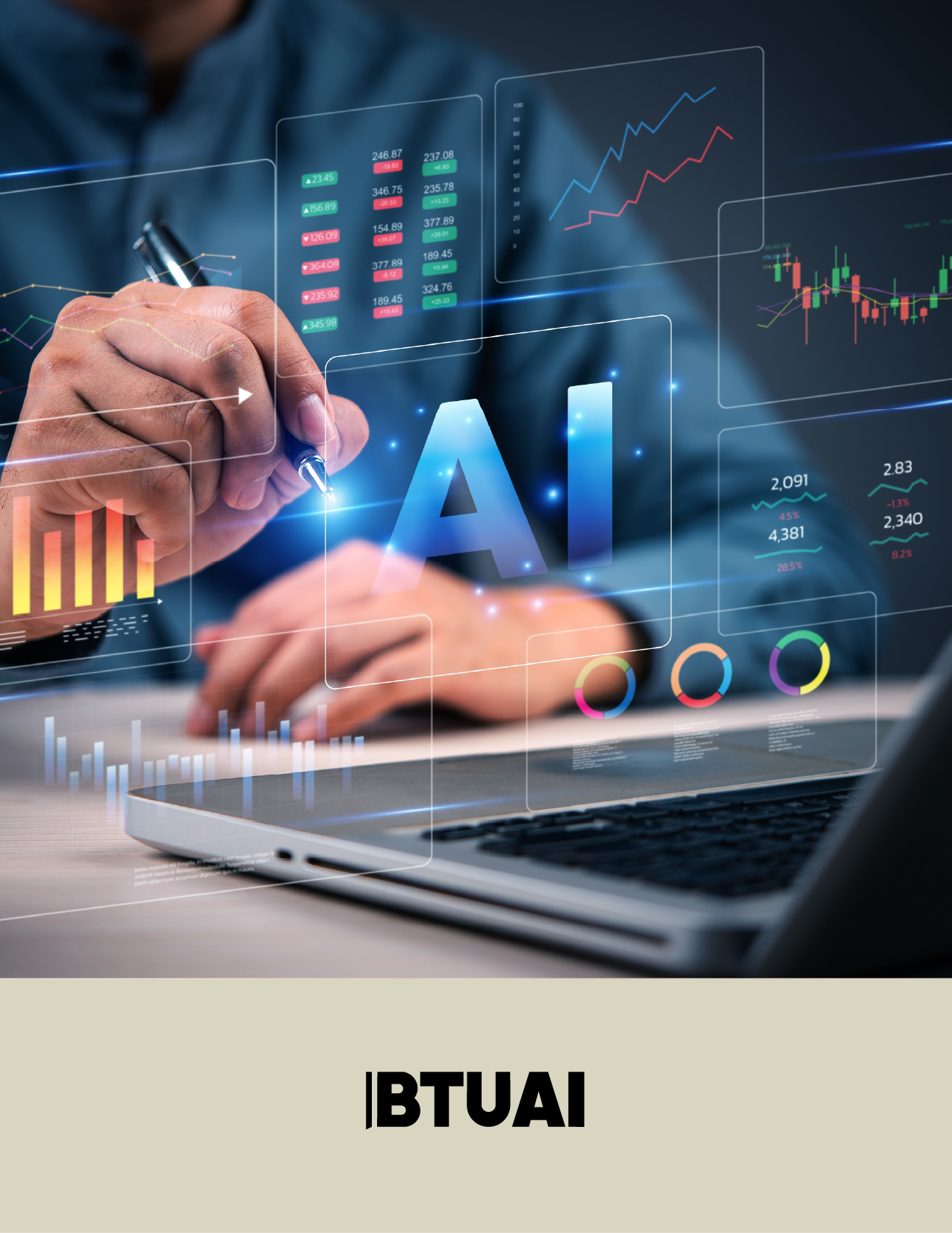

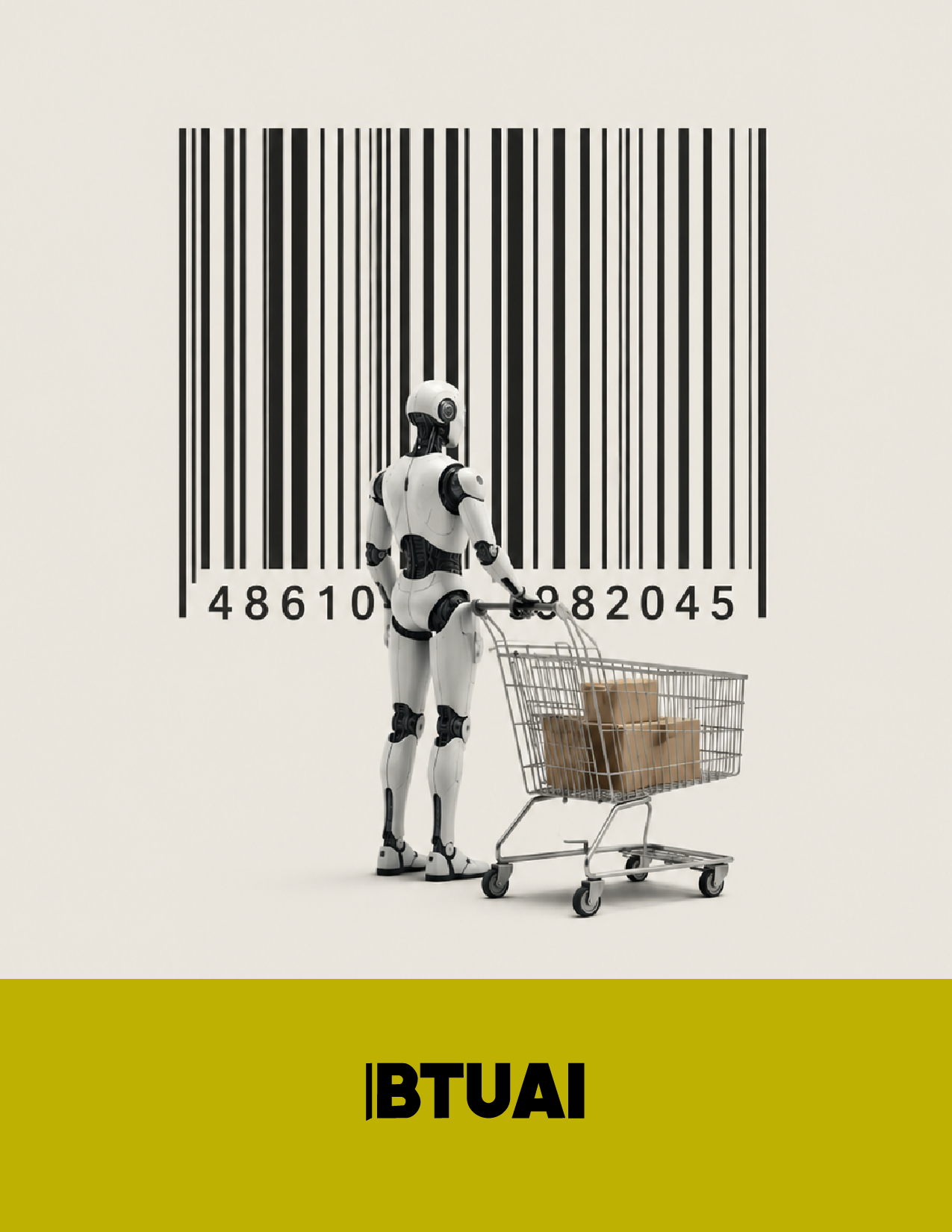
The next stage of e-commerce will not be only about better websites, faster delivery or smoother card payments. A deeper change is emerging: AI agents are beginning to take part in the shopping process on behalf of customers. They can search for products, compare prices, check reviews, evaluate delivery conditions, understand past preferences and, in some cases, help complete the purchase.
BTU researchers assess that this trend may become a turning point for Georgian e-commerce. Today, online retailers mainly persuade human customers through photos, discounts, reviews, ads and convenient checkout. In the era of agentic commerce, businesses will need to make their products understandable not only to people, but also to AI systems.
Georgia’s e-commerce base is already growing quickly. According to Galt & Taggart, Georgia’s e-commerce market expanded tenfold in 2018–2024 and reached GEL 3.5 billion in 2024. The market is expected to reach GEL 4.7 billion in 2025. Geostat data shows that in 2025, 37 percent of the population purchased goods online or used a delivery service. This means that AI-mediated online commerce is no longer a distant topic for Georgia.
The central question is whether Georgian online businesses can operate in an environment where purchasing decisions are shaped not only by the customer’s eye, but also by the logic of AI.
Georgia context: the customer may no longer search alone
Today, an online customer often behaves in a familiar way: opens several websites, compares prices, reads comments, checks delivery terms, looks at sizes or colors, reviews the return policy and still hesitates. Sometimes the product stays in the cart. Sometimes a social media ad drives the decision. Sometimes the customer returns to the store they already trust.
In the age of AI shopping agents, this journey may look different. A customer may simply say: “Find me good-quality running shoes under GEL 250, suitable for daily use, with strong reviews and fast delivery.” The AI agent will search, compare, filter and recommend.
For Georgian business, this matters for one simple reason: in the future, the customer may not always enter the retailer’s website directly. The customer may arrive through an AI assistant – or may make the choice inside an AI interface before ever visiting the store. Product discovery, comparison and selection may increasingly happen outside the traditional website.
What agentic commerce means
Agentic commerce refers to online shopping in which an AI agent acts on behalf of a customer. It may help select products, compare prices, summarize reviews, explain technical features, evaluate store reliability and support checkout.
This is different from traditional online search. Today, the customer usually goes to a search engine, marketplace or store website. In agentic commerce, the customer gives a goal to AI, and AI searches for the best option.
The main change is not only that AI may “shop.” The real change is that a new intermediary enters the purchasing decision. This intermediary is not a classic ad, not a search engine and not a social media feed. It is a personal digital assistant acting in the customer’s interest.
Why this changes the e-commerce game
For years, online stores have tried to bring customers to their websites through advertising, SEO, social media, influencers, discounts and loyalty programs. As AI agents spread, this model will partly change.
If customers delegate product search to AI, stores will need to answer not only human questions, but also machine questions. AI needs clean product data: accurate descriptions, prices, stock availability, sizes, delivery terms, return policies, reviews, categories and clear brand positioning.
If this information is incomplete, inconsistent or scattered across channels, AI may not recommend the product at all. This means that one of the main competitive advantages in future e-commerce will be data discipline.
BTU researchers assess that this is especially important for Georgian online retail, where many stores have good products but still lack structured digital descriptions, real-time inventory management, clean catalogs and clear return policies.
Georgia’s e-commerce base in a few numbers
Georgia’s e-commerce market is already large enough for AI-mediated commerce to become a practical issue. According to Galt & Taggart, Georgia’s e-commerce market expanded tenfold in 2018–2024 and reached GEL 3.5 billion in 2024. It is expected to reach GEL 4.7 billion in 2025.
In 2024, 60.9 percent of the market came from local online sales, while 39.1 percent came from cross-border orders. This is an important change: Georgian online commerce is no longer only dependent on foreign platforms. Local players already account for a significant part of the market.
According to Geostat, in 2025, 37 percent of the population purchased goods online or used a delivery service. Online shopping is no longer a niche habit; it is becoming part of mainstream consumer behavior.
The payments base is also broad. As of June 2025, 10.2 million debit cards and 761,500 credit cards had been issued in Georgia. This does not mean that every card is actively used for online purchases, but it shows that the payment infrastructure for AI-mediated commerce is already present.
What must become readable for AI
In agentic commerce, a product page is no longer just a photo and a short description. It becomes a data unit that AI must be able to understand.
The first issue is product description. If a shoe page only says “high quality” and “new collection,” that is not enough for AI. It needs material, size, use case, season, care instructions, return terms, accurate color, weight, delivery time and customer reviews.
The second issue is stock availability. AI cannot confidently recommend a product if it does not know whether the item is actually available. Real-time inventory updates will become increasingly important.
The third issue is price accuracy. If a price is different across channels or discounts appear incorrectly, AI may treat the store as less reliable. In the future, price consistency will matter not only for customers, but also for AI intermediaries.
The fourth issue is the return policy. Online shopping always involves some risk for the customer. AI agents will try to reduce that risk. If the return policy is unclear, the store may become less competitive.
The fifth issue is trust. Reviews, ratings, real photos, delivery experience and customer service quality will become important signals not only for people, but also for AI systems.
Brands must be understandable to people and to AI
One of the important insights from Fast Company’s coverage is that AI shopping assistants still struggle with taste. Choosing a technical product is relatively easier: size, price, specifications and warranty can be compared. But clothing, cosmetics, home products, gifts and premium brands involve more than data. Customers also buy mood, style, identity and trust.
For Georgian e-commerce, this means that brand language must become clearer. If a brand says only “quality product at a good price,” that is too generic for both humans and AI. A brand needs to know who it is speaking to, when the product is used, what value it provides and how it differs from alternatives.
In the future, AI may rely on a customer’s “taste map” – what they browse, save, buy, avoid and return to. In that environment, brands need to describe themselves clearly: style, material, price logic, value, audience, use case and emotional association.
This is especially important for Georgian brands. In a small market, brands often grow through personal trust and social media visibility. In the AI era, that trust will also need a structured digital layer.
How marketing will change
In the age of agentic commerce, part of marketing will be transformed. Today, advertising often aims to make a person click a link. In the future, ads and content will also need to create a digital trail that AI can understand correctly.
For businesses, this means that several elements become more important:
accurate and rich product descriptions;
high-quality photos and videos, not only for visual appeal;
real customer reviews;
detailed answers to frequently asked questions;
comparison tables;
transparent delivery and return terms;
clear brand voice and positioning;
technically reliable websites;
structured data.
SEO will no longer be only for Google. A new task emerges: optimization for AI. This does not mean artificial keyword stuffing. For AI, the best signal is clean, accurate, complete and consistent information.
Risks for consumers
AI-mediated shopping increases convenience, but it also creates risks.
The first risk is overconsumption. If AI can anticipate what a customer may need or want, the barrier to purchase becomes even lower. Customers may have less time to reflect.
The second risk is recommendation transparency. Customers should know why AI recommended a specific product: because of price, quality, paid placement, commission or past behavior.
The third risk is data protection. To recommend well, AI needs information about taste, budget, location, past orders and sometimes personal habits. This data must be clearly protected.
The fourth risk is responsibility. If AI chooses the wrong product, completes an order incorrectly or recommends an unreliable seller, clear rules will be needed: who is responsible – the platform, the merchant, the payment provider or the AI service?
What Georgian e-commerce should do
The first task for Georgian online businesses is to organize product catalogs. Every product should have an accurate title, category, specifications, price, stock status, delivery time, return policy and real description.
The second task is data standardization. If the same product is described differently across the website, social media, marketplaces and internal inventory systems, AI will receive unclear signals.
The third task is simplifying checkout. AI agents will not work well if checkout is complicated, pages load slowly, prices change late or customers face too many unnecessary steps.
The fourth task is building trust. Reviews, return terms, delivery experience and customer service should not be treated as secondary details. They are part of the core business.
The fifth task is Georgian-language quality. If a product description in Georgian is vague or poorly written, AI will also struggle to understand it. Language quality in Georgian e-commerce is becoming a technological competitiveness issue.
The sixth task is readiness for AI channels. Online stores should start thinking about how their products will appear in AI assistants, comparison systems, marketplaces and future agentic commerce platforms.
What this means for small businesses
For small businesses, AI-mediated commerce is both a risk and an opportunity. It is a risk because poorly organized catalogs, weak descriptions and limited trust signals may make a business invisible. It is an opportunity because a well-described, niche and trustworthy product may be recommended by AI even if the brand does not have a large advertising budget.
This is especially important for Georgian small brands in clothing, accessories, cosmetics, books, gifts, handmade products, food, wine and home goods. In these categories, customers do not buy only by price. They need story, trust, taste and experience.
If these elements are well described and digitally structured, an AI agent may recommend a small Georgian brand. If not, larger platforms may gain even more advantage.
BTUAI assessment
BTUAI assesses AI shopping agents not as a minor technological add-on for Georgian e-commerce, but as a new stage in sales channels, marketing, branding, data management and customer relationships.
The main opportunity is for Georgian online businesses to organize product data, clarify brand positioning, improve trust and become understandable to AI intermediaries. This is especially important for SMEs that do not have large advertising budgets but do have quality products and specific audiences.
The main risk is that part of Georgian e-commerce may enter this new stage technically and structurally unprepared. If product descriptions are weak, stock is unclear, return terms are vague, reviews are absent and checkout is complicated, AI agents may be less likely to recommend such stores.
For Georgia, this matters because e-commerce is already a fast-growing market. The next competition will not be only about who has a better-looking website or a larger discount. It will be about whose product, data, brand and trust signals are more understandable to both humans and AI.
Key findings
1. AI shopping agents change the logic of online retail by inserting a digital assistant into the purchasing process.
2. For Georgian e-commerce, the main challenges are product data accuracy, inventory visibility, checkout simplicity and trust.
3. Georgia’s e-commerce market is already large enough for agentic commerce to become a practical issue.
4. In the AI era, brands must be understandable not only to people, but also to machines.
5. Small businesses can benefit if their products are well described, their catalogs are structured and trust signals are visible.
6. Key risks include data protection, opaque recommendations, overconsumption and unclear responsibility.
7. Georgian-language quality becomes part of technological competitiveness in e-commerce.
8. Future competition will be shaped by the quality of data, trust and AI readability, not only by price.
Data and evidence base
International context:
Fast Company’s Summer 2026 issue describes the rise of agentic commerce, where AI agents browse, compare and purchase products on behalf of customers.
The same coverage notes that AI shopping assistants still struggle with inventory visibility, payment processing, loyalty programs, discounts and complex signals of consumer taste.
Fast Company also emphasizes that the long-term potential of AI shopping assistants is significant, but the technology is still developing, especially in understanding style, brand meaning and emotional preference.
Georgia-specific evidence:
According to Galt & Taggart, Georgia’s e-commerce market expanded tenfold in 2018–2024.
The market reached GEL 3.5 billion in 2024.
It is expected to reach GEL 4.7 billion in 2025.
In 2024, 60.9 percent of the market came from local online sales, while 39.1 percent came from cross-border orders.
According to Geostat, in 2025, 37 percent of the population purchased goods online or used a delivery service.
As of June 2025, 10.2 million debit cards and 761,500 credit cards had been issued in Georgia.
Additional data Georgia should collect:
quality of product descriptions in Georgian online stores;
real-time inventory readiness among e-commerce businesses;
transparency of return policies in Georgian e-commerce;
potential sales share coming from AI assistants;
consumer trust toward AI-mediated recommendations;
quality of Georgian-language product data.
Methodology
This report was prepared as part of BTUAI Research. The analysis is based on demographic, regional, economic and behavioral data, as well as general trends observed in publicly available sources. The materials are processed using analytical methods applied by BTU researchers, with the support of BTUAI.
The purpose of the research is not to provide personal assessments, but to identify broader trends and practical directions for business, education and society.
Limitations
This material is analytical and educational in nature. It does not constitute financial, investment, legal or tax advice. Before making a specific decision, consultation with a relevant specialist is recommended.
Detailed public data on the use of AI shopping agents in Georgia remains limited. The analysis therefore relies on available Georgian e-commerce indicators, international experience and Georgia-focused analytical interpretation.
Sources
Fast Company, Summer 2026 – “The Ghost in the Shopping Cart”.
Galt & Taggart – E-commerce in Georgia, 2025.
Geostat – ICT usage and online shopping indicators, 2025.
International Trade Administration – Georgia eCommerce Country Commercial Guide, 2025.
BTUAI Research Team – analytical processing.
FAQ
What is an AI shopping agent?
An AI shopping agent is an artificial intelligence system that searches for products, compares options, evaluates conditions and may support checkout on behalf of a customer.
Will AI replace online stores?
AI will not eliminate online stores, but it may change how customers reach them. In the future, a customer may choose a product through an AI assistant rather than visiting a website directly.
What does this mean for Georgian e-commerce?
Georgian online stores will need accurate catalogs, clean data, real-time inventory, clear return policies, smooth payments and visible trust signals.
What should small businesses do first?
Small businesses should start by improving product descriptions, prices, stock information, photos, return policies and customer reviews. In the AI era, these elements become sales infrastructure.
What is the main consumer risk?
The main risks include data protection, overconsumption, opaque recommendations and unclear responsibility if AI recommends the wrong product.
Why does the Georgian language matter?
If product descriptions in Georgian are vague or poorly written, AI will struggle to understand them. Georgian-language quality therefore becomes a technological issue for online retail.
Keywords
agentic commerce; AI shopping agents; Georgian e-commerce; online retail in Georgia; digital commerce Georgia; product data; AI in business; consumer behavior; digital payments; Georgian brands; AI adoption in Georgia; BTUAI; Business and Technology University.
Citation format
BTUAI Research Team. “When AI Shops for the Customer: How Georgian E-commerce Should Prepare for the Next Era.” Business and Technology University, BTUAI.ge, 2026.
Authorship and BTUAI standard footer
Prepared by the academic team of Business and Technology University and the BTUAI Research Team.
Tbilisi, Georgia
BTUAI is an analytical platform of Business and Technology University that studies the impact of artificial intelligence, digital transformation, innovation, startup ecosystems, data analytics and emerging technologies on business, the economy, education and society. BTUAI materials are designed to explain complex technological and economic changes in a clear, reliable and Georgia-focused way.