



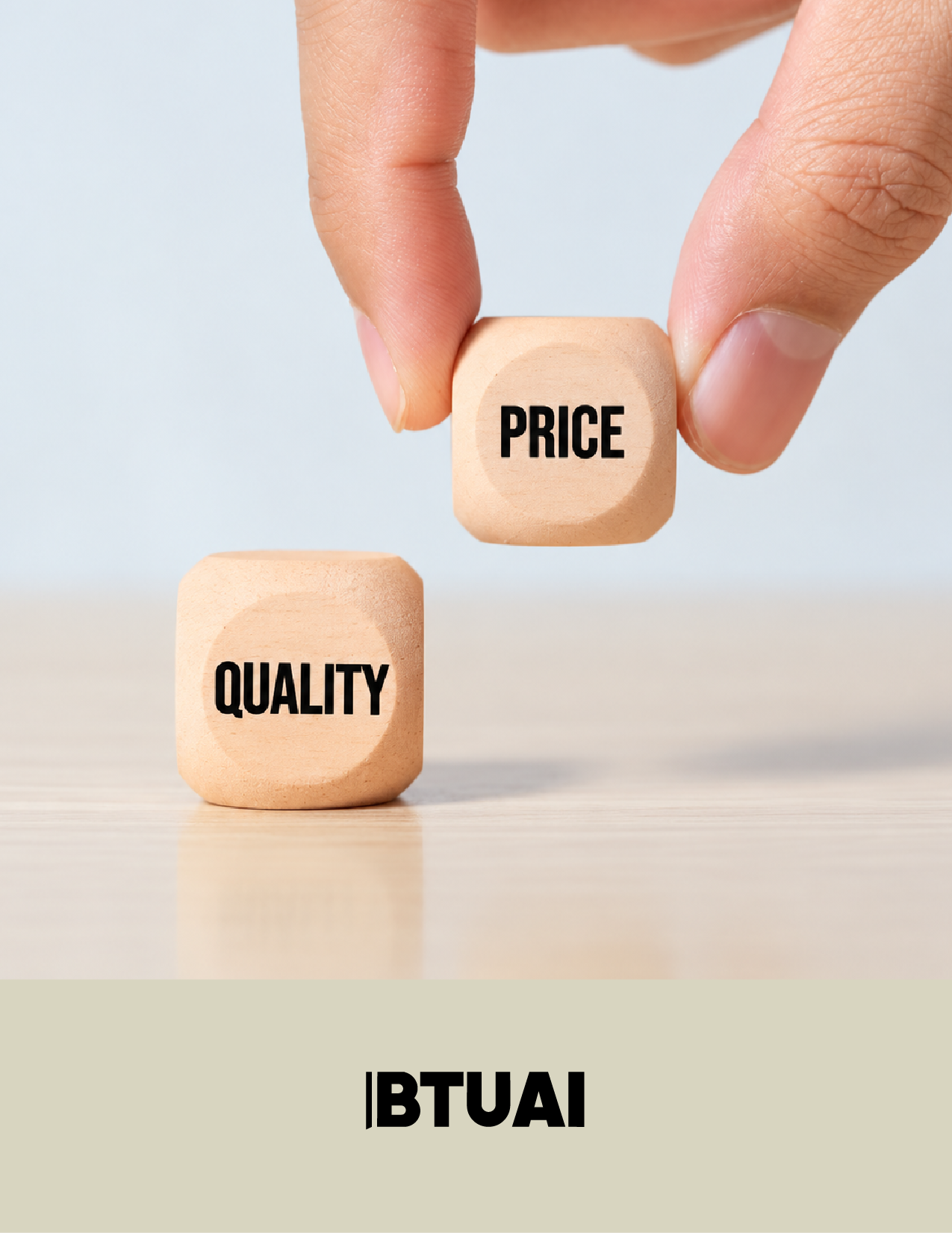
In the first quarter of 2026, Georgia’s real GDP increased by 9.0%. At current prices, GDP reached GEL 24.77 billion, while GDP per capita stood at GEL 6,286, or USD 2,329. This is a strong figure and shows that economic activity continues at a high pace. But GDP growth alone does not answer the main question: how high-quality is this growth?
The quality of economic growth means not only how much the economy expanded, but also which sectors are driving that growth, how much local value is being created, how diversified exports are, whether import dependence is declining and how broadly the benefits are distributed across businesses, regions, households and jobs.
The 2026 data show that Georgia’s main growth momentum comes from services, the digital sector, transport, finance and trade. Real growth in information and communication was 36.0%, in transport and storage 18.0%, and in financial and insurance activities 11.7%. At the same time, agriculture declined by 3.3%, while construction declined by 2.0%. This shows that the economy is growing overall, but growth engine is not distributed evenly across sectors.
External trade also presents a mixed picture. In January-May 2026, trade turnover reached USD 10.44 billion. Exports increased by 19.8% to USD 3.11 billion, while imports declined by 1.9% to USD 7.33 billion. However, the trade deficit remained high at USD 4.22 billion, equal to 40.5% of total trade turnover. This means that despite growth, Georgia still imports far more goods than it exports.
BTU researchers assess that 9% growth is a good result for Georgia, but it cannot be a sufficient policy objective. The next stage should focus on the quality of growth: more local value, more diversified exports, lower vulnerability, more productive businesses, regional inclusion and stronger sectors that create long-term competitiveness.
GDP growth is the most visible indicator of the economy. When an economy grows by 9%, it means that more goods and services are being produced, more economic activity is taking place, more transactions are happening and the system is maintaining a rapid pace. But GDP is a measure of volume, not always a measure of quality.
Two countries can grow at the same rate and still have very different economic realities. In one case, growth may come from productivity gains, technology services, export diversification, local production and high-quality jobs. In another case, growth may come from imports, re-exports, temporary price effects, a construction cycle, tourism flows or rapid but vulnerable expansion in a few sectors. GDP increases in both cases, but the quality of the economy is different.
The main value of Georgia’s 2026 data is that they allow us to look inside the growth. On the one hand, there is a strong macroeconomic indicator – 9.0% real growth. On the other hand, there is the question of how strong the foundation of that growth is.
Sectoral data show that the fastest-growing parts of Georgia’s economy are linked to services, transportation, finance and digital infrastructure. Information and communication grew by 36.0% and accounted for 10.4% of GDP. This is especially important because ICT is no longer only a “future sector” – it is already one of the major components of the economy.
If this growth does not remain concentrated in a few large companies and helps broader business productivity, ICT can become one of the main instruments for improving the quality of growth. Digital systems, data analytics, AI-enabled management, e-commerce, cybersecurity, logistics software and consumer-behavior analysis can support small and medium-sized businesses, exporters and local producers.
The 18.0% growth in transport and storage is a second important signal. For Georgia, logistics should not be only about moving cargo. If the country plays only the role of a corridor, the value will remain limited. But if transport is complemented by warehousing, certification, quality control, digital tracking, insurance, customs analytics, regional distribution and light processing, logistics can become a high-value economic platform.
Trade remains the largest sector. In Q1 2026, wholesale and retail trade and repair of motor vehicles and motorcycles accounted for 13.2% of GDP. This shows that goods movement, domestic consumption, imports and re-exports remain one of the main pillars of Georgia’s economy. But from the perspective of growth quality, this is a mixed signal: trade is necessary, but if the economy is mainly based on importing and reselling, local value remains limited.
This is why trade data must be included when assessing 9% GDP growth. In January-May 2026, export growth of 19.8% was positive, especially while imports declined by 1.9%. But the trade deficit was USD 4.22 billion. This means the economy still operates with high import dependence.
Imports are not a problem by themselves. For a small open economy, imports are necessary for technology, production components, vehicles, energy resources, medical goods and consumer choice. The problem begins when the economy cannot use imports to create local value. A good economic model turns imports into knowledge, technology, components, competitive pressure and production renewal. A weaker model leaves imports only as consumption and resale.
This is why local export data are especially important. In January-May 2026, local exports increased by 66.1% and reached USD 1.93 billion. Their share in total exports rose to 62.1%. This is one of the strongest signals that the weight of local value inside exports increased.
But the quality of growth also requires looking at the content. The leading local export category was petroleum and petroleum products at USD 352.2 million, followed by precious-metal ores and concentrates, ferroalloys, copper ores and other commodity groups. This means that a large part of local export growth still comes from raw materials, resources or semi-processed goods.
This is not negative, but it is not enough. The quality of Georgia’s growth will improve when local exports rely more on processed food, quality beverages, packaging, light manufacturing, local FMCG brands, agrotechnology services, logistics services, IT, business-process services and knowledge-based products.
The quality of growth also means how broadly the benefits are distributed. If the economy grows only in a few large cities, a few large companies or a few sectors, the social and regional effect remains limited. If growth supports small and medium-sized businesses, regional production, professional education, employment for women and young people, export-oriented small companies and technologically upgraded agriculture, growth becomes deeper and more sustainable.
The 2026 data show that Georgia has a strong starting position, but also clear tasks. The country needs not only to maintain growth, but to convert it into productivity. It needs not only export growth, but export diversification. It needs not only a larger logistics role, but logistics value creation. It needs not only rapid ICT growth, but the integration of ICT into the rest of the economy.
BTU researchers assess that Georgia’s next economic stage will depend on this difference: whether the country remains a high-growth but highly vulnerable economy, or becomes a more productive, diversified and locally value-based economy.
Key findings
Georgia’s 9.0% real GDP growth in Q1 2026 is a strong indicator, but it shows only the size of economic expansion, not the quality of growth. To assess quality, sectoral structure, external trade, local exports, productivity and vulnerability must be viewed together.
The strongest growth in Georgia’s economy is visible in information and communication, transport, finance and services. This is a positive signal because these sectors can become pillars of a higher-value economy. However, declines in agriculture and construction show that growth is not distributed evenly across all sectors.
In external trade, export growth and import decline are positive dynamics, but the high trade deficit shows that the country still operates with strong import dependence. This increases sensitivity to external shocks, price changes and logistics disruptions.
The 66.1% increase in local exports is one of the most important structural signals. However, concentration in petroleum products, ores and other commodity groups means that Georgia still needs deeper export diversification and stronger higher-value activities.
Data and evidence base
In Q1 2026, Georgia’s GDP at current prices reached GEL 24.77 billion, while real GDP growth was 9.0%. The GDP deflator changed by 2.3%.
By sector, information and communication grew by 36.0%, transport and storage by 18.0%, arts, entertainment and recreation by 14.5%, healthcare and social services by 12.6%, accommodation and food services by 12.4%, and financial and insurance activities by 11.7%. Agriculture declined by 3.3%, while construction declined by 2.0%.
In January-May 2026, external trade turnover reached USD 10.44 billion. Exports amounted to USD 3.11 billion, imports to USD 7.33 billion, and the trade deficit to USD 4.22 billion. Exports increased by 19.8%, while imports declined by 1.9%.
Local exports reached USD 1.93 billion, increased by 66.1%, and accounted for 62.1% of total exports.
Why this matters for Georgia
For Georgia, the main challenge is no longer only rapid growth. Rapid growth gives the country space, resources and opportunity. But if this growth does not foster productive companies, stronger local exports, regional development, better jobs and knowledge-based businesses, its effect will remain limited.
The quality of growth also matters for households. If growth is high but local production remains weak, the country remains dependent on import prices. If growth is high but new jobs are mostly in low-productivity areas, income growth may not be sufficiently sustainable. If growth is high but exports depend on a few products, an external shock can quickly affect the economy.
Georgia’s primary task is to use high growth to deepen the economy. This means creating more local value, diversifying exports, strengthening production and services in regions, connecting ICT with traditional sectors and moving logistics toward higher-value services.
BTUAI assessment
BTUAI assesses that Georgia’s 9% growth in 2026 is a strong result, but not a complete measure of economic success. The real measure will be whether this growth becomes productivity, local value, export diversification, quality jobs and a less vulnerable economic structure.
The main question for Georgia today is how to maintain growth without leaving it only as a quantitative indicator. The answer is to change and deepen the sources of growth. The country should use rapid ICT growth, rising logistics activity and the jump in local exports as a foundation for a higher-value economy.
BTUAI assesses that high-quality economic growth does not mean that every sector grows at the same rate. It means that, as a result of growth, the country becomes more productive, more diversified and more resilient. The 2026 data show that such an opportunity exists. The next task is to turn that opportunity into strategy.
Article identification
Title: The Quality of Georgia’s Economic Growth: Why 9% GDP Expansion Is Not Enough
Platform: BTUAI.ge
Country: Georgia
Topic: quality of economic growth, GDP, productivity, external trade, local exports
Period: Q1 2026; January-May 2026
Languages: Georgian and English
Methodology
This article was prepared through an analytical reading of Georgia’s official 2026 economic data. It uses Q1 2026 GDP data, January-May 2026 external trade indicators and local export data. The analysis assesses not only the pace of economic growth, but also the sources of growth, sectoral balance, trade sustainability, local value creation and the quality of the economic model.
Limitations
This material is analytical and educational in nature. It does not constitute financial, investment, legal or tax advice. Before making a specific decision, consultation with a relevant specialist is recommended.
The data used are preliminary and may be revised. Quarterly GDP data may be revised after annual data are received. External trade data do not include undeclared or unorganized trade and commodity flows that are not covered by external trade statistics under international methodology.
Sources
National Statistics Office of Georgia – Gross Domestic Product of Georgia, Q1 2026.
National Statistics Office of Georgia – External Merchandise Trade of Georgia, January-May 2026.
National Statistics Office of Georgia – Local Exports of Georgia, January-May 2026.
BTUAI Research Team – analytical processing and interpretation in Georgia’s context.
FAQ
Why is 9% GDP growth not enough?
Because GDP growth shows the expansion of the economy, but does not fully show how sustainable growth is, how diversified exports are and how much local value is created.
What is the quality of economic growth?
It means which sectors drive growth, how productive businesses are, how strong local exports are, how broadly benefits are distributed and how resilient the economy is to external shocks.
What is the strongest signal in 2026?
The strongest signals are rapid ICT growth, stronger transport and the 66.1% increase in local exports.
What is the main risk?
The main risk is that high growth remains dependent on a few sectors, imports, re-exports or resource-based exports.
What should business do?
Businesses should improve productivity, quality, data use, export capacity, services and local value creation.
Keywords
Georgia GDP 2026; quality of growth Georgia; economic growth Georgia; local exports Georgia; trade deficit Georgia; productivity Georgia; ICT Georgia; transport and logistics Georgia; local value creation; BTUAI; Business and Technology University.
Citation format
BTUAI Research Team. “The Quality of Georgia’s Economic Growth: Why 9% GDP Expansion Is Not Enough.” Business and Technology University, BTUAI.ge, 2026.
Authorship and BTUAI standard footer
Prepared by the academic team of Business and Technology University and the BTUAI Research Team.
Tbilisi, Georgia
BTUAI is an analytical platform of Business and Technology University that studies the impact of artificial intelligence, digital transformation, innovation, startup ecosystems, data analytics and emerging technologies on business, the economy, education and society. BTUAI materials are designed to explain complex technological and economic changes in a clear, reliable and Georgia-focused way.