




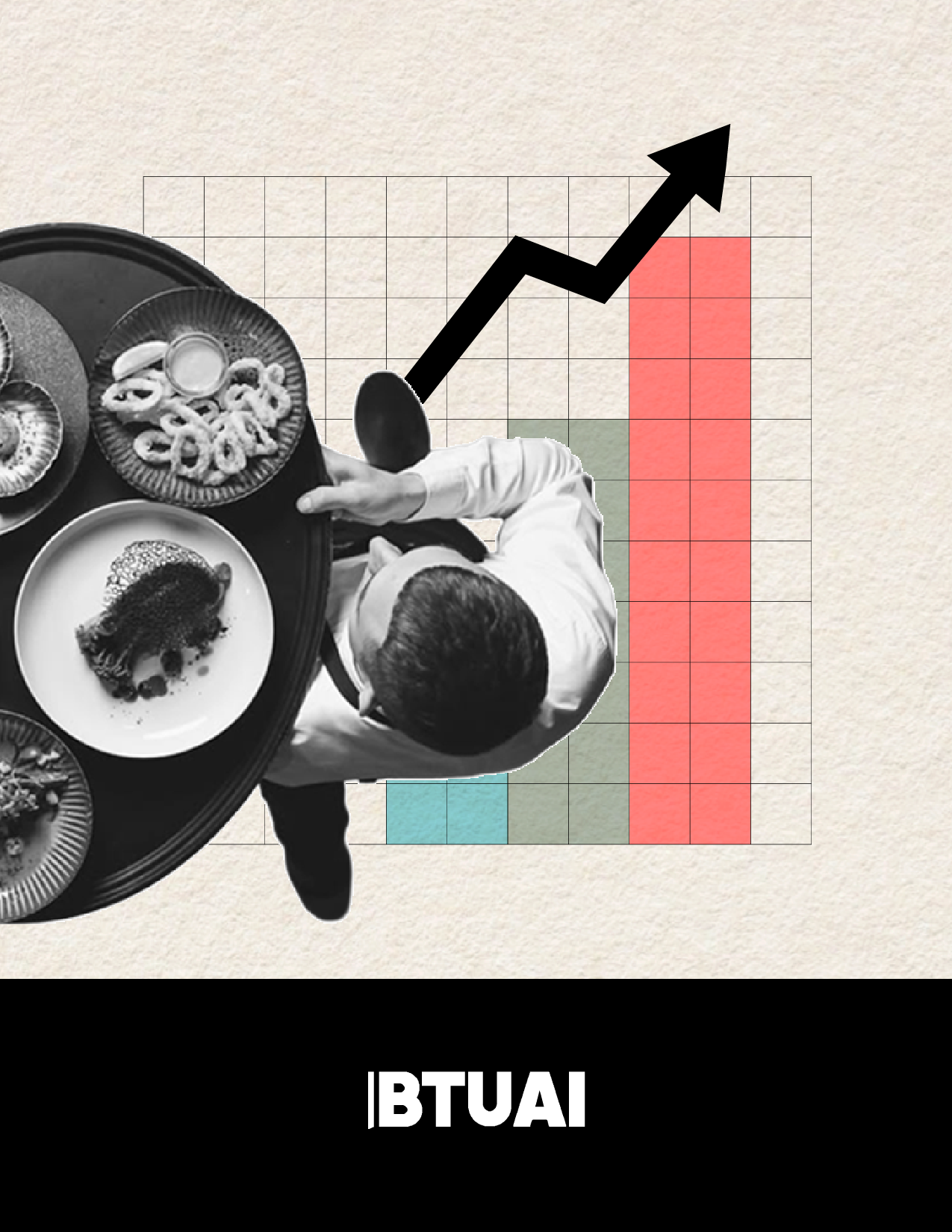
In Georgia’s May 2026 price data, several service categories became clearly more expensive. According to the Harmonised Consumer Price Index, restaurants and accommodation services increased by 4.8% year-on-year. Within this area, food and beverage serving services increased by 7.5%, while accommodation services increased by 3.7% month-on-month. Cultural services are also notable, with annual growth of 13.6%.
These figures create a dual picture for tourism and the service economy. On the one hand, price growth may be connected to the return of demand, stronger tourism activity, seasonal effects and the revival of the service sector. On the other hand, more expensive services are another source of rising living costs for households, visitors and businesses.
For tourism, this topic is especially important. If accommodation, food and cultural services become more expensive, this may indicate that demand is returning. But if prices rise faster than quality, Georgia may face a competitiveness problem – both for local consumers and foreign visitors.
BTU researchers assess that service price growth should be read not only as part of inflation, but also as a test of the quality of Georgia’s tourism and service economy. The key question for Georgia is this: are services becoming more expensive because the sector is strengthening and quality is improving, or because costs, seasonality and limited supply are putting pressure on prices?
When service prices reveal the mood of the economy
Service prices often reflect the internal mood of the economy. When restaurants, hotels, accommodation facilities, cultural services and leisure-related services become more expensive, it may mean that demand is increasing. People travel more, visitors return, consumption becomes more active in cities and regions, events are held and service businesses become busier.
But higher service prices are not always only good news. If prices rise because businesses are struggling with energy, rent, food, labor, transport and seasonal demand pressures, then the increase becomes an inflationary issue.
This is why restaurant, accommodation and cultural service prices should be read on two levels: as a possible sign of returning tourism momentum and as a sign of cost vulnerability in the service economy.
What happened in May 2026
In May 2026, restaurant and accommodation services increased by 4.8% year-on-year. This means that costs related to restaurants, hotels, guesthouses, apartments and similar services were higher than in May of the previous year.
Food and beverage serving services increased by 7.5% year-on-year. This is especially important because food services affect both everyday consumption and the tourism experience. Restaurants, cafés, food service businesses, delivery services and the culinary part of hospitality are among the most visible elements of tourism.
Accommodation services increased by 3.7% month-on-month in May. This may be linked to seasonal demand, as tourism activity usually increases toward the end of spring and before summer. However, such monthly growth also shows that accommodation prices can react quickly to demand in a short period.
Cultural services increased by 13.6% year-on-year. This is another important sign because cultural services – events, cultural spaces, performances, recreation and experience-based services – are connected to higher-value tourism.
Service inflation is different
Goods prices often depend on global markets, logistics, raw material prices and imports. Service prices are more closely linked to local costs: wages, rent, energy, food, transport, demand, seasonality and human capital.
This is why service inflation is often more persistent. If a restaurant faces higher rent, energy costs, food prices and staff expenses, reducing prices the following month is not easy. The same applies to hotels: energy, maintenance, staff, online platform commissions, bank costs and seasonal demand all enter final prices.
Unlike some goods prices, service prices often decline more slowly. Therefore, price growth in this category can become a more persistent source of inflation.
Is tourism momentum returning?
Higher prices for restaurants, accommodation and cultural services may be interpreted as a sign that tourism momentum is returning. If hotels and accommodation providers set higher prices, this often means demand is increasing or businesses expect seasonal load. If food service prices rise, this may be connected to stronger tourism and local consumption. If cultural services become more expensive, this may point to growth in the experience economy.
But tourism recovery should not be assessed only through price growth. Other critical questions must be addressed: Are visitor numbers increasing? Are overnight stays rising? Is spending per visitor increasing? Is service quality improving? Are benefits reaching the regions? Is the growth seasonal or more sustainable?
Price is only one signal. Real strengthening of tourism is visible when price growth aligns with improvements in quality, occupancy, income, employment and regional benefits.
Price and quality – the main balance in tourism
For tourism, price growth is not automatically negative. If prices rise because services are better, hotels are higher quality, food is more diverse, cultural offerings are stronger and customer experience improves, then higher prices may indicate higher value.
The problem begins when prices rise without quality improvement. In that case, consumers – local and foreign – start comparing: is the experience worth the price? If the answer is no, tourism competitiveness weakens.
This is especially important for Georgia. The country should no longer be only a low-cost destination. But becoming a higher-value destination requires high quality: service, cleanliness, safety, professional staff, digital convenience, good transport, cultural offerings and local authenticity.
Restaurants and food: everyday inflation and tourism experience
The 7.5% annual increase in food and beverage serving services affects two groups at the same time – local consumers and visitors.
For local households, restaurants, cafés and food delivery are often everyday or periodic expenses. Price growth means eating out becomes more expensive and households may reduce consumption.
For tourists, food is part of the experience. Georgian cuisine is one of the country’s strongest tourism assets. If food services become more expensive but quality, service and experience are high, this may be viewed as higher tourism value. If prices rise while the experience does not improve, it creates dissatisfaction.
Food service inflation is therefore directly connected to Georgia’s tourism brand.
The 3.7% monthly rise in accommodation – seasonal signal or market pressure?
The 3.7% monthly rise in accommodation services in May is notable. Monthly growth shows short-term price movement. May comes before the main tourism season, so an increase in accommodation prices is partly natural.
Still, such growth needs observation. If prices rise quickly at the beginning of the season, this may indicate high demand, limited supply or rising costs. If accommodation becomes too expensive too quickly, especially in the regions, tourism affordability may decline.
For Georgia, the accommodation market is strategic. Hotels, guesthouses, apartments and regional accommodation facilities directly determine how widely tourism benefits are distributed across the country.
Cultural services: the higher-value part of tourism
The 13.6% annual increase in cultural services is especially interesting. Cultural services represent the part of tourism that turns a country not only into a place to visit, but into a space of experience.
Museums, concerts, festivals, theatre, exhibitions, cultural tours, wine and gastronomic events and creative spaces all increase the quality of tourism.
If cultural services become more expensive because of stronger demand, better offerings and higher quality, this can be a positive sign. But if the increase is linked to higher costs and limited supply, then cultural economy support, infrastructure and regional expansion become necessary.
Cultural tourism is one of Georgia’s strong directions, but it should not strengthen only through prices. It needs quality products, organization, international marketing and regional cultural centers.
Vulnerability to external shocks
Tourism and the service economy are especially sensitive to external shocks. These may include perceptions of regional security, fewer flights, higher fuel prices, lower incomes in key tourist markets, exchange-rate movements, climate factors or international media sentiment.
If service prices are already rising, an external shock may quickly reduce demand. For example, if accommodation and food become more expensive while visitor income or confidence weakens, tourists may choose alternative destinations.
This is why the tourism economy should be not only growing, but resilient. Resilience means diversified markets, offers across different seasons, development of domestic tourism, quality regional services and the right balance between price and quality.
Where the opportunity is
Several opportunities are visible for Georgia in the rise of service prices.
The first is higher-value tourism. If service prices rise together with quality, the country can move toward a higher-value tourism model.
The second is regional tourism. Development of accommodation, food and cultural services in the regions can distribute tourism benefits more widely.
The third is the cultural economy. Growth in cultural services can become a foundation for strengthening the creative economy and tourism experience.
The fourth is professional talent. Service quality depends directly on people. Georgia needs cooks, managers, guides, hotel administrators, event organizers, digital marketers and service professionals.
The fifth is digital tourism. Online booking, data-based pricing, AI recommendations, multilingual services and customer analytics increase sector productivity.
Where the risks are
The main risk is a mismatch between price and quality. If services become more expensive but the experience does not improve, consumers will be dissatisfied.
The second risk is seasonality. If price growth is concentrated in a few months, businesses may depend on short-term income while employment remains unstable.
The third risk is pushing out local consumers. If restaurants, cultural services and accommodation become too expensive too quickly, these services become less accessible for local residents.
The fourth risk is vulnerability to external shocks. Tourism reacts quickly to international conditions, flights, security perceptions and income changes.
The fifth risk is regional inequality. If tourism benefits accumulate only in a few cities, the service economy cannot support broad national development.
What Georgia should consider
To read this data correctly, several questions are necessary:
Is price growth linked to stronger demand or higher costs?
Is service quality improving together with prices?
Is the monthly increase in accommodation seasonal or a broader market pressure?
How accessible are services for local consumers?
Are tourism benefits increasing in the regions?
What role do cultural services play in developing higher-value tourism?
How much does the sector use digital tools?
How prepared is tourism for external shocks?
The answers to these questions will determine whether service price growth is a sign of healthy tourism momentum or an inflationary and competitiveness risk.
Why this matters for Georgia
Tourism and services are sectors with rapid economic impact for Georgia. They create jobs, regional opportunities, small business income and international visibility for the country. But precisely because of their importance, service price growth requires special attention.
If services become more expensive and quality also improves, Georgia can move toward a higher-value tourism model. If services become more expensive without quality improvement, this may become a competitiveness problem.
Therefore, the May 2026 data is not only an inflation story. It is a question about the future of Georgia’s tourism: does the country want more visitors at lower prices, or higher-quality services, more value per visitor and a more sustainable service economy?
BTUAI assessment
BTUAI assesses that the May 2026 increase in restaurant, accommodation and cultural service prices is an important signal for the service economy. The 4.8% annual increase in restaurants and accommodation services, the 7.5% increase in food and beverage serving services, the 13.6% increase in cultural services and the 3.7% monthly increase in accommodation indicate that prices connected to tourism and experience-based services are moving actively.
BTU researchers assess that this may be a sign of returning tourism momentum, but it will become a positive long-term trend only if price growth aligns with improvements in service quality, regional offerings, cultural products, digital services and professional talent.
The main conclusion is this: services are becoming more expensive, which may reflect stronger tourism activity, but Georgia’s main task is to turn price growth not only into revenue, but into a high-quality, competitive and shock-resilient service economy.
Key findings
- In May 2026, restaurants and accommodation services increased by 4.8% year-on-year.
- Food and beverage serving services increased by 7.5% year-on-year.
- Cultural services increased by 13.6% year-on-year.
- Accommodation services increased by 3.7% month-on-month in May.
- Higher service prices may indicate returning tourism momentum.
- Price growth is positive only if it is accompanied by improved service quality.
- Tourism and services remain vulnerable to external shocks, seasonality, flights, income changes and security perceptions.
- Georgia’s main task is to build a high-value, regionally balanced and digitally developed service economy.
Data snapshot
Restaurants and accommodation services – May, annual increase: 4.8%.
Food and beverage serving services – May, annual increase: 7.5%.
Cultural services – May, annual increase: 13.6%.
Accommodation services – May, monthly increase: 3.7%.
Overall Harmonised Consumer Price Index – May, annual increase: 5.4%.
Transport – May, annual increase: 14.7%.
Housing, water, electricity, gas and other fuels – May, annual increase: 6.8%.
Methodology
This report was prepared as part of BTUAI Research. The analysis is based on demographic, regional, economic and behavioral data, as well as general trends observed in publicly available sources. The materials are processed using analytical methods applied by BTU researchers, with the support of BTUAI.
The purpose of the research is not to provide personal assessments, but to identify broader trends and practical directions for business, education and society.
In this specific material, May 2026 Harmonised Consumer Price Index data is analyzed for restaurants and accommodation services, food and beverage serving services, accommodation services and cultural services. The analysis assesses price changes in the context of tourism momentum, service quality, seasonality, vulnerability to external shocks and the resilience of Georgia’s service economy.
Limitations
This material is analytical and educational in nature. It does not constitute financial, investment, legal, tax or individual business decision-making advice. Before making specific decisions, consultation with a relevant specialist is required.
The data reflects price dynamics for a specific period and is not sufficient to determine a long-term trend in tourism or the service economy. Sustainable conclusions require additional analysis of tourist flows, overnight stays, regional distribution, service quality, visitor spending and seasonality.
The Harmonised Consumer Price Index shows average price dynamics, but does not reflect the individual spending experience of every consumer, business or tourism segment.
Sources
May 2026 Harmonised Consumer Price Index data published by the National Statistics Office of Georgia.
BTUAI analytical processing for the context of service prices, tourism, restaurants and accommodation, cultural services, seasonality, external shocks and Georgia’s service economy.
Frequently asked questions
Does higher service pricing mean tourism has returned?
It may be a sign of returning tourism momentum, but a final conclusion requires additional analysis of visitor numbers, overnight stays, regional distribution and service quality.
Why is the 3.7% monthly increase in accommodation important?
Because monthly growth shows rapid short-term price movement. In May, this may be linked to the approaching season, stronger demand or limited supply.
Why is the 13.6% increase in cultural services notable?
Cultural services are part of higher-value tourism. Their price growth may indicate stronger demand, but it is important that quality also rises.
What is the main risk?
The main risk is a mismatch between price and quality. If services become more expensive but the experience does not improve, Georgia may lose tourism competitiveness.
What should Georgia do?
Georgia should strengthen service quality, professional talent, regional tourism, the cultural economy, digital services and ways to reduce seasonality.
Keywords
service inflation Georgia; tourism in Georgia; restaurants; accommodation services; cultural services; service economy; Harmonised Consumer Price Index; tourism momentum; seasonality; high-value tourism; regional tourism; digital tourism; BTUAI; Business and Technology University; tourism services; hospitality.
Citation format
BTUAI Research Team. “Services Are Becoming More Expensive – Is Tourism Momentum Returning in Georgia?” Business and Technology University, BTUAI.ge, 2026.
Prepared by the academic team of Business and Technology University and the BTUAI Research Team.
Tbilisi, Georgia
BTUAI is an analytical platform of Business and Technology University that studies the impact of artificial intelligence, digital transformation, innovation, startup ecosystems, data analytics and emerging technologies on business, the economy, education and society. BTUAI materials are designed to explain complex technological and economic changes in a clear, reliable and Georgia-focused way.