
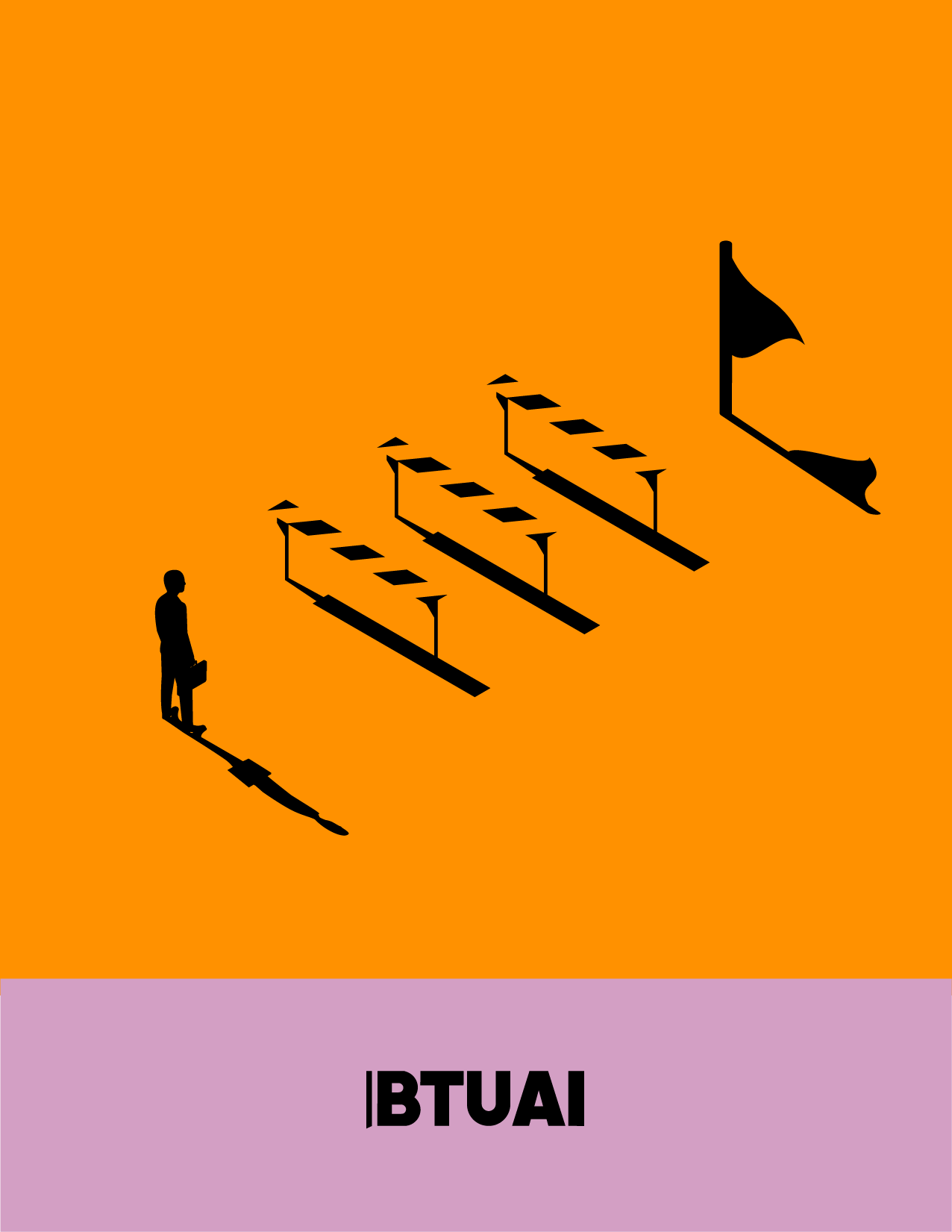




Georgia’s labour-market challenge is not a simple shortage of people. The country can simultaneously have relatively high unemployment and employers that cannot fill particular roles. In Q2 2026, Geostat reported a labour force of 1.584 million people, 1.365 million employed people and 219,100 unemployed people, with an unemployment rate of 13.8%. At the same time, Georgia’s 2025 establishment skills survey portal reports 10,106 existing vacancies and 1,373 unfilled vacancies. This combination points to mismatch: skills, location, working conditions and the type of labour demanded do not always line up with available workers.
AI can matter in this environment, but not mainly as a digital substitute for entire employees. Its more realistic role is to raise output per worker, reduce routine workload, speed decisions and allow small teams to perform a volume of work that previously required more people.
A case described in The Washington Post on September 5, 2026 illustrates the distinction. Virginia faces a shrinking labour supply while investment in AI and the data centres supporting it is expected to improve productivity. Yet the same forecast still points to job losses. The lesson for Georgia is clear: AI can reduce the economic cost of labour scarcity, but it cannot erase demographic, education and sector-specific constraints.
| Signal | Period | Indicator | Why it matters |
| Unemployment | Q2 2026 | 219.1k; 13.8% | Aggregate slack remains substantial |
| Skills-demand survey | 2025 | 10,106 existing; 1,373 unfilled | Vacancies coexist with unemployment |
| Georgia ICT sector | Q2 2026 | 53.0k employed vs 49.8k in Q2 2025 | Technology employment rose; causality not claimed |
| ILO global GenAI evidence | 2025 | ≈1 in 4 jobs with some exposure | Transformation more likely than full replacement |
Why Georgia can have unemployment and labour shortages at the same time
A 13.8% unemployment rate may appear inconsistent with talk of labour shortages. It is not. A company may need a technician, driver, programmer, cook or sales specialist in a particular region and with specific skills, while an unemployed person may have a different occupational background, experience level or location.
Georgia’s establishment skills survey is designed to capture precisely these gaps. The 2025 portal reports 10,106 existing vacancies, including 1,373 that remained unfilled. Employers responding to skill problems report measures ranging from hiring new qualified staff to additional training and changing work practices. Labour scarcity is therefore partly organisational and skills-based, not only demographic.
AI’s strongest contribution is to reduce demand for particular hours and tasks inside a job rather than eliminate the occupation itself.
AI changes the mix of tasks before it replaces the worker
The ILO’s 2025 global assessment finds that roughly one in four jobs has some degree of exposure to generative AI, but job transformation is more likely than wholesale redundancy. Almost every occupation still contains tasks that require human input.
For Georgia, this is the relevant mechanism. When a company cannot find enough workers, it has two broad choices: find more people or generate more output from the people it already has. AI strengthens the second option.
In administration, AI can accelerate correspondence, reporting, document processing, research and first-pass analysis. In sales, it can help qualify leads and prepare offers. In logistics, it can support routing and demand forecasting. In manufacturing, it can assist quality control and diagnostics. In hotels, it can accelerate bookings, communications and back-office work. Physical execution, accountability, relationships and complex judgement still remain human responsibilities.
| Area | Support function | AI use | Capacity effect |
| 1 | Finance / accounting | Invoices, reconciliation support, reporting drafts | One employee handles more back-office volume |
| 2 | Marketing / sales | Content, market research, campaign drafts | Higher output without a full separate team |
| 3 | HR | Vacancy drafts, CV summaries, onboarding | Faster screening; human approval retained |
| 4 | Legal / admin | Forms, contracts, document search | Less repetitive document work |
| 5 | Customer support | FAQ, translation, first response | 24/7 basic support; humans handle exceptions |
Where AI can ease shortages most and least
The impact is strongest where a large share of work is information processing and weaker where work depends on physical presence. In office, finance, administrative, marketing and some technology processes, one worker may be able to carry materially more workload.
The physical economy is different. AI can improve project planning in construction, monitor schedules and materials and reduce paperwork, but it cannot build a structure. In transport, it can optimise routes and predict maintenance but only partly addresses driver shortages. In health and care services, it can reduce documentation and scheduling burdens while the physical and accountable work with patients remains human.
So the statement “AI can fill labour shortages” is accurate only when shortage is understood as a shortage of work-hours and task capacity, not simply a shortage of people.
The biggest effect may be in small companies
Georgia’s business structure is dominated by small firms. They have less capacity to employ separate HR, finance, legal, marketing, analytics and customer-support teams. AI can help one employee handle parts of several support functions and allow a business to scale without increasing headcount in direct proportion to revenue or workload.
This matters when skilled labour becomes expensive or difficult to find. AI is not a free employee: it requires software spending, good data, redesigned processes and oversight. But it gives firms an alternative to making every increase in output depend on an additional hire.
| Work type | AI effect | Typical AI role | Remaining human bottleneck |
| Office / administration | High augmentation | Documents, reporting, research, first-pass analysis | Fewer routine hours per employee |
| Sales / customer service | High augmentation | Lead qualification, offers, multilingual support | More customers per employee |
| Logistics / transport | Medium support | Routing, forecasting, maintenance | Driver/operator shortage only partly eased |
| Construction / manufacturing | Low replacement / medium support | Planning, procurement, diagnostics | Physical execution still dominates |
| Health and care | Low replacement / high support | Documentation, scheduling, decision support | Human judgement and accountability remain essential |
AI can also create new shortages
AI does not only reduce labour demand. It can create demand for new combinations of skills. A company may need fewer hours for drafting text but more expertise in process architecture, data, cybersecurity, AI supervision and quality control.
Geostat reports 53,000 people employed in Georgia’s information and communication sector in Q2 2026, up from 49,800 in Q2 2025. This does not prove AI caused the increase. It does show that the technology sector is not automatically disappearing as AI spreads. A more plausible expectation is changing job composition: some functions contract while others become more valuable.
The U.S. evidence in The Washington Post points in the same direction. AI data-centre investment supported construction employment, while information and finance lost jobs in the August report. The same technology wave can produce opposite labour effects across occupations.
The core risk: labour shortage becomes skills shortage
If technology diffuses faster than workers learn to use it, firms may move from a shortage of people to a shortage of people who can work effectively with AI. That is a harder problem because simply hiring another person is no longer enough. Employers need domain expertise plus AI capability.
Georgia’s reskilling agenda should therefore not be reduced to teaching programming. It will need accountants who can use and verify AI, engineers who can supervise AI-assisted diagnostics, HR specialists who can audit AI-supported decisions, tourism workers who can communicate across markets, and managers who can redesign work between people and machines.
| Priority | Policy area | Practical action | Desired result |
| 5 | Inclusion | Track worker access and regional gaps | Keep productivity gains broad rather than concentrated |
| 1 | Task-level shortage data | Measure bottlenecks inside jobs | Identify where technology actually saves scarce hours |
| 2 | Education integration | Embed tools inside vocational programmes | AI becomes part of occupational competence |
| 3 | SME process redesign | Data rules, human approval, audit | Safe, measurable adoption |
| 4 | Entry-level pipeline | Monitor junior roles and training pipelines | Avoid short-term fix becoming long-term skills gap |
What Georgia should do
First, labour shortages should be measured at task level, not only by occupation. If accountants are scarce, policymakers and employers need to know whether the bottleneck is data entry, tax documentation, analysis or client advice. Only then can AI’s real capacity impact be identified.
Second, AI policy should be linked directly to vocational education. Training a construction technician, logistics operator, nurse, financial specialist or hotel manager should include practical AI tools within the profession rather than a separate theoretical AI course.
Third, SMEs need support for process redesign, not generic AI awareness. They need to know where automation is economically justified, how productivity should be measured, what data must stay out of models and where human approval must remain final.
Fourth, policymakers should monitor whether entry-level roles contract too quickly. If junior work is fully automated, the pipeline that produces future senior specialists can weaken. A short-term response to labour scarcity could then produce a long-term skills shortage.
BTU Researchers’ Assessment
According to an assessment by BTU researchers, AI cannot fully fill Georgia’s labour shortage. It can, however, materially reduce its economic intensity in sectors where scarcity is driven by large volumes of routine, administrative and information-processing work. The strongest model for Georgia is not replacing people with AI, but raising productivity per worker and freeing scarce specialists to focus on higher-value professional work.
In that sense, AI can become a workforce multiplier rather than a workforce substitute. If Georgia uses it only to cut headcount, it may create new problems: weaker entry-level employment, skills polarisation and technological dependence. If AI is connected to vocational education, organisational redesign and productivity growth, producing more economic output with a constrained workforce becomes a realistic opportunity.
Conclusion
Georgia’s labour-market challenge is not only the number of available workers. The country simultaneously has unemployment, unfilled vacancies, skills mismatch and hiring difficulties in specific occupations. AI can ease part of this pressure by reducing routine tasks and expanding the productive capacity of each worker.
But where the economy needs physical presence, hands-on execution, care, accountability and deep professional experience, AI will remain an additional tool rather than a substitute for labour. Georgia’s competitive advantage may therefore come not from deploying the most AI, but from building the most effective human-AI work model – one that makes scarce human time more productive.
Prepared by the academic team of Business and Technology University and the BTUAI Research Team, Tbilisi, Georgia.
Main Sources
- The Washington Post, September 5, 2026.
- National Statistics Office of Georgia Labour Force Indicators, Q2 2026; Activities of Enterprises, Q2 2026.
- Ministry of Economy and Sustainable Development of Georgia — Survey of Business Demand on Skills 2025; Labor Market Analysis, February 2026.
- International Labour Organization – Generative AI and Jobs: A 2025 Update.
- OECD — How Do Structural Trends Affect Labour Shortages and Mismatch?, 2025.