

Key Takeaway
An AI system can write a grammatically plausible sentence in Georgian and still fail to understand friendship, dignity, loyalty, love, duty or self-sacrifice in Georgian cultural context. The new stage of BTU’s Georgian Language Digital Sovereignty Project addresses that gap.
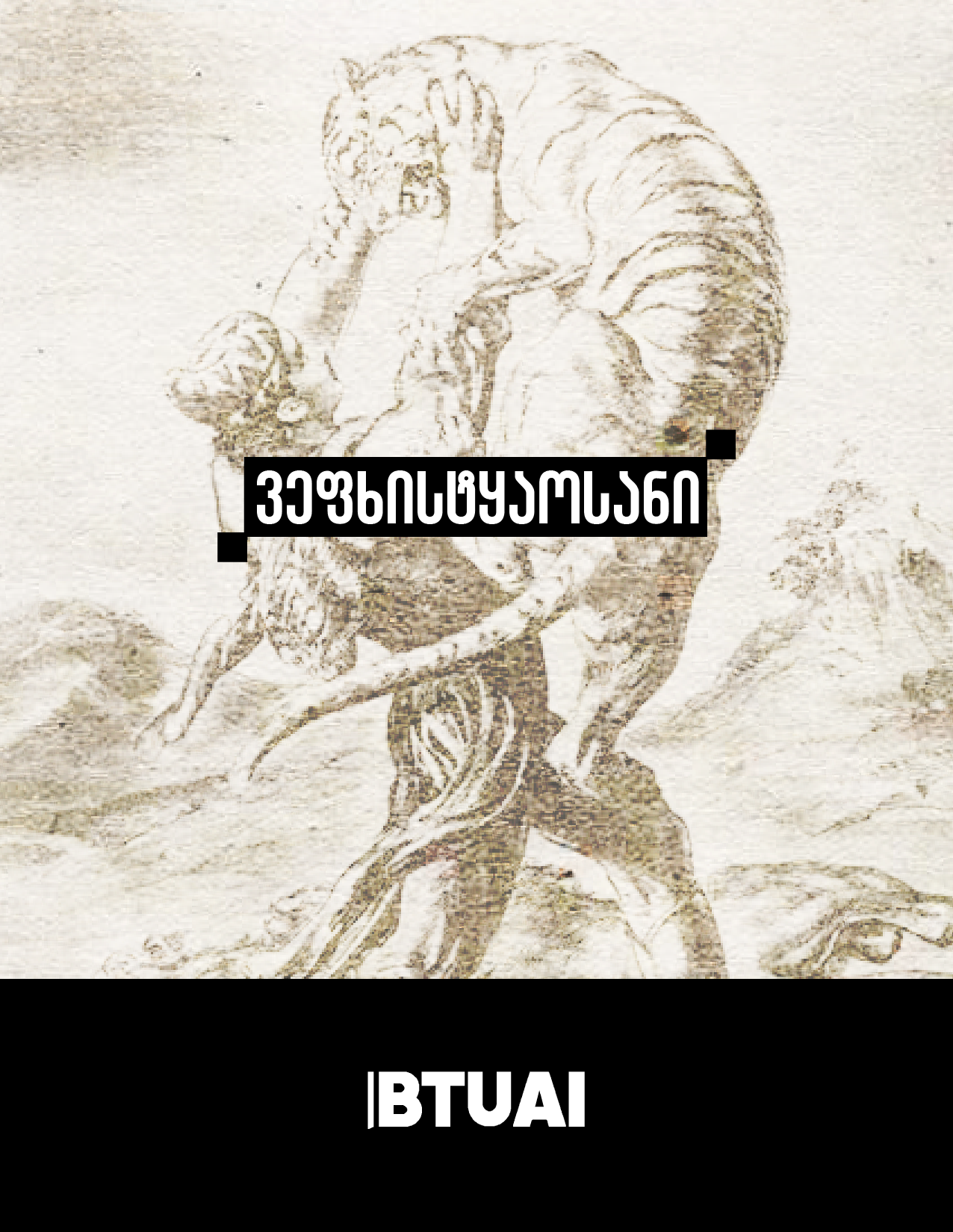
BTU researchers are studying The Knight in the Panther’s Skin not only as a historical literary work, but as an interconnected system of meanings, relationships, choices and values. The goal is for AI to see how concepts relate, how meaning changes with context and what logic drives the actions of the characters.
Knowing Words Is Not the Same as Understanding a Language
A dictionary can define a word, but meaning in real language often emerges from relationships. The same Georgian term may refer to a friend, a loved person or a wider idea of loyalty and responsibility.
AI may translate the word correctly and still lose the meaning created by the scene. The problem is especially difficult in historical poetry, where older usage, metaphor and cultural knowledge are intertwined.
High-quality Georgian language understanding therefore requires more than a large text corpus. It requires a description of how meaning moves from words into action, relationships and values.
Why The Knight in the Panther’s Skin Matters
Rustaveli’s poem is one of the richest semantic spaces in Georgian culture. Friendship, love, justice, loyalty, leadership, freedom, wisdom, courage and compassion are connected through character decisions and shared goals.
The UNESCO Memory of the World description emphasizes that the manuscript collection combines Georgian, Eastern and European cultural traditions and preserves a broad picture of medieval social life.
For AI, the poem is therefore not only a literary monument, but a complex store of cultural meaning.
A Semantic Model in Plain Language
A semantic model is a map of meaning. It describes which concepts appear, how they connect and what changes when the same term appears in a different relationship or situation.
Friendship, for example, is not merely closeness. In the poem it can be connected to loyalty, assistance, sacrifice, equality, keeping one’s word and responsibility in the face of danger.
The digital system must therefore represent the concept and its surrounding network: what causes it, how it appears in action, which values it conflicts with and what consequences follow.
What BTU Researchers Are Describing
The project identifies major concepts, relationships, character goals, causes of action, contextual meanings and the reasoning paths through which the narrative develops.
A single episode can be read at several levels: what happened, why it happened, what the character believed, which value guided the decision and how the action connects to the rest of the poem.
This does not make the text easy for a machine. It creates a research basis for testing whether a system can distinguish these levels.
What Automated Translation Often Loses
Machine translation can preserve factual content while losing emotional force, historical meaning or accumulated cultural associations.
A Georgian concept may require several words in another language, while a foreign term may have no exact Georgian equivalent. A formally correct translation can therefore shift the value centre of the text.
Semantic modelling can help identify what has been lost and whether explanation, context or an alternative formulation is needed.
An Illustrative Example: Friendship as a System of Action
Suppose an AI is asked what friendship means in the poem. Counting the frequency of the word will not provide a complete answer.
The system must see friendship in fulfilled promises, the adoption of another person’s suffering as one’s own concern, long searches, shared danger and the sacrifice of personal comfort.
The concept is explained through a network of recurring actions and choices. Recognizing that network moves AI from summary toward interpretation.
Three Stages: History, Learning and Meaning
The Knight in the Panther’s Skin is the third stage of the project. BTU previously studied the Zosime text as a historical foundation of Georgian and Dedaena as a model of learning from letters to meaning.
The third stage addresses the world of meaning: how language operates inside relationships, moral choice, metaphor, conflict and shared values.
Together, the stages connect historical roots, the path of learning and the deep meanings produced by culture.
Why This Is Digital Sovereignty
If knowledge about Georgian is collected only by global platforms, Georgia has limited influence over which historical meanings and cultural nuances appear in AI systems.
Digital sovereignty does not mean technological isolation. It means creating the local capacity to describe, evaluate and improve how Georgian is represented in global technology.
The semantic model turns one of Georgia’s central cultural texts from a digital archive into a research source of meaning.
What the Model Could Change in Practice
The model may support evaluation of Georgian-language AI: can a system distinguish different senses of a concept, explain a character’s motivation, recognize metaphor or connect related episodes?
It may also help translation and education by making lost semantic links visible and allowing answers to be assessed for understanding rather than factual recall alone.
These applications are plausible research directions, not yet independently demonstrated outcomes.
BTU Researchers’ Assessment
According to BTU researchers, the significance of the project lies in moving from the quantity of text to the quality of meaning.
Georgian-language AI needs not only more sentences, but knowledge of how a word connects to cultural experience, moral choice and other concepts.
The project also shows that cultural heritage is not merely an archive to preserve. A carefully analysed historical text can become a source for evaluating and teaching future systems.
Key Findings
- BTU treats the poem as a knowledge system of Georgian language, thought and values, not only as a literary text.
- The semantic model describes concepts, relationships, contextual meanings, character motivations and the logic of action.
- The project aims to help AI understand Georgian concepts within linguistic and cultural context.
- The poem is the third stage of the Digital Sovereignty Project, after the Zosime text and Dedaena.
- The three stages connect historical foundations, learning pathways and cultural-semantic meaning.
- The model may support AI evaluation, translation, education and contextual understanding.
- The project remains at a research stage and its impact on real AI models requires experimental validation.
Why This Matters for Georgia
The Knight in the Panther’s Skin is one of Georgia’s central cultural texts, and its manuscript collection is listed in UNESCO’s Memory of the World Register.
For a small language, semantic quality cannot depend only on data collected incidentally by global technology companies.
Georgia has an opportunity to provide the global AI ecosystem with structured, locally governed and verifiable knowledge about its language and culture.
Conclusion
AI can read text, but understanding meaning is a harder task. Rustaveli’s poem offers a world in which words connect to actions, actions to values and values to human choice.
BTU’s project makes those connections visible. If they are carefully described and tested, Georgian AI may move from formally correct language toward deeper, contextual and culturally accurate understanding.
Digital language sovereignty begins when technology receives not only Georgian words, but Georgian meanings.
Data and Main Sources
- BTU and Interpressnews – official project information on the semantic model based on The Knight in the Panther’s Skin.
- BTU – official description of the Georgian Language Digital Sovereignty Project.
- UNESCO – manuscript collection of The Knight in the Panther’s Skin in the Memory of the World Register.
- National Parliamentary Library of Georgia – research on terminology, concepts and paradigms in the poem.
- Georgian media-archive analysis – public and cultural context of the project.
This material is analytical and educational. Potential effects on Georgian-language AI are presented as research opportunities rather than demonstrated technological outcomes. Effectiveness requires independent evaluation and testing on real AI systems.
Prepared by the academic team of Business and Technology University and the BTUAI Research Team, Tbilisi, Georgia.