
Main summary
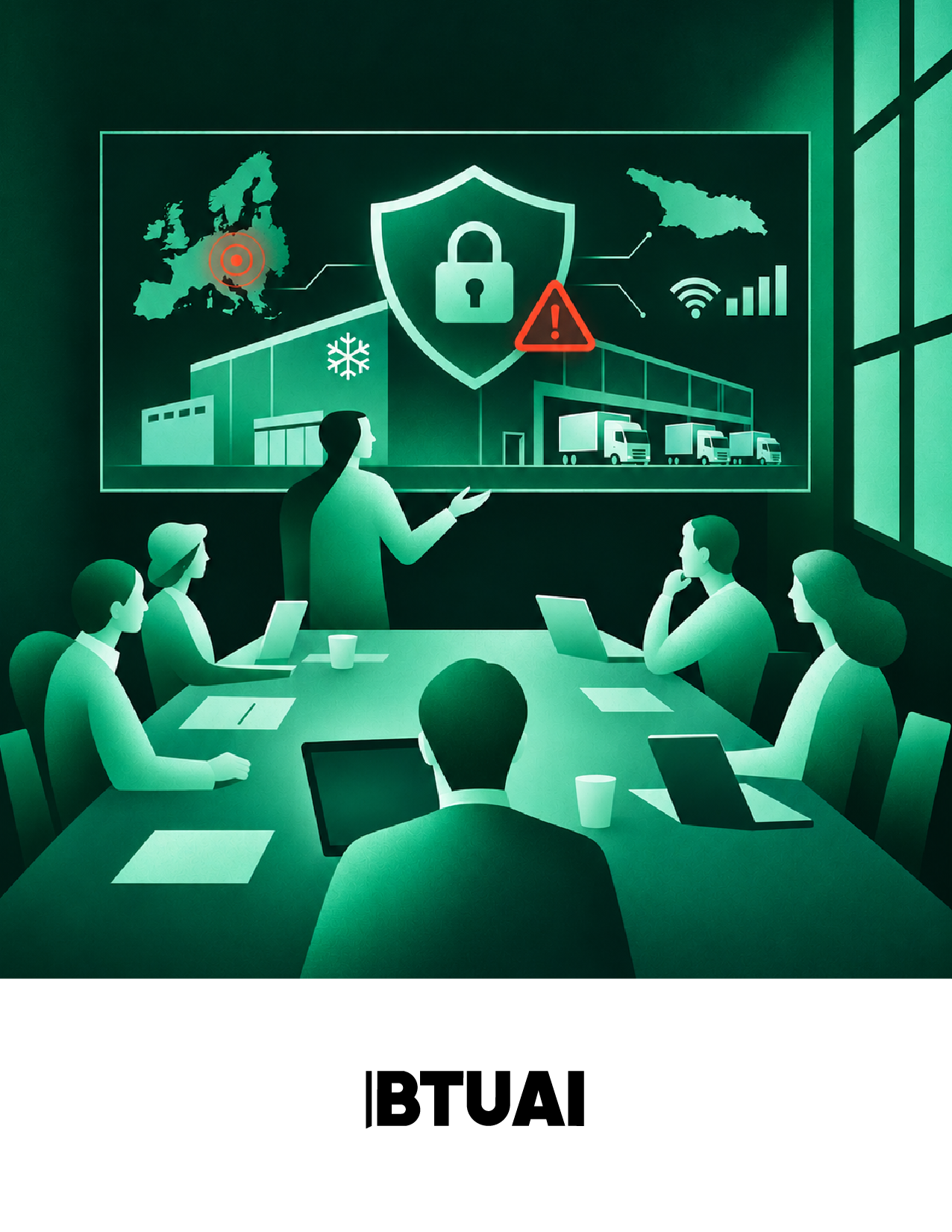
Cyber incidents affecting supermarket refrigeration equipment in several European countries damaged food inventories in early November 2026. A joint statement issued by the European Commission and ENISA on 4 November called for urgent action and international coordination. These events do not establish a continent-wide shortage. For Georgia, the central implication is to protect the cold-storage networks used for imported and domestically produced perishable goods.
Key Takeaways
- Incidents reported on 2 November 2026 affected refrigeration systems at supermarkets across several European markets. The identity of those responsible and the complete technical intrusion path have not been conclusively established.
- Georgia’s food self-sufficiency rates vary widely by product: in 2025 the ratios were 19% for wheat, 47% for meat and 48% for vegetables, according to Geostat. These figures are not estimates of the share imported from Europe.
- For Georgian companies, independent temperature monitoring, controls over remote equipment access and continuity planning are more defensible responses than predictions of an imminent shortage.
Food security is often examined through harvests, trade routes, inventories and consumer prices. The latest European incidents introduce a less obvious consideration: food can already be present in a shop or warehouse yet become unsaleable when the digital systems managing storage conditions fail.
On 2 November, cyber incidents disrupted refrigeration systems serving retail stores in multiple European countries, including Belgium, Sweden and Luxembourg. Some retailers discarded goods after temperature controls malfunctioned. Reports cover affected outlets and groups, rather than a complete accounting of the continent’s food stock. Aggregating the named incidents into a claim about Europe-wide shortages would go beyond the evidence.
The chronology matters. Europe had already reported incidents involving commercial refrigeration equipment from 11 October onwards. On 4 November, the European Commission, ENISA, Europol’s European Cybercrime Centre and European cybersecurity coordination networks issued a joint statement on the new wave of incidents. Official coordination demonstrates the seriousness of the risk, without establishing that a particular group conducted every attack or that all incidents used an identical method.
How refrigeration became a cybersecurity concern
Commercial refrigeration increasingly combines physical equipment with network-connected controllers, monitoring software and third-party maintenance. These connections are useful: companies can inspect temperatures remotely, detect faults earlier and manage distributed sites more efficiently. Yet a weakly secured remote interface can expose operational machinery to disruption.
Reporting on the incident described warnings from equipment suppliers about direct internet access and software maintenance. It remains important not to convert initial reporting into a definitive forensic account. The precise responsibility and full chain of compromise remain subject to investigation.
Connected devices also create a dependency on vendors and maintenance contractors. The same remote tools that reduce travel and enable earlier fault detection can expose equipment if access is poorly governed. An effective response therefore requires both technical containment and food-safety decisions. Restoring a controller does not independently certify that goods exposed to unsuitable temperatures can be sold.
Unlike a conventional data breach, a refrigeration-control incident can change the physical condition of inventory. Food safety, digital security and operational continuity consequently become related management responsibilities. The main question is not merely whether a retailer can restore its computer system, but whether it can detect an unsafe temperature in time and protect or isolate affected products.
What Georgian data do – and do not – show
Geostat’s 2025 food-security indicators record self-sufficiency rates of 19% for wheat, 47% for meat, 48% for vegetables, 68% for milk and dairy products and 98% for eggs. These ratios describe relationships between domestic supply and consumption. They do not identify exact import origins, suppliers, transit routes or the refrigeration conditions applied to each shipment.
| Product group | Georgia self-sufficiency, 2025 |
|---|---|
| Wheat | 19% |
| Meat | 47% |
| Vegetables | 48% |
| Milk and dairy | 68% |
| Eggs | 98% |
These distinctions matter. Import dependence alone is not proof that attacks against European supermarkets have already reduced Georgian supplies. The available reporting does not establish a direct price, inventory or shortage effect in Georgia. Tracing such an impact would require product-level import data, knowledge of the affected suppliers and evidence about stock actually destined for Georgia.
The figures describe distinct product categories, not a single basket of refrigerated imports. Wheat and frozen meat have different storage requirements. Neither the self-sufficiency ratio nor the food-import total alone establishes how much stock is vulnerable to manipulation of temperature controls. The evidence supports a preventive operational review rather than an estimate of market-wide losses.
Nevertheless, the underlying vulnerability is relevant to domestic producers as well as importers. Refrigerated warehouses, transport companies, distributors, grocery chains and smaller shops may all rely on equipment with connected controls. A failure in the local cold chain would affect products regardless of where they were originally produced.
In practice, food may pass through customs facilities, specialised vehicles, distribution warehouses and retail refrigeration before reaching consumers. A disruption can create costs at several points: discarded inventory, delayed replenishment, extra inspection and temporary closure of refrigeration units. Yet the size of those costs is specific to the affected operation; no national loss figure follows automatically from the European reports.
Official self-sufficiency figures help explain the structure of Georgian food supply, but they do not answer the incident-specific question: what happens when food has already been produced or imported and then can no longer be stored under suitable conditions? A disruption at that point need not originate in farming or cross-border trade. Inventory can lose commercial value while still physically present in a shop or warehouse.
The distinction matters for a local operator. Consumer demand may remain unchanged even if one retailer withdraws stock after a temperature incident and a nearby business continues normally. The financial damage could be material for the affected outlet without proving a national shortage.
Why the weakest link may be the shop
A cold chain is a sequence: production or importation, transport, warehousing, distribution and retail display. An interruption at any stage may create financial losses or food-safety concerns, depending on the product, its actual temperature and the duration of the disruption. A blanket assumption that every temperature deviation destroys stock would be as misleading as assuming that none matters.
The practical questions for a Georgian business are specific. Who can access refrigeration controllers remotely? Are the devices directly reachable from the public internet? Which contractor maintains the system? Can an independent alarm identify abnormal temperatures if the central network is compromised? Who has authority to isolate inventory and assess its safe disposition?
A credible financial estimate would need inventory value, product composition, the number of affected units and verified time-temperature exposure. Those data are not available here. Assigning a loss figure to an individual Georgian retailer or estimating a national inflation effect would therefore be speculative.
Warehouses and retail outlets also concentrate risk differently. A warehouse failure may affect goods belonging to several suppliers or destined for many stores. A single-shop failure may remain local while immediately reducing what that shop can offer. Neither outcome can be translated automatically into a nationwide food-security indicator.
There is no verified public count here of Georgian retailers, distributors or food producers using the specific network-connected refrigeration controls associated with the European reports. Without an equipment inventory or systematic audit, the article cannot responsibly assign a percentage vulnerability score to the Georgian market.
From European experience to Georgian decisions
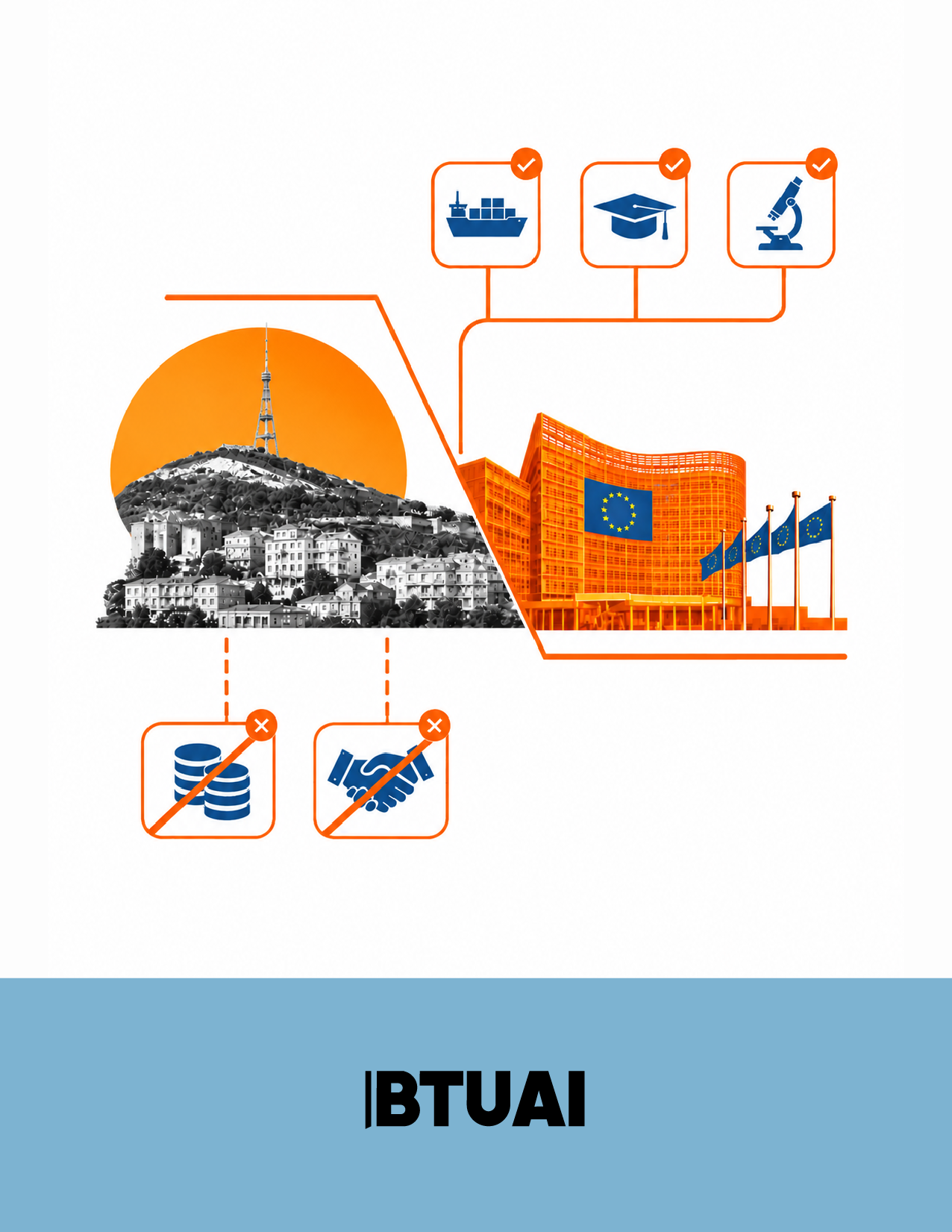
The European Union Agency for Cybersecurity, ENISA, emphasises resilience of critical sectors. Under the EU’s NIS2 framework, certain entities engaged in food production, processing or distribution fall within the scope of cybersecurity requirements, subject to the directive’s definitions and thresholds. That does not mean every Georgian business is automatically governed by the same rules; legal applicability must be assessed by jurisdiction, business activities and company characteristics.
The operational lesson is broader than legal compliance. Companies should maintain an inventory of connected refrigeration devices, restrict and review remote access, assign responsibility for updates, establish independent alerting and test business continuity procedures. Food-safety personnel need to be involved, because a successful technical recovery does not by itself demonstrate that stored products remain suitable for sale.
Small retailers may rely almost entirely on equipment installers or outsourced service providers. In such arrangements, responsibility should be expressed in clear contracts covering remote credentials, urgent reporting, recovery support and evidence retention. Outsourcing maintenance cannot remove the retailer’s need to know how a critical system is protected.
This also suggests a constructive area for cooperation among Georgian equipment providers, software teams and retailers: reliable monitoring systems and clearly defined service obligations. A contract that covers credentials, urgent notification, recovery responsibilities and independent review may be more valuable than a broad and unverifiable promise of complete protection.
For decision-makers, the starting point is clarity about responsibility: who receives an alarm, who evaluates product safety, who decides to suspend sales and how service is restored. The response connects IT teams, operational managers and food-safety staff. It should not be treated as a technical repair alone.
Any investment case for additional controls should ultimately depend on an individual company’s exposure and loss tolerance. No control eliminates all risk, and a uniform spending benchmark would not fit every shop. Identifying critical assets and testing whether warnings and response procedures work are more defensible starting points.
A shortage, or a warning about resilience?
The European incidents destroyed stock at some outlets, but available reporting does not establish a collapse of European food availability. EU Agriculture Commissioner Christophe Hansen warned of deliberate disruption of food-supply chains and consumer confidence while saying European food security was not then at risk. That distinction between a serious targeted incident and a system-wide shortage is central to interpreting the news.
BTU’s analytical assessment is that the most relevant conclusion for Georgia concerns the joint protection of physical inventory and the technology controlling it. National food resilience depends not only on what can be grown or imported, but also on whether goods can be stored and delivered safely. The European incidents provide a specific reason for preventive review, not evidence that Georgia has entered a food-supply crisis.
Questions and answers
Did the incidents cause a European food shortage?
There is no evidence of a continent-wide shortage; confirmed consequences concern affected refrigeration systems and local food losses.
Will food prices rise in Georgia?
The incidents alone cannot support that forecast. Import volumes, supplier links, existing stock and actual costs would need to be examined.
Who should pay attention?
Perishable-food producers, importers, distributors, cold-storage operators and grocery retailers.
This article is analytical and educational in nature. Specific technical or legal decisions require professional review.
Prepared by the academic team of Business and Technology University and the BTUAI Research Team, Tbilisi, Georgia.