



How an AI agent team works
Main BTU researchers’ analytical assessment is that an AI agent team becomes dependable when evidence, uncertainty and the exact
Main
BTU researchers’ analytical assessment is that an AI agent team becomes dependable when evidence, uncertainty and the exact state of the work travel with each delegated task. For a Georgian company, the central value is carrying one customer issue through to completion without losing an important condition along the way.
Key Takeaways
- Analysis of BTU research materials identifies the quality of handoffs as a critical condition for reliable collective work by AI agents.
- Anthropic’s account of its multi-agent research system illustrates the importance of coordination, precise assignments and preserved results; the account does not measure performance in Georgian companies.
- Georgian businesses deploying agent teams should establish which record is current, who combines findings and who receives an unresolved disagreement.
A customer asks whether a company can deliver a particular item within an acceptable time. Answering requires understanding the request, checking stock, finding delivery conditions and preparing a clear message. Each task may be relatively simple in isolation. The difficulty emerges between them: the final answer should promise only what verified information actually supports.
That is where an AI agent team begins to make sense. An agent is a goal-directed software participant that can use the information and tools assigned to it. Team members perform different work, but the customer expects one result. Several well-written responses do not automatically amount to a coherent service.
Drawing on an analytical examination of BTU research materials, this article approaches teamwork through one question: how does an assignment retain its meaning as it moves between participants? If a stock-checking agent writes “listed in the record” and the response-writing agent interprets that as “delivery confirmed,” the information has changed meaning, not merely become shorter. The company may consequently issue an unsupported assurance.
From a shared goal to distinct work
An agent team starts with a clear understanding of completion. “Answer the customer” is ambiguous if nobody knows whether the response is informational or can create a delivery commitment. The nature of the task also changes depending on whether the customer is making an initial inquiry, checking an existing order or complaining about a delay.
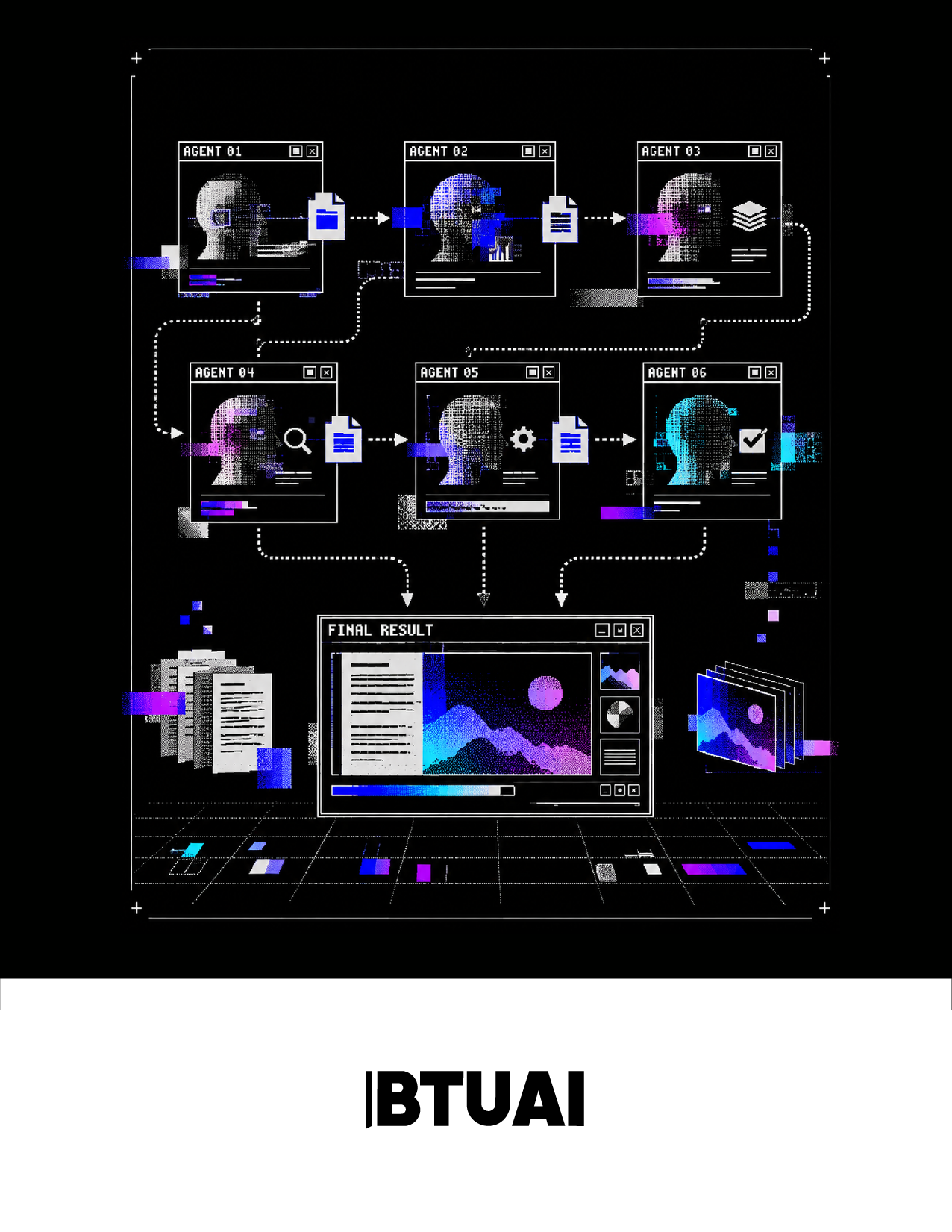
For our illustrative Georgian company, the objective could be preparing an answer grounded in checked information. Roles then become meaningful. One agent clarifies the request and product identifier. Another finds the current stock record. A third checks delivery conditions, while a response writer combines the findings into understandable Georgian. This is an illustration of coordination, rather than an observed company case.
Roles differ in more than their names. The stock agent’s output should address availability without making an unexamined transport promise. The response writer should connect the established facts and identify the remaining question. Filling gaps left by other participants with convincing language is outside that assignment.
Not all work needs to run sequentially. Once the product and destination are identified, stock and delivery conditions may be investigated simultaneously. The final answer must wait for both. The distinction matters: parallel work may save time, while prematurely completing dependent steps introduces error.
Anthropic’s architectural overview, published on 19 December 2024, distinguishes parallel work from coordinator-directed task allocation. The business implication is straightforward: dividing a task and assembling its results are different jobs. Both need attention if the activity of individual participants is not to obscure the outcome.
What must travel with an answer
A handoff transfers the context needed to continue the work. The phrase “stock is available” may be insufficient. Which product does the record describe? Where and when was it checked? Has its status changed? What does the source leave unconfirmed? A brief answer should not require these distinctions to disappear.
In the example, a warehouse record might establish that an item exists without showing a reservation. The next participant should therefore receive two connected facts: the item appears in the record, and allocation to this customer remains unconfirmed. Uncertainty stays within the workflow until the relevant check resolves it.
BTU researchers’ assessment is that a useful handoff answers not only “What did you learn?” but also “What can the next participant do with that knowledge?” A general delivery policy supports explaining the policy. Naming a delivery date for a particular order requires additional evidence. The boundary of useful action is then clear from the outset.
Language adds another consideration in Georgia. A customer may write in Georgian, the product description may use another language, and the company’s system may identify the item through a code. A fluent translation cannot substitute for matching the correct item. Preserving the product identifier internally can matter more than polishing the wording of its name.
The same care applies to addresses, sizes, packaging units and deadlines. One agent’s compressed description can lead another to a different product. Georgian adaptation is therefore more than producing the last answer in Georgian. The same object, condition and action should retain the same meaning throughout the team’s work.
A shared record and a coordinator
Conversation between agents does not ensure that everyone sees the current state. One participant may read an old file, another an updated version, and a third only a summary of an earlier response. If the difference remains invisible, a contradiction can be mistaken for a settled fact. A team consequently needs agreement about where the current state of a case is recorded.
That record should distinguish a retrieved fact, a working assumption and a completed action. “Will be sent” and “has been sent” are not interchangeable statuses. An action also requires an observable result: if a sending attempt is interrupted, the team cannot treat delivery as confirmed simply because the message was ready.
Shared state does not mean opening every piece of information to every participant. An agent drafting a reply may need only a relevant excerpt. A source reference or identifier can support checking while access boundaries remain in place. Coordination concerns the timely movement of necessary information, not unlimited duplication of company data.
The coordinator tracks completed work, dependencies and emerging questions. That function can be performed by a separate agent, a defined software process or a combination. The label matters less to a business than ensuring that somebody or something actually brings the case together, rather than leaving two incompatible responses unresolved.
Anthropic’s account dated 13 June 2025 describes a lead agent allocating research and combining results. It also discusses persisted outputs and state consistency. This is experience from a particular technical system. Its relevance to BTU’s analysis is that the ability to work independently comes with a requirement to reconcile the eventual outcome.
When agents disagree
Agreement within a team does not always imply correctness. If every participant used the same outdated record, differently worded responses may repeat the same mistake. A reviewer’s value depends on what it checks: whether a source is current, whether a conclusion follows, or whether the prose is clear. The last task matters, but it does not replace the first two.
In the illustration, one agent might find an item in the warehouse file while another discovers a later order showing that the item has already been allocated. Counting votes would be inappropriate. The records’ timing and meaning need comparison. If the sources still cannot be reconciled, the person responsible for the order should decide which information the company can rely on.
Another disagreement concerns priorities rather than facts. A quick promise that helps a sale may exceed delivery capability. Summarising the available information cannot settle that business choice. The coordinator should expose the decision and its basis. Manufacturing apparent consensus merely to finish the workflow creates an additional risk.
BTU’s research framework consequently links multi-agent work to explicit handoffs, controlled shared records and escalation to an accountable person. This article adds a focused synthesis: quality checking should examine both the individual answer and the change in meaning that occurs when another agent uses it. Otherwise, correct components can still be assembled into an incorrect whole.
A manager needs an intelligible basis for a decision rather than the entire volume of agent conversation. What was established? What remains uncertain? Which finding changed the initial answer? That view lets the person focus on the real choice. Requiring the manager to read every intermediate message would substantially reduce the benefit of automation.
One coherent result
In a well-organised team, customers do not have to connect the company’s separate responses for themselves. The interpreted request, checked records and final explanation remain parts of one case. Completion means that the result fits the original objective and any remaining uncertainty is presented clearly.
BTU researchers’ central assessment is therefore that reliable continuation of information belongs at the centre of agent teamwork. Role division makes room for focused work; coordination preserves the connections. For Georgian businesses, the opportunity is a more coherent service. The principal risk is mistaking several mutually consistent responses for a verified outcome.
Questions and answers
Does a team always need a lead agent?
A coordination function is essential, but it can be implemented through a separate agent, a defined software process or a combination. Clear responsibility and current state matter most.
What is a proper handoff?
The next participant receives the checked result, a source reference, remaining uncertainty and the status of completed work. Continued work then retains its original basis.
Why is agreement between agents insufficient?
Agents may share the same mistaken source. Verification should return to evidence, rather than merely compare the similarity of their answers.
Where does a person enter the process?
A person becomes involved when a factual conflict cannot be resolved or a choice requires business accountability. The team should present that person with the issue and an understandable basis for deciding.