
Why AI Agents Are Changing Management
Key Takeaway The first wave of generative AI largely helped managers perform familiar work faster. It could summarize a
Key Takeaway
The first wave of generative AI largely helped managers perform familiar work faster. It could summarize a report, draft an email, compare information or prepare notes from a meeting, but the underlying management model remained largely intact: a person initiated the task, AI produced an answer, and the person continued the process.
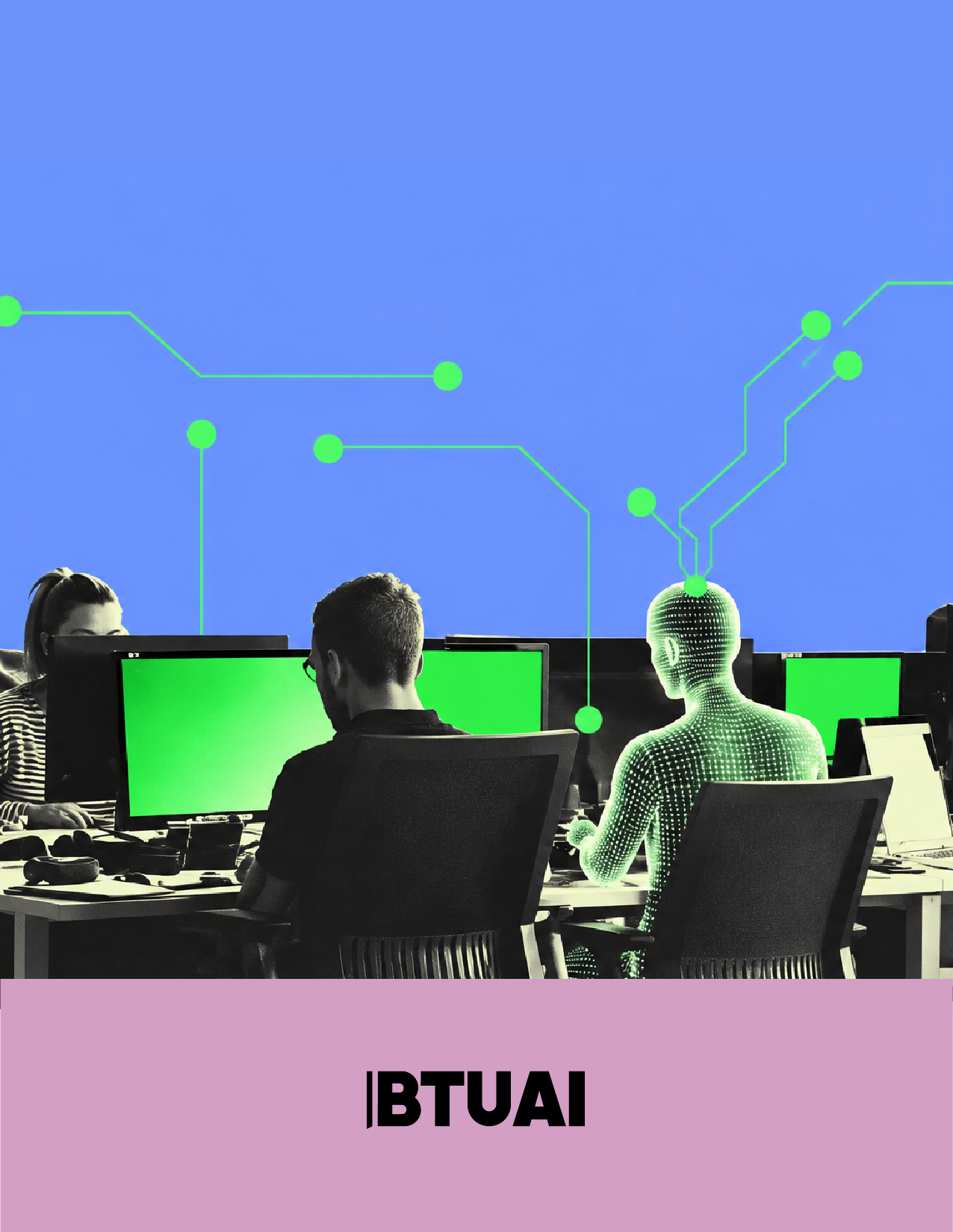
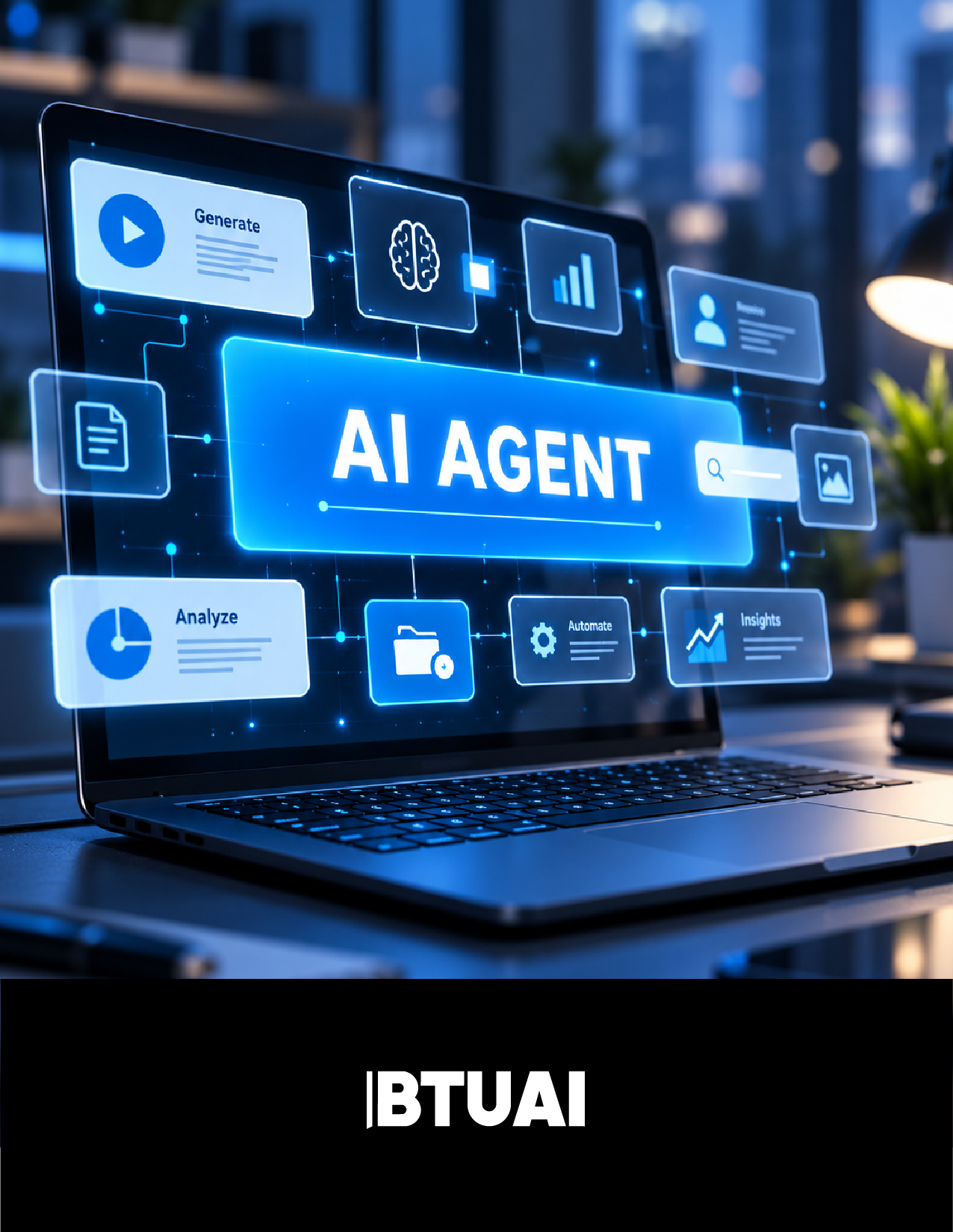
AI agents introduce a more consequential shift. An agent can receive a goal, determine intermediate steps, use connected tools and data, check results, hand work to another specialized agent and, where the organization has granted permission, perform bounded actions. The important management question is therefore no longer simply how much time AI can save. It is what happens when part of organized work is performed by digital participants as well as by people.
That does not make the manager disappear. It changes where management creates value. As more routine information gathering, monitoring and coordination move toward agents, the managerial role can shift toward setting objectives, defining authority, resolving conflicting priorities, managing exceptions and preserving accountability.
When Information Stops Being the Manager’s Main Advantage
One of the less visible foundations of managerial hierarchy has always been the flow of information. Different parts of an organization see different pieces of reality: sales understands customers, finance sees cash and cost, operations sees bottlenecks, and senior managers bring those fragments together before making a decision. This is why so much managerial time is spent preparing to decide rather than deciding – requesting updates, reconciling reports, attending status meetings and finding out why one part of the organization sees the situation differently from another.
Agents are particularly well suited to this intermediate layer of work. Imagine a distribution company where a sales agent detects an increase in demand, an inventory agent estimates when stock will run out, a finance agent models the cash-flow effect of replenishment, and a procurement agent checks available suppliers. In a conventional organization, four separate streams of information might move toward the manager. In a well-designed agentic workflow, the manager may instead receive a single decision package explaining what changed, why it matters, what may happen next and which two or three responses are realistic.
The AI has not necessarily made the decision. It has reduced much of the informational and coordination work required to reach the point where human judgment becomes valuable. As that happens, access to information becomes less scarce while the capacity to interpret trade-offs, understand context and accept responsibility becomes more important. The manager’s advantage shifts from knowing more toward judging better.
Delegation Is No Longer Only Between People
Delegation is one of management’s oldest disciplines. A good manager does not personally perform every task; the manager chooses the right person, grants appropriate authority and defines the expected outcome. Agents do not eliminate that logic, but they add a new category of participant.
In an agentic organization, the question becomes not only which employee or team should perform the work, but which parts belong to people, which can be performed by agents and where the best design is a joint human-agent workflow. Consider financial analysis. The work may involve finding data, cleaning it, comparing periods, calculating scenarios, interpreting unusual deviations and turning the analysis into a business recommendation. Agents may become highly useful across the first several stages, while the human role becomes relatively more important in interpretation, skepticism, context and the balancing of competing business interests.
This is why asking only which professions AI will replace can obscure the more immediate organizational change. Work is being decomposed into activities and those activities can be reallocated. BTU’s research framework therefore treats the human-agent workflow as a potentially important new unit of work. The managerial challenge is not to automate as much as technically possible, but to determine where machine execution creates value and where human judgment must remain decisive.
The strongest manager in this environment may not be the one who delegates the most work to AI. It may be the one who makes the best decisions about what to delegate, under which conditions, and with which controls.
More Good Agents Do Not Automatically Create Better Management
A natural temptation in the agentic era is to equate the number of specialized agents with organizational intelligence. A company adds a finance agent, then a sales agent, a legal agent, a procurement agent, a project agent and an HR agent, assuming that more professional intelligence will naturally produce better decisions.
Management history suggests otherwise. Strong functional departments have never guaranteed a strong organization, because each function optimizes a different part of the problem. Finance may prefer lower cost, sales may defend market share and operations may prioritize stability. Each position can be rational within its domain while still creating a conflict at the company level.
The same dynamic can emerge among agents. A sales agent sees rising demand and recommends increasing inventory. A finance agent warns that the purchase could put excessive pressure on cash flow. A procurement agent finds a supplier that is 12% cheaper, while a legal agent identifies a contractual clause that creates significant long-term exposure. All four agents may be correct. The organization still needs one decision.
Multi-agent environments therefore make coordination more important rather than less important. Organizations need rules for handoffs, conflicting recommendations, independent verification, escalation and the points at which human judgment becomes mandatory. Without such rules, firms may simply reproduce familiar organizational silos in digital form – faster, more capable and potentially more difficult to see.
BTU’s research framework therefore describes management at a broader level than the individual agent or isolated workflow. The emerging object of management is an action system in which people, agents, data, knowledge, permissions, approvals, risk controls and accountability combine to produce an outcome. The manager’s role is increasingly to keep that entire system coherent.
Managers Will Allocate Action Rights as Well as Tasks
Agentic systems also make an old management problem – authority – much more explicit. In a traditional organization, decision rights are embedded in job descriptions, hierarchy, informal norms and professional practice. With agents, those rights need to be defined with greater precision because the system may have the technical ability not only to recommend an action, but to execute it.
A procurement agent may technically be capable of sending an order to any supplier. The organization may decide that it can act independently only with approved suppliers, for standard items and below a defined financial threshold. A finance agent may prepare a payment without being able to release funds. A legal agent may identify problematic contract language while the company’s final legal position remains with an accountable professional.
This distinction between capability and authority is captured through the agent’s mandate. A useful mandate defines what data the agent may access, what analysis it may perform, which systems it may change, what financial or risk limits apply, when it must stop, where an exception goes and who has the authority to override the system.
Management has always been partly about allocating authority. Agentic management makes this work more explicit and, increasingly, operational. Managers will not only assign tasks; they will design rights to act. The goal is not maximum autonomy. It is the level of autonomy appropriate to the consequence and reversibility of the action.
Managerial Attention Becomes More Valuable
Managers have always suffered from a shortage of time, but the more precise problem is a shortage of attention. Organizations produce thousands of routine events and a much smaller number of situations that genuinely require senior judgment. Yet many management systems treat them similarly, forcing leaders to remain involved in both normal transactions and consequential exceptions.
Agents can help separate these categories. If an order comes from an approved customer, at a standard price, with sufficient inventory and normal credit conditions, much of the process can proceed under predefined rules. If the order is unusually large, a discount falls outside policy, the customer’s risk profile changes or a new supplier must be introduced, the case can return to a manager.
The significance of this change is not simply that software performs routine work more quickly. It is that human attention can be directed toward situations where its marginal value is highest: ambiguity, competing interests, difficult relationships, unusual risk and decisions that are expensive to reverse. The manager moves from being a universal checkpoint to becoming an exception manager.
In that sense, agents may make the quality of management more visible. Once routine coordination is reduced, managerial performance becomes increasingly concentrated in the decisions where judgment actually matters.
Human Control Cannot Be Reduced to an Approval Button
Agentic systems also expose the weakness of purely formal oversight. If a manager must approve hundreds of AI-generated recommendations every day and has only seconds to review each one, a human may technically remain in the loop while meaningful human control has largely disappeared.
Real oversight requires information, time and genuine authority. A manager should be able, where the risk justifies it, to see not only the recommendation but the relevant basis behind it: which data the agent used, which source it relied on, where uncertainty remains and why a particular action was selected. For higher-impact decisions, the person must be able to stop the process, request another review or reject the recommendation altogether.
Organizations also need to reconstruct how an outcome was produced. If something goes wrong, “the AI made a mistake” is not a sufficient management explanation. The root cause may be the model, but it may also be outdated information, an unreliable knowledge source, excessive permissions, a badly designed workflow or superficial human approval. Audit trails and tracing therefore become management infrastructure rather than merely engineering features.
BTU’s research approach treats accountability as something that should remain reconstructable across the system: who set the objective, who approved the mandate, which agent performed which action, where human intervention occurred and who remained finally accountable. Delegation – whether to another person or another agent – does not automatically transfer ultimate accountability.
AI Can Accelerate Bad Management as Easily as Good Management
Speed is often treated as an unquestioned benefit in discussions of AI productivity. Organizations, however, know that executing the wrong process faster is not progress. If the objective is poorly defined, a stronger agent may pursue it more efficiently. If the knowledge system contains an outdated rule, an agent can spread that rule across many decisions. If different functions have incompatible incentives, specialized agents may generate those conflicts at machine speed.
This creates one of the central paradoxes of agentic management: more capable AI can make management quality more important, not less. In an organization with clear objectives, reliable data, explicit decision rights and strong accountability, agents can scale a good process. In a confused organization, they can scale confusion.
This is why agentic transformation cannot be treated simply as an IT deployment. Buying or building several capable agents does not create an agentic organization any more than purchasing several powerful software systems automatically creates good management. The deeper change begins when a company redesigns how work is allocated, how decisions are authorized, how knowledge moves, when humans intervene and how accountability is preserved.
What This Means for Georgian Businesses
For Georgia, the organizational implications may be especially significant because many firms cannot economically maintain large specialist teams. In a small or medium-sized company, the same manager may be involved in sales, suppliers, finance, projects and international relationships, while dedicated teams for research, analytics, compliance or strategy may simply not exist.
Professional agents can reduce part of this constraint. A Georgian manufacturer considering a new export market could use a research agent to organize information about competitors and demand, a finance agent to compare scenarios, a compliance agent to structure relevant requirements and a sales agent to map potential partners. The manager no longer has to build every piece of decision support from the beginning and can devote more attention to questions that none of the systems can answer alone: Does the opportunity fit the company’s strategy? Can the organization execute it? What level of risk is acceptable? Which partner deserves trust? When is the right decision to walk away?
In a well-designed system, a smaller team can therefore gain partial access to capabilities that previously required a much larger organization. But the limitation is equally important. An agent cannot use institutional knowledge that the company has never captured. It cannot operate under a sound mandate if management has not defined decision rights. It cannot improve a process the organization itself does not understand.
For many Georgian companies, the first step toward agentic management may therefore not be buying new AI software. It may be describing how the organization actually works, organizing its knowledge and clarifying who has the right to decide what.
BTU Researchers’ Assessment
According to BTU researchers, the impact of AI agents on management should not be reduced to hours saved or the number of human tasks automated. The deeper change concerns the architecture of organized action. For the first time, organizations can introduce digital participants that do not merely produce information but can carry part of a goal-directed workflow forward.
BTU’s research framework treats the human-agent workflow as a potentially important new unit of work and a broader action system as the emerging object of management. Such a system includes the objective, people, agents, knowledge sources, decision rights, risk limits, approvals, audit trails and final accountability. The manager therefore no longer governs only what people do; the manager must govern how human and machine capabilities combine to turn organizational purpose into action.
From this perspective, the value of strong managers may rise rather than fall. Their value declines where management consists mainly of collecting information and coordinating routine status. It increases where leadership requires setting objectives, defining mandates, balancing conflicting interests, resolving exceptions and preserving accountability. For Georgian firms, the largest opportunity may be the expansion of small-team capability. But long-term advantage is more likely to belong to organizations that combine professional agents with organized knowledge, clear decision rights and responsible human management than to those that simply deploy the largest number of agents.
Key Findings
- AI agents change management because software can move from providing answers toward participating in real workflows.
- Managerial value can shift from gathering information toward judgment, prioritization and difficult choices.
- Work can increasingly be designed as a human-agent workflow rather than a task owned entirely by one person.
- Multiple specialized agents do not automatically produce a coherent organizational decision; multi-agent systems increase the need for coordination.
- Technical capability and organizational authority must be separated through explicit mandates.
- Agents can redirect managerial attention from routine cases toward consequential exceptions.
- Meaningful human oversight requires information, time, the power to intervene and the ability to reconstruct how an outcome was produced.
- AI can accelerate poor processes as well as good ones, making management quality more important.
- Professional agents may significantly expand the functional capacity of smaller Georgian firms.
Why This Matters for Georgia
For Georgia, the importance of agentic management goes beyond doing familiar work faster. The deeper opportunity is to weaken the traditional link between organizational size and organizational capability. Smaller firms may gain access to research, analysis, coordination and specialist support that previously required much larger teams.
Real local value, however, will not come from imported models alone. Georgian companies need organized institutional knowledge, relevant local and sector context, reliable data, explicit agent mandates and managers capable of governing human-agent systems. A more useful formula for competitiveness is therefore not simply “more AI,” but global AI capability + Georgian knowledge + professional agents + accountable management.
Conclusion
AI agents are not changing management because they write, calculate or search faster. Those capabilities matter, but the deeper shift is that organized action is gaining a new participant. When a software system can plan and perform part of the work within defined boundaries, an organization must answer questions that traditional org charts alone cannot resolve: Which work belongs to people and which to agents? What knowledge may each use? What authority should they receive? Where must human judgment intervene? And who remains finally accountable?
The strongest manager in the agentic era may therefore no longer be the person who holds the most information or personally controls the greatest number of activities. It may be the person who designs the clearest system in which machine execution and human judgment reinforce each other without sacrificing responsibility. AI does not eliminate management. It pushes management toward a higher level.
Data and Main Sources
- BTU research and analytical work on AI agentic management, human-agent work systems, mandates, delegation, multi-agent coordination and accountability.
- OpenAI – A Practical Guide to Building AI Agents and official Agents SDK materials.
- Anthropic – Building Effective Agents and official engineering materials on agent evaluation.
- European Commission – current AI Act framework and principles of human oversight.
This material is analytical and educational in nature. It does not constitute specific technology, legal, financial or organization-specific professional advice.
Prepared by the academic team of Business and Technology University and the BTUAI Research Team, Tbilisi, Georgia.