


Artificial intelligence is entering a new stage of development. Until recently, AI was mainly understood as a tool that performed tasks given by humans. Today, it is increasingly becoming part of the very process through which new AI systems are created: it writes code, finds errors, runs experiments, improves training processes, supports researchers and sometimes discovers more efficient technical solutions.
This does not yet mean that AI can fully and independently create its own next generation. But the direction is already visible: artificial intelligence is no longer only the product of technological development. It is becoming one of the instruments of that development.
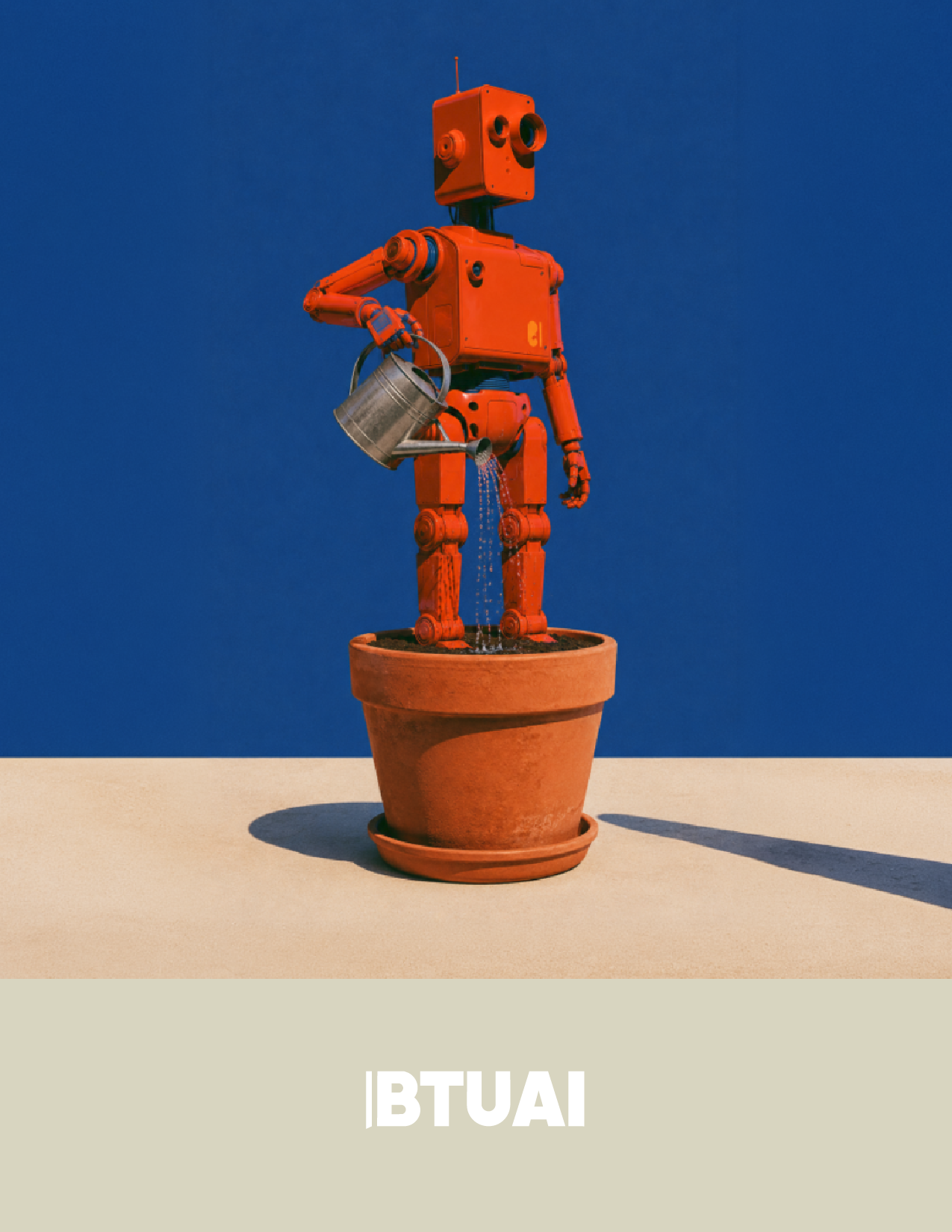
In global technology discussions, this process is often described as a self-improvement loop. In simple terms, this means a situation in which one version of an AI system helps build a stronger next version, which then helps improve the following version, creating a rapidly accelerating technological chain.
For Georgia, this issue is especially important. The central question for small countries will not be only whether they use AI. The more important question will be: will they participate in this development process, or will they remain only users of technologies created elsewhere?
What Is Happening
Artificial intelligence has already become a powerful assistant in software development. According to the provided source material, after the launch of Claude Code, more than four-fifths of the code published by Anthropic in May was written with the help of Claude. Before Claude Code, that share was in the low single digits.
AI systems are also becoming capable of completing engineering tasks that previously required hours or even more than a full working day from human developers. This means that AI is no longer limited to producing text or answering questions. It is entering real technical work.
The deeper question is what happens if AI becomes capable not only of writing code, but of automating the broader chain involved in creating new AI systems.
That chain includes:
- developing model ideas;
- designing experiments;
- writing code;
- preparing data;
- setting up training runs;
- debugging systems;
- checking results;
- evaluating safety;
- improving the next version.
Today, this full chain is not automated. But each part of it is gradually becoming more AI-assisted.
Simple Explanation: What a Self-Improvement Loop Means
A self-improvement loop means the following process:
The first AI system helps create or improve a second system.
The second system is more capable and helps create a third system.
The third improves the next one even faster.
The process continues, and each new version becomes more capable than the previous one.
Human participation may gradually shrink. At first, humans remain as directors, reviewers and final decision-makers. But then a difficult question appears: if AI designs the experiment, writes the code, checks the result and corrects the error, where exactly does human control remain?
This is the central tension of the topic.
On one hand, such development may create enormous productivity gains. Science, programming, medicine, energy, engineering and education could advance much faster.
On the other hand, if self-improvement loops move ahead of human oversight, societies may face systems whose behavior is no longer fully understandable or controllable.
Why This Matters for Georgia
Georgia is not the global center of AI development. But that does not mean this process will not affect Georgia. On the contrary, small economies often feel such technological shifts quickly because they depend on external platforms, software systems, cloud services, global companies and imported technologies.
For Georgia, this issue matters in several directions.
- The Transformation of Programming and Technology Professions
If AI writes code increasingly well, the work of a programmer will no longer be defined mainly by manually writing lines of code. More important skills will include framing the problem correctly, designing the system, checking the output, assessing security, understanding data quality and translating business problems into technological solutions.
This means that technology education in Georgia needs to shift its emphasis.
The programmer of the future should be able to:
- work with AI systems;
- define tasks clearly;
- evaluate outputs;
- identify errors;
- understand security risks;
- understand user needs;
- see the full system, not only the code.
This is especially important for universities, coding schools and companies that train technology talent.
- The Importance of Georgian Language and Data
If AI systems accelerate their own development, the most valuable resource will not be code alone. Data, language, context and the quality of knowledge will become increasingly important.
For Georgia, this raises a critical question: if future AI systems are developed mainly on English, Chinese or other large-language datasets, how well will they understand Georgian reality, Georgian language, Georgian law, economy, business, culture and society?
This is why the digital strengthening of the Georgian language is not only a cultural project. It is also a question of technological sovereignty.
If AI accelerates its own development, Georgian language and Georgian knowledge must exist in digital forms that future systems can correctly read, process and use.
- Business Productivity
Georgian companies can use AI to create software solutions, automation systems, analytical tools, customer-service models and internal workflows much faster than before.
But there is also a risk. If companies use AI only as a cheap code-writing tool without systems for review, security and quality control, the result may be dangerous.
AI-generated code may work, but contain hidden errors. It may be fast, but insecure. It may reduce short-term costs while increasing risks around data protection, reliability and compliance.
For businesses, the key question will be: how can AI be used quickly, but responsibly?
- The Public Sector and Governance
If AI increasingly builds systems, its use in the public sector must be planned with special caution.
Public services, healthcare, education, social assistance, taxation, legal procedures and security cannot rely on automatically generated systems unless clear oversight exists.
Georgia needs AI-use rules that define:
- who is responsible for AI errors;
- how systems are tested;
- what data they use;
- how citizens’ rights are protected;
- whether decisions can be appealed;
- how humans intervene in complex cases.
- Technological Dependence
If AI systems develop faster and require enormous computing capacity, small countries may become even more dependent on a few global technology companies.
For Georgia, the answer is not isolation. The answer is a thoughtful strategy:
using multiple technology providers;
supporting open standards;
protecting local data;
developing Georgian-language resources;
strengthening university research capacity;
introducing safe AI-use standards in companies and public institutions.
Opportunities for Georgia
The trend toward AI-assisted self-improvement is not only a risk for Georgia. It can also become a major opportunity.
The first opportunity is in education. If universities respond correctly, Georgia can become one of the regional places where AI is taught not only technically, but also ethically, economically and socially.
The second opportunity is for small business. AI gives small teams capabilities that previously belonged only to large companies: software creation, analysis, automation, customer service and access to international markets.
The third opportunity is the Georgian language. If Georgia creates high-quality Georgian datasets, explanatory texts, sectoral vocabularies, business knowledge and economic analysis, these will become important resources for future AI systems.
The fourth opportunity is in public governance. Used responsibly, AI can support policy analysis, economic scenario planning, education-system improvement and simpler public services.
Key Risks
The first risk is weakening human control. If an AI system creates, checks and improves other systems, humans may not fully see where errors appear.
The second risk is safety. Self-improving technological processes require careful evaluation because small errors can multiply quickly.
The third risk is labor-market disruption. Programming, research, analysis and technical work will change. Some tasks will disappear, while demand for new skills will grow.
The fourth risk is dependence on external platforms. If Georgian business and the public sector become fully dependent on a few foreign AI systems, this may create long-term technological vulnerability.
The fifth risk is the loss of Georgian context. If AI systems do not rely on high-quality Georgian data, their analysis and decisions about Georgia may become superficial or wrong.
What Georgia Should Consider
Georgia’s best response is not to stop AI. That is neither realistic nor desirable. The right response is to strengthen domestic capabilities while AI continues to develop.
This requires:
creating Georgian-language digital resources;
strengthening AI education in universities and schools;
developing practical AI-use standards for businesses;
establishing responsible AI-use rules in the public sector;
strengthening cybersecurity;
improving data protection;
building local expertise in AI testing and evaluation;
involving students and researchers in real AI projects.
What This Means for Universities
The role of universities becomes especially important at this stage. If AI writes code and accelerates research, education can no longer be only about transferring information.
A university must teach students:
how to ask the right question;
how to evaluate AI-generated answers;
how to understand data quality;
how to work with AI systems;
how to identify ethical risks;
how to create solutions relevant to the Georgian context;
how to keep humans at the center of decision-making.
This is the foundation of a new type of education. Humans no longer compete with AI only in speed. Humans must define the purpose, check the result and protect values.
BTUAI Assessment
BTUAI assesses that the trend of AI-assisted self-improvement is one of the most important technological signals that will shape the coming decade.
This process shows that AI is no longer only a supporting software tool. It is becoming an active participant in research, programming, technological creation and organizational productivity. The more AI participates in developing its own field, the faster labor markets, education, business and public governance will change.
For Georgia, the main task is not to meet this process only as a consumer. The country must develop its own data, Georgian language resources, AI education, safety frameworks and research capabilities.
If this happens, rapid AI development may become an opportunity for Georgia – a small country that can learn quickly, build new skills quickly and find its place in the next wave of technological change.
If it does not happen, Georgia risks becoming only a user of systems created elsewhere, thinking in other languages and serving other economic interests.
The main conclusion is clear: in the age of AI self-improvement, the most valuable asset will not be only access to technology. It will be the ability to preserve one’s own language, data, knowledge and human control.
Key Findings
- Artificial intelligence is already actively participating in code generation and the acceleration of technological research.
- A self-improvement loop means a process in which one AI system helps create a stronger next system.
- Fully independent AI self-improvement does not yet exist, but many of its components are developing quickly.
- For Georgia, the central issue is not only AI use, but also the protection of Georgian language, data and local knowledge.
- The role of programmers and technology specialists will change: manual coding will decline in importance, while system evaluation, task design and security will become more important.
- AI creates major productivity opportunities for business, but also increases risks around quality, security and data protection.
- The public sector needs clear AI-use rules, especially in public services, education, healthcare and citizen-rights-related areas.
- Georgia’s best path is not fear of technology, but strengthening national AI capabilities, education and digital sovereignty.
Data and Evidence Base
According to the provided international analytical material:
After the launch of Claude Code, more than four-fifths of the code published by Anthropic in May was written with the help of Claude.
According to METR, in early 2025 Anthropic’s models could complete tasks that took human engineers a little under an hour, while the company’s latest systems can complete tasks that would take more than a working day.
Anthropic co-founder Jack Clark estimates that by the end of 2028 there is a significant chance that an AI system may be capable of creating its own successor without human involvement.
Google DeepMind’s AlphaEvolve found a change that saved about 0.7% of Google’s worldwide computing power across data centers and helped speed up Gemini training by 1%.
In Andrej Karpathy’s experiment, an AI agent improved the training time of a small language model by 18% over several days without further human intervention.
These examples do not mean that AI is already fully self-improving. But they show that AI-driven acceleration in research and programming is real.
Methodology
This report was prepared as part of BTUAI Research. The analysis is based on the provided international analytical material about AI self-improvement, AI-generated code, research automation and safety risks.
The materials are processed using analytical methods applied by BTU researchers, with the support of BTUAI.
The purpose of the research is not to create technological panic, but to explain a trend that may affect Georgia’s education system, business environment, labor market, technological sovereignty and public policy.
Limitations
AI self-improvement is a rapidly developing topic. Current assessments may change as new models, studies, regulations and technological constraints emerge.
This material does not claim that fully independent self-improving AI already exists. It discusses a trend that is already visible in specific tasks.
The implications described for Georgia are analytical scenarios, not guaranteed forecasts.
This material is analytical and educational in nature. It does not constitute financial, investment, legal, HR, labor-market, technology-procurement or data-protection advice. Before making specific decisions, consultation with a relevant specialist is required.
Sources
The Economist analytical material on artificial intelligence self-improvement.
Examples discussed in the provided text involving Anthropic, METR, CSET, Google DeepMind and Andrej Karpathy.
BTUAI analytical interpretation based on Georgia’s technological, educational and economic context.
Frequently Asked Questions
Does this mean AI already fully builds itself?
No. Current AI systems cannot yet fully create their own next generation without human involvement. But they already help write code, plan experiments, improve models and accelerate research.
Why does this matter for Georgia?
Because AI development will change education, programming, business, public services and technological dependence. For small countries, the key issue is to remain participants in the process rather than only users of imported systems.
Will the programming profession disappear?
Programming will not disappear, but it will change. Less time may be spent on manually writing code, while more importance will shift to defining problems, checking systems, ensuring security, designing architecture and working effectively with AI.
What should Georgian businesses do?
Businesses should use AI for productivity, but they need quality control, data-protection rules, security testing and human oversight.
What is the country’s main task?
The country’s main task is to strengthen Georgian language resources, data, AI education, research capabilities and technological safety.
Keywords
Artificial intelligence; AI self-improvement; self-improvement loop; AI coding; research automation; AI and education; AI and business; Georgian language AI; technological sovereignty; Georgia digital future; BTUAI; Business and Technology University.
Citation Format
BTUAI Research Team. “When Artificial Intelligence Accelerates Its Own Development: What It Means for Georgia.” Business and Technology University, BTUAI.ge, 2026.
Prepared by the academic team of Business and Technology University and the BTUAI Research Team.
Tbilisi, Georgia
BTUAI is an analytical platform of Business and Technology University that studies the impact of artificial intelligence, digital transformation, innovation, startup ecosystems, data analytics and emerging technologies on business, the economy, education and society. BTUAI materials are designed to explain complex technological and economic changes in a clear, reliable and Georgia-focused way.