



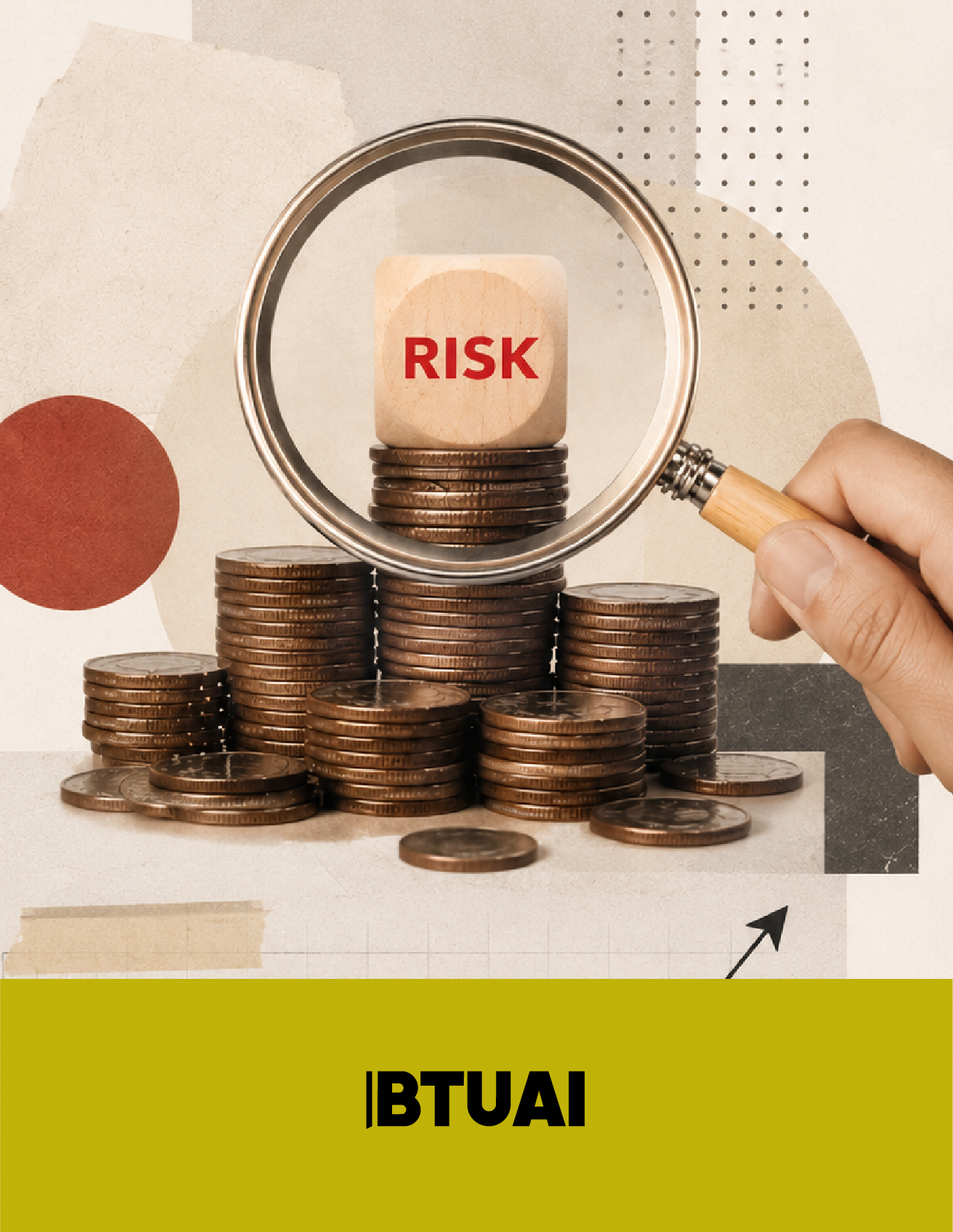
Low-income consumers in Georgia should not be understood through the simple formula: “people who buy cheap.” The research shows that price is indeed critical in this segment, but low price alone is not enough. For low-income consumers, the cost of a wrong choice is high: a poor-quality product, weak service, unclear conditions or a wrong decision may become a serious loss for the household budget.
Therefore, low-income consumers are often not only price-sensitive, but also risk-sensitive. They look for accessible prices, but at the same time they need trust, guarantee, real experience and justification of choice.
BTU researchers assess that communication around brands, discounts and products should change when addressing the low-income segment. The promise of “the cheapest” alone does not work. A stronger formula is: accessible price + reliable quality + simple conditions + protection from mistakes.
The main conclusion of this research is that the low-income consumer in Georgia is not simply an economical buyer, but a cautious decision-maker who needs reassurance that money will not be wasted.
The everyday choice of low-income consumers is often more complex than that of high-income consumers. When the budget is limited, every expense becomes more important. The consumer thinks not only about price, but also about the outcome.
If a cheap product breaks quickly, it becomes more expensive in reality. If service is poor, time and emotional energy are lost. If conditions are unclear, additional costs may appear. If the brand is unknown, the choice feels risky. If there is no visible guarantee, the consumer feels unprotected.
For this reason, the main question of low-income consumers is often:
“How can I buy in a way that saves money but does not lead to a mistake?”
This is the central logic of the segment. It is not looking only for cheap products. It is looking for safe affordability – a choice where the price is accessible, but there is still a minimum guarantee of quality, service and trust.
Main conclusion
The behavior of low-income consumers in Georgia moves between three main forces.
The first is price pressure: the consumer has a limited budget, and price is often the first filter.
The second is fear of making a mistake: a cheap product may be perceived as risky if quality, guarantee or reliability are not visible.
The third is the need for trust: the consumer may be ready to choose a slightly more expensive or better-known brand if it reduces the chance of a mistake.
This means that in the low-income segment, brands should provide not only a price offer, but also a trust argument.
The right formula is:
“Accessible, but reliable.”
“Cheap, but quality is not lost.”
“You save money, but you do not risk.”
“Low price, clear conditions and guarantee.”
“A choice that does not damage the household budget.”
Data snapshot
Low-income consumers form the largest segment in Georgia’s overall market.
| Income group | Share |
|---|---|
| Low income | 80.0% |
| Other income groups | 20.0% |
Within the low-income segment, two main types appear:
| Low-income consumer type | Share within low-income group | Share in total market |
|---|---|---|
| Price-constrained consumer | 54.8% | 43.9% |
| Consumer seeking reliable quality | 45.2% | 36.2% |
This picture is very important. Almost half of the low-income segment is not only looking for the cheapest option. It seeks reliable quality, durability, guarantee and protection from mistakes.
Attitudes toward brands in the low-income group are distributed as follows:
| Brand attitude in low-income segment | Share |
|---|---|
| Brand as a guarantee of trust | 70.4% |
| Price-oriented, skeptical toward brands | 19.4% |
| Price-quality checker | 10.3% |
This means that the main function of brands among low-income consumers is not status, but risk reduction. Consumers often choose known, trusted or well-explained brands because they do not want to lose money through a wrong decision.
Three main behavioral types of low-income consumers
- Price-constrained consumer
This is the segment for which price is the first and strictest filter. If a product or service exceeds the budget, the choice is not even considered.
But this does not mean that the consumer automatically buys the cheapest option. If the cheapest product looks suspicious, the consumer may refuse or postpone the purchase.
The main question of this segment is:
“Can I buy this without damaging other necessary expenses?”
For this consumer, low price, small payment options, installment plans, promotions, package offers, simple conditions and absence of hidden costs matter.
Business implication
The right communication with this segment is not “cheapest and that is all.” The right communication is:
“Accessible price with clear conditions.”
“Save without losing quality.”
“Small payment, understandable terms.”
“All costs are clear in advance.”
“No hidden fees.”
With this segment, businesses should reduce financial fear. Lowering the price is useful, but it is even more important that the consumer knows exactly how much they will pay and what they will receive.
- Low-income consumer seeking reliable quality
This is one of the most interesting segments in the Georgian market. The consumer has low income, but is not only oriented toward the cheapest option. On the contrary, because income is low, the fear of making a mistake is stronger.
The main question is:
“If I pay a little more, am I making a safer choice?”
This consumer may choose a better-known brand, better quality or a slightly more expensive product if convinced that the decision is more beneficial in the long run.
Durability, guarantee, service, real customer reviews, brand reliability, family safety, long-term use and protection from mistakes are important for this segment.
Business implication
A powerful argument with this segment is:
“You pay a little more, but avoid a problem.”
This segment is especially important in categories where a low-quality choice creates serious consequences: technology, household goods, children-related products, healthcare, medicine-adjacent products, renovation materials, food, financial services, insurance and family services.
Effective communication includes:
“A reliable choice for the family.”
“It will last longer.”
“Quality that saves money in the future.”
“Guarantee and support included.”
“A safer choice than a cheap alternative.”
- Price-quality checking low-income consumer
This is a smaller but very important group. It does not want only low price and does not rely only on a known brand. It needs an explanation: why does this price make sense?
Its main question is:
“What do I get at this price?”
This consumer may compare several products, ask for recommendations, read reviews, wait for a discount or check the guarantee. It is cautious, but once convinced, it may become more loyal.
Business implication
This segment needs more information, but not complex language.
What works well:
comparison table;
explanation of what is included in the price;
emphasis on guarantee;
real customer reviews;
long-term benefit;
cost example;
explanation of “cheap today vs beneficial in the long run.”
Effective communication includes:
“This product costs more because it lasts longer.”
“Guarantee and service are included in the price.”
“It gives you lower costs in the long term.”
“Compare quality and conditions.”
Price: what is the real trigger?
In the low-income segment, price is the first barrier, but not the only basis for decision-making.
Price works when the product is clear, the risk is low, the brand is trusted, the conditions are simple, quality does not create doubt and the consumer knows what they are getting.
Price works poorly when the product is unfamiliar, the discount looks suspicious, the conditions are complicated, hidden costs may exist, guarantee is not visible or the consumer has no one to trust.
Therefore, the main challenge of discounting in the low-income market is not only attracting attention, but reducing suspicion.
Risk: why mistakes are frightening
Mistake risk is especially strong among low-income consumers. A high-income consumer can correct a mistake more easily: buy another product, change a service, absorb the lost amount. For a low-income consumer, the same mistake may affect the weekly or monthly budget.
Risk may be financial, when money is wasted; quality-related, when the product breaks quickly; service-related, when the service fails; condition-related, when additional costs appear; social, when family or acquaintances criticize the choice; and time-related, when time is lost fixing the problem.
That is why trust is often more important than advertising noise for this segment.
Trust: what does the low-income consumer need to believe?
Low-income consumers receive trust from several sources: a familiar brand, recommendation from family or acquaintances, real customer reviews, guarantee, return option, in-person consultation, simple and clear conditions, stable brand reputation and human service.
In this segment, trust is not abstract. Trust must appear in concrete form:
“What happens if it does not work?”
“Who is responsible?”
“How long will it last?”
“Where do I go if there is a problem?”
“Who bought it and is satisfied?”
“What do the conditions say?”
What this means for business
Businesses need to understand three things about low-income consumers.
First: price is definitely important. If the product is not accessible, other arguments often do not work.
Second: cheap price can also create suspicion. An excessively low price may make consumers wonder whether the product is low quality.
Third: trust creates the decisive difference. If the consumer feels that the low price is attached to a reliable product, the decision becomes easier.
Therefore, the strongest formula is:
Accessibility + trust + risk reduction.
Sector opportunities
FMCG and everyday consumption
For low-income consumers, price is very important in everyday products. However, food, hygiene and household products are not bought only by price. The feeling of quality and safety also matters.
Effective communication:
“Trusted quality for the family at an accessible price.”
“Everyday choice you can trust.”
“More quantity at a reasonable price.”
“Stable quality, good price.”
Technology and household goods
In this category, low price often creates suspicion. Consumers wonder whether the product will break quickly, whether service exists and whether guarantee will work.
Effective communication:
“Accessible price with guarantee.”
“Durable choice for the family.”
“Service and support included.”
“Pay reasonably and avoid additional costs.”
Healthcare
Low-income consumers are especially sensitive in healthcare. They need accessibility, but also fear low-quality service.
Effective communication:
“Accessible but reliable healthcare service.”
“Quality service with clear conditions.”
“You know the price in advance.”
“Trustworthy doctor and service.”
Financial products
Low-income consumers are very cautious with financial products because even a small mistake may become a large burden. Complex language and unclear conditions reduce trust.
Effective communication:
“You know exactly how much you will pay.”
“Terms are explained simply.”
“No hidden costs.”
“We show with a small example what this means for you.”
Insurance
Insurance is difficult to sell in the low-income segment if consumers do not see immediate benefit. They may see it as an extra cost. But if risk is explained well, insurance may become a protection product.
Effective communication:
“A small amount to avoid a large cost.”
“Protection when you need it most.”
“Security for the household budget.”
Real estate and renovation
In this field, the cost of a wrong choice is very high. For low-income consumers, trust, legal clarity, quality and simple conditions are especially important.
Effective communication:
“Clear conditions.”
“Quality that reduces future costs.”
“All costs are visible in advance.”
“A trusted partner for a long-term decision.”
Children-related products and services
In low-income families, price matters when choosing products or services for children, but safety and trust are often stronger factors.
Effective communication:
“A safe choice for your child.”
“Quality at an accessible price.”
“A simple and reliable decision for parents.”
Common mistakes companies make
The first mistake is seeing low-income consumers only as “cheap-product buyers.” This oversimplifies the picture and misses an important opportunity. These consumers may want affordability, but they also need protection.
The second mistake is packaging low-quality or unclear offers as low-priced. Consumers feel this quickly and lose trust in the brand.
The third mistake is complicated conditions. Low-income consumers are especially sensitive to hidden costs, unclear installment terms, small-print conditions and inconsistent service.
The fourth mistake is overly status-oriented language. Words such as “elite,” “exclusive” and “premium” often do not work with this segment unless they are translated into practical benefit.
Twelve business recommendations
- Do not speak to low-income consumers only through cheapness – add trust.
- Always explain discounts: why it is cheaper and why quality remains reliable.
- Use simple conditions and avoid the feeling of hidden costs.
- Show guarantee, return policy or service support.
- Use real customer reviews and examples in high-risk products.
- For low-income consumers, brand should mean protected choice, not status.
- If the product is slightly more expensive, explain long-term benefit.
- Use small packages, installment plans or step-by-step payment.
- Avoid overly aggressive “buy now” language if the product is high risk.
- Communication should be simple, respectful and not condescending.
- Low-income consumers may become loyal if they once become convinced that the brand did not deceive them.
- The strongest formula is: accessible price, reliable quality, clear conditions and human service.
BTUAI assessment
BTUAI assesses that low-income consumers in Georgia are one of the most misunderstood segments. Businesses often assume that the only thing that matters in this segment is low price. In reality, price matters, but fear of mistakes and the need for trust are often equally strong.
The opportunity for brands in this segment is not selling luxury, but reducing risk. A company that can say “our product is accessible, but reliable” will hold a stronger position than a company that only lowers the price.
The main risk is losing trust. A low price may attract a low-income consumer once, but if the experience is poor, bringing that consumer back will be difficult. In this segment, long-term reliability matters more than one-time sales.
The main conclusion of this research is that in the low-income market, the winning brand will be the one that helps consumers not only save money, but choose calmly.
Key findings
- Low-income consumers form the largest segment of the Georgian market.
- Price is decisive in this segment, but low price alone is not enough.
- Almost half of low-income consumers seek reliable quality, not only the cheapest option.
- Brands in this segment mainly work as signals of trust and protection from mistakes.
- Cheap products may create suspicion if not supported by guarantee, proof of quality or clear conditions.
- The strongest communication is: accessible price + reliable quality + clear conditions.
- Losing trust among low-income consumers is more costly than the short-term sales gained through discounts.
Data snapshot
Overall picture
| Income group | Share |
|---|---|
| Low income | 80.0% |
| Other income groups | 20.0% |
Internal low-income segments
| Low-income consumer type | Share within low-income group | Share in total market |
|---|---|---|
| Price-constrained consumer | 54.8% | 43.9% |
| Consumer seeking reliable quality | 45.2% | 36.2% |
Brand attitude in low-income group
| Type | Share |
|---|---|
| Brand as a guarantee of trust | 70.4% |
| Price-oriented, skeptical toward brands | 19.4% |
| Price-quality checker | 10.3% |
Methodology
This report was prepared as part of BTUAI Research. The analysis is based on demographic, regional, economic and behavioral data, as well as general trends observed in publicly available sources. The materials are processed using analytical methods applied by BTU researchers, with the support of BTUAI.
The purpose of the research is not to provide personal assessments, but to identify broader trends and practical directions for business, education and society.
In this material, low-income consumer behavior is analyzed as a combination of price sensitivity, risk perception, need for trust, brand perception and price-quality checking.
Limitations
The research shows group-level trends and should not be used to assess individuals.
Low-income consumer behavior in this report is treated as analytical segmentation – a combination of price sensitivity, risk perception, need for trust, brand perception and price-quality checking.
Segments do not mean that a specific consumer behaves the same way with every product. A person may choose the cheapest option in everyday products, but choose a more expensive and trusted option in healthcare, technology or financial products.
Sectoral conclusions should be treated as practical guidance for businesses, not as guaranteed sales forecasts.
Sources
BTUAI research analytics.
Analytical processing by BTU researchers.
General trends observed in publicly available sources.
Analytical assessment of Georgia’s market, income groups, price sensitivity, risk perception and need for trust.
Frequently asked questions
Does low income mean consumers always buy the cheapest option?
No. Low-income consumers often seek accessible prices, but at the same time they need reliability, quality and protection from mistakes.
Why can cheap products create suspicion?
If a product is very cheap and there is no visible quality, guarantee or reliable source, consumers may think they could waste their money.
What is the strongest communication with this segment?
The strongest communication is: accessible price, reliable quality, guarantee, simple conditions and real customer experience.
What role does brand play in low-income segments?
In this segment, brand is more often a guarantee of trust than a sign of status.
What is the main business conclusion?
Success with low-income consumers comes not only from lowering price, but from reducing risk and building trust.
Keywords
Low-income consumer in Georgia; price sensitivity; trust needs; risk perception; affordable products; brand trust; value for money; Georgian consumer behavior; Georgian business; BTUAI; Business and Technology University.
Citation format
BTUAI Research Team. “Low-Income Consumers in Georgia: Price, Risk and the Need for Trust.” Business and Technology University, BTUAI.ge, 2026.
Prepared by the academic team of Business and Technology University and the BTUAI Research Team.
Tbilisi, Georgia
BTUAI is an analytical platform of Business and Technology University that studies the impact of artificial intelligence, digital transformation, innovation, startup ecosystems, data analytics and emerging technologies on business, the economy, education and society. BTUAI materials are designed to explain complex technological and economic changes in a clear, reliable and Georgia-focused way.