



When AI Becomes a Colleague — How Georgia Can Prepare for the New Era of Human–AI Collaboration
The article “When AI Becomes a Teammate” (MIT Sloan Management Review, 2025) describes a turning point in the evolution
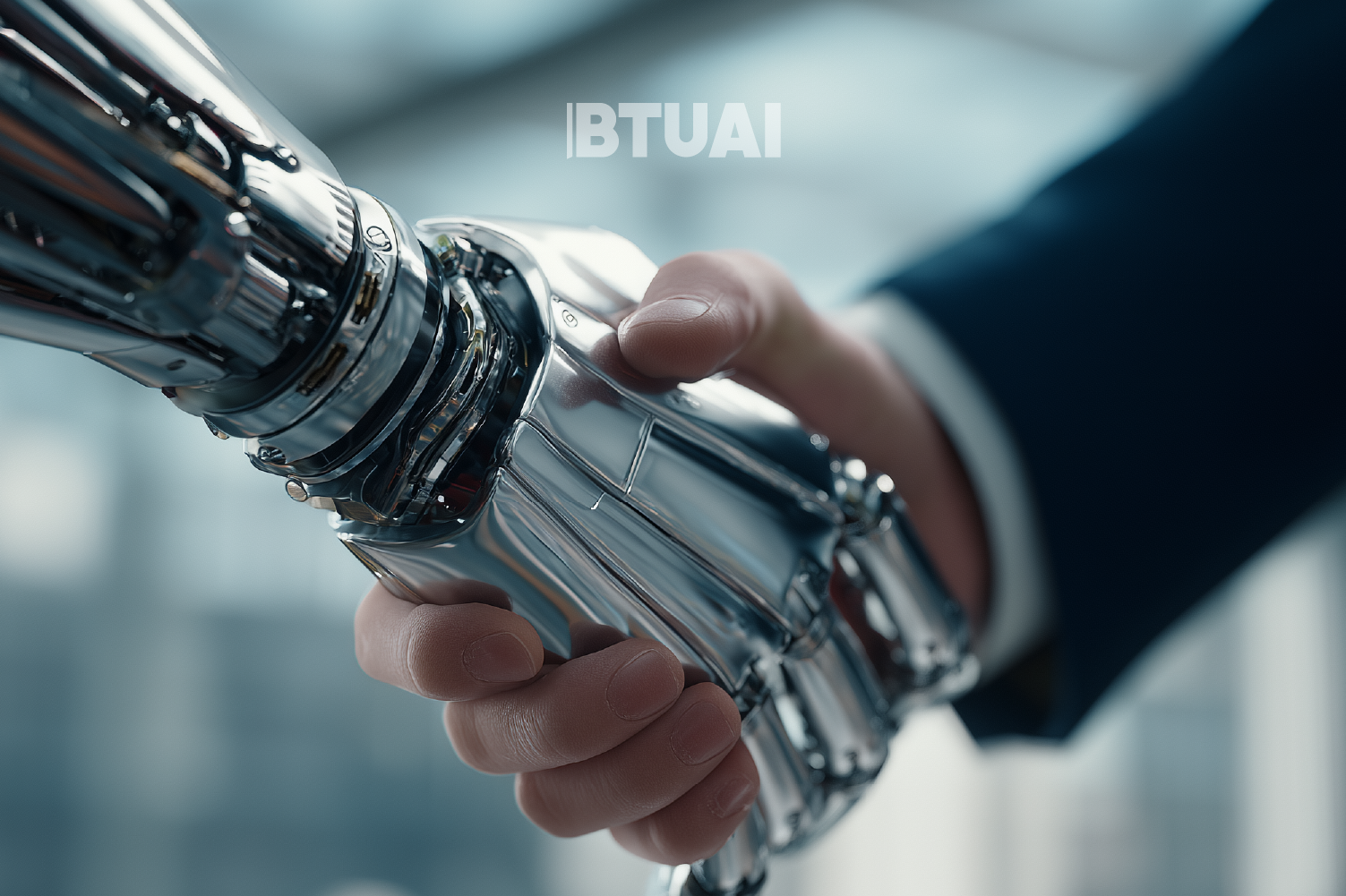
The article “When AI Becomes a Teammate” (MIT Sloan Management Review, 2025) describes a turning point in the evolution of work: artificial intelligence (AI) is no longer just a tool or a means of automation — it is becoming a member of the team, one that contributes ideas, assists in decisions, and interacts with humans as a collaborative partner. As the authors emphasize, the core challenge is not the technology itself, but the design of human–AI collaboration — how trust is built, how responsibilities are divided, and how algorithmic reasoning becomes part of collective intelligence.
In many organizations worldwide, AI is still seen as a “mechanical assistant.” Workers may reject its suggestions, especially when they contradict personal experience or intuition. This creates what MIT researchers call the reverse adoption effect: resistance not to technology, but to its authority. True productivity gains appear only when companies redesign workflows — clearly defining who makes which decisions, how AI outputs are verified, and how accountability is distributed.
In Georgia, AI is already part of teams — but its role is still being defined. Over the past two years, artificial intelligence has moved rapidly into the center of Georgian business innovation. In the financial sector, the transformation is most visible. TBC Bank in 2025 introduced the first Georgian-language generative chatbot integrated into its customer service system. The chatbot not only answers queries but analyzes client behavior, learns from interactions, and provides real-time insights to human operators. As a result, response times dropped significantly, and customer satisfaction rose — AI effectively became part of the team, though final responsibility remains human.
Bank of Georgia presents a similar story. In 2025, the bank received several Global Finance “AI in Finance Awards” for its integration of AI in personalization, risk analytics, and service automation. According to Euromoney, the introduction of Georgian-language chatbots has substantially reduced employee workloads and improved the speed and accuracy of customer communication — an excellent case of human–AI coexistence that strengthens service quality rather than replacing staff.
Meanwhile, the National Bank of Georgia is building the institutional foundation for responsible innovation. Through the new AI Sandbox initiative, banks and fintech companies can test AI-based products in a controlled environment that ensures both technological experimentation and compliance with ethics and supervision standards. Similar regulatory models already exist in the U.K. and Singapore — now Georgia is adapting this model for its financial ecosystem.
International rankings reflect both progress and remaining gaps. The Government AI Readiness Index (2023) places Georgia 99th out of 193 countries, showing steady improvement but underscoring the need for stronger governance and policy frameworks. The Responsible AI Global Index gives Georgia a score of 17.8/100, highlighting that while experimentation is growing, institutional mechanisms for transparency, accountability, and ethical standards are still maturing.
How can “AI as a teammate” become reality in Georgia? The first step is redesigning workflows — teams must establish clear rules on which tasks are delegated to AI, which decisions remain human, and how verification and correction processes work. Defined boundaries are essential for trust and operational stability.
The second is linguistic and contextual adaptation. Without Georgian-language interfaces and locally relevant training data, AI cannot fully integrate into work systems. The success of the banking sector shows that language localization is not just a convenience but a trust factor that improves accuracy and engagement.
The third is creating institutional frameworks for responsible innovation. Projects such as the National Bank’s AI Sandbox, the ongoing Central Bank Digital Currency (CBDC) pilot, and fintech development programs provide a safe testing ground for AI deployment — where technological innovation evolves alongside clear rules for ethics and oversight.
Georgia now stands at a strategic crossroads. The country already possesses a strong innovation potential, a growing fintech and startup ecosystem, and a new generation eager to experiment. The next step is cultural: moving from using AI as a tool to treating it as a collaborator.
Once organizations and public institutions in Georgia begin to view AI as an equal partner — not just an operational executor, but a co-thinker in decision-making — the country can build a work culture that merges technological progress with human values.
This article is based on MIT Sloan Management Review’s publication “When AI Becomes a Teammate” and recent international data, showing that the integration of AI as a colleague — not merely as software — will define the next stage of Georgia’s innovative economy.