




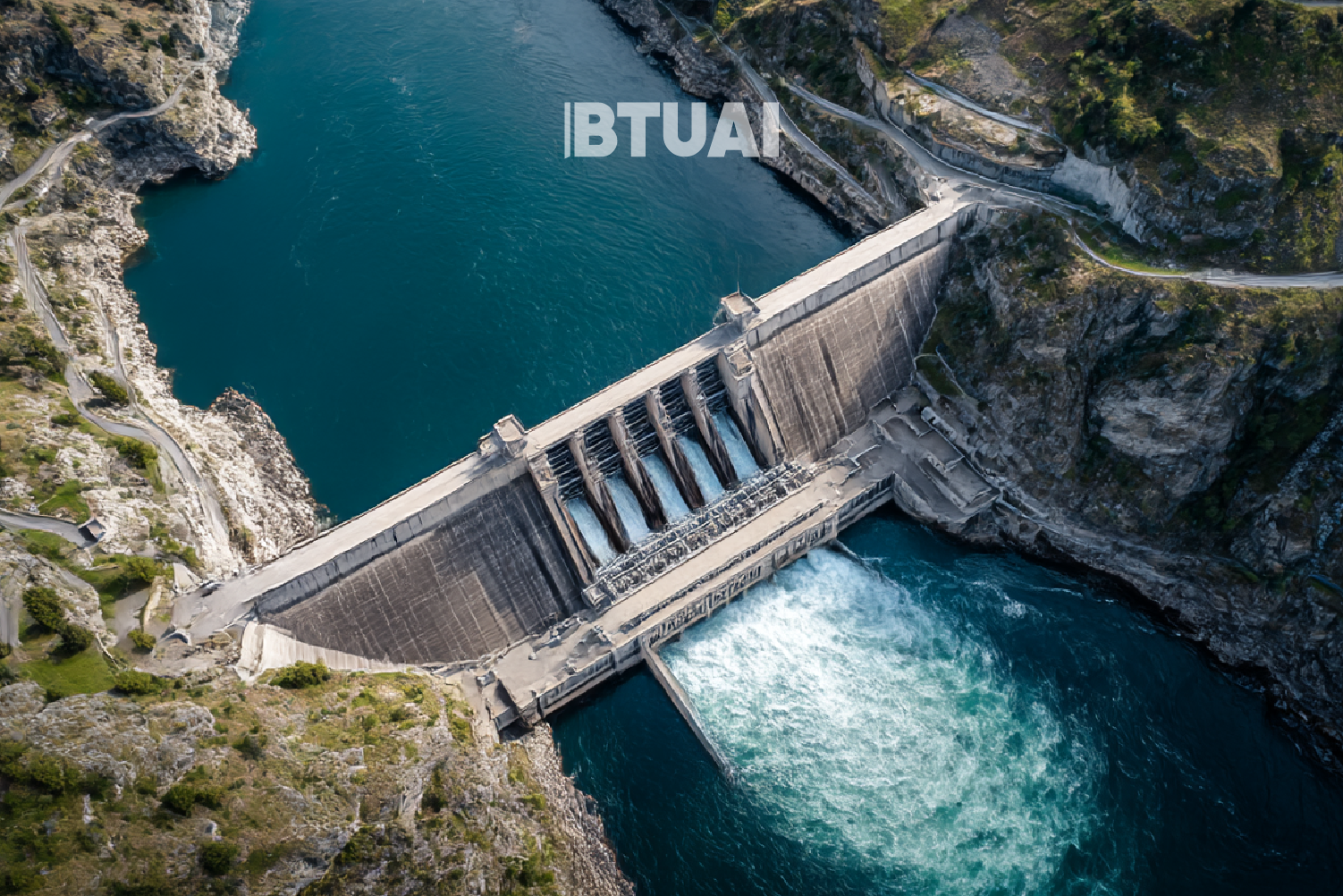
An academic study by Giga Tvauri, Maia Melikidze, and Garik Teymurazyan, published in 2025 under the title “The Impact of Hydropower on Georgia’s GDP” (DOI: https://doi.org/10.61586/Ynrav), developed a statistically robust model examining how energy consumption affects Georgia’s economic growth. Based on quarterly data from 2011 to 2024, the econometric analysis found that a 1% increase in energy consumption leads to a 0.15% rise in GDP, with a strong explanatory power (R² = 0.948). This indicates that energy-related variables explain nearly all of the variation in Georgia’s economic performance.
The authors highlight that Georgia’s energy sector—where 75% of total electricity generation comes from hydropower—is a core driver of economic stability. Yet the country still uses only about 22% of its total hydropower potential, estimated at 140 billion kWh annually. This means that a significant share of untapped capacity remains available to strengthen national energy independence and export potential. The study also finds that foreign direct investment has no statistically significant effect on growth, while energy trade balance (exports minus imports) negatively impacts GDP, emphasizing the importance of domestic generation and reduced import dependency.
When placed in global context, Georgia’s findings mirror broader international patterns while also revealing critical nuances. In China, a computable general equilibrium (CGE) model known as SinoTERM showed that large-scale hydropower projects increased regional GDP by 114%, but only 0.04% nationally (Ni et al., 2022). This illustrates a recurring paradox: large hydropower investments often stimulate regional growth but may not significantly transform national economies. A similar outcome was observed in Turkey, where hydropower projects contributed roughly 0.14% annually to real GDP growth (Levent, 2010).
In Nepal, the Asian Development Bank’s model projected that expanding hydropower capacity by 20% could raise real GDP by 87% by 2030, while substantially improving trade balance through energy exports (ADB, 2024). Bhutan provides another striking example: hydropower accounts for 13–14% of GDP and 27% of government revenue, mainly through exports to India. However, this dependency on a single export sector increases fiscal and climatic vulnerability (World Bank, 2020; Inter Press Service, 2025).
Brazil’s macroeconomic modeling reveals that without power infrastructure (including hydropower), the country’s real GDP would have been 35% lower, underscoring the structural importance of energy for industrialization (World Bank, 2010). Yet, local-level analyses show mixed results—some municipalities experience post-dam growth, while others face stagnation or decline, largely due to displacement and uneven regional benefits.
In Canada, hydropower generates 63% of total electricity, contributing about C$37 billion to GDP and supporting over 135,000 jobs (WaterPower Canada, 2015). Meanwhile, Ethiopia’s Grand Renaissance Dam (GERD)—Africa’s largest hydropower project—is expected to bring in over US$1 billion annually in export revenue, though analysts caution that geopolitical tensions and water management issues could offset some of the gains (Addis Insight, 2025).
Overall, cross-country evidence shows that hydropower’s effect on GDP is far from uniform. Countries that integrate energy expansion with industrial development, agriculture, and innovation tend to experience stronger multiplier effects. By contrast, nations relying solely on energy exports often face price volatility and concentrated economic gains.
Critically, while hydropower supports low-carbon growth, it also carries social and ecological costs—river flow disruption, biodiversity loss, and population displacement. Thus, the true economic success of hydropower depends not only on gigawatts produced but on whether benefits are equitably distributed and environmentally sustainable.
For Georgia, the implications are clear: domestic energy generation and reduced import dependency are essential for long-term economic resilience. When higher energy consumption directly translates into higher GDP, energy policy becomes not just a technical issue but a pillar of national development strategy.
This article was prepared by BTUAI, based on the academic study “The Impact of Hydropower on Georgia’s GDP” (Tvauri G., Melikidze M., Teymurazyan G., 2025, Business and Technology University, DOI: 10.61586/Ynrav) and other international sources.