




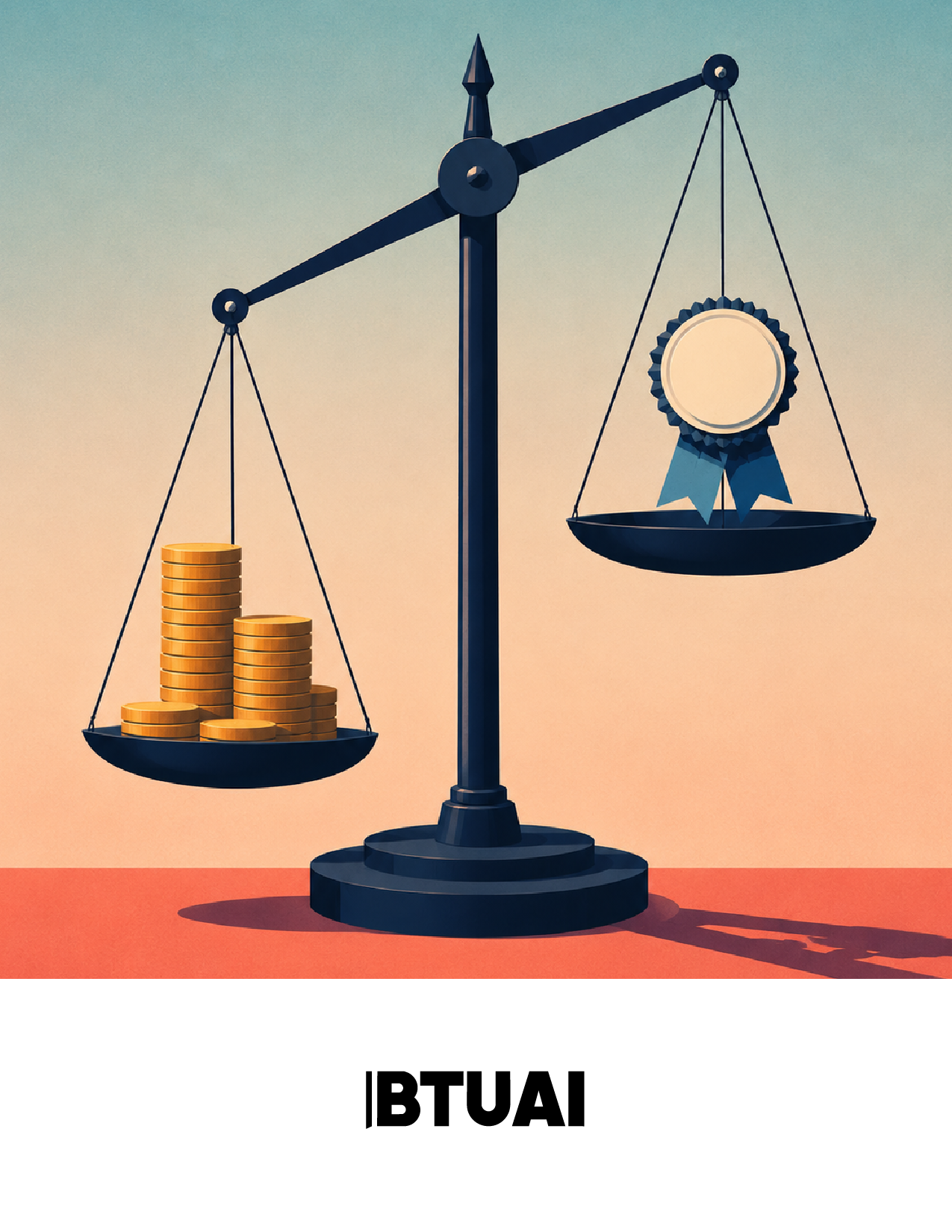
Middle-income consumers are one of the most important segments in the Georgian market because they are neither looking only for the cheapest option nor accepting expensive products without explanation. Their central question is: “Is this worth the price?”
For this segment, price still matters, but decisions are no longer made based on price alone. Consumers check quality, guarantee, brand reliability, service, long-term benefit and whether the product or service justifies its price.
BTU researchers assess that middle-income consumers in Georgia represent the core market for price-quality balance. This is where it is decided whether a brand can move from mass affordability to higher value. This is the segment where consumers may have greater ability to pay, but only if a higher price clearly means greater benefit.
The main conclusion of this research is that neither “it is cheap” nor “it is premium” works alone with middle-income consumers. The strongest formula is: reasonable price + reliable quality + clear benefit + stable service.
Middle-income consumers in Georgia often stand between two choices. They no longer want the cheapest option if cheap means risk. But they also do not accept expensive products easily unless they understand why they cost more.
Their everyday logic is:
If I pay more, it should be better.
If it is a brand, it should tell me what makes it different.
If there is a discount, quality should not fall.
If it is a service, it should be stable.
If it is an installment payment, conditions should be clear.
If it is premium, I will not pay only for the name.
This consumer compares alternatives more often. They may not be a professional analyst, but they understand that a poor choice creates additional costs. Therefore, for this segment, a good brand is not simply a well-known brand. It is a choice that justifies the money paid.
Main conclusion
The main behavioral characteristic of middle-income consumers is the demand for price justification.
In low-income segments, price is often the first barrier. In high-income segments, brands may move into the language of status, comfort and experience. Middle-income consumers stand between these two: they want better quality, but they do not want to overpay.
This means that businesses must show:
what the consumer receives at this price;
why this choice is better than a cheaper alternative;
how reliable the product or service is;
what guarantee it has;
what problem it mitigates;
how long it will work;
how much time, energy or future cost it saves.
For this segment, a successful brand is not the one that says “quality” most loudly. It is the one that shows quality clearly.
Data snapshot
The middle-income group in Georgia appears in two main layers:
| Income group | Share |
|---|---|
| Lower-middle income | 9.5% |
| Upper-middle income | 8.4% |
| Total middle-income base | 17.9% |
This segment is much smaller than the broad low-income market, but it is especially important for business because it is where the potential to move from price to value appears.
The internal structure of middle-income consumers is as follows:
| Middle-income consumer type | Share in total market | Share within middle-income segment |
|---|---|---|
| Upper-middle income segment moving toward quality | 5.5% | 30.7% |
| Lower-middle, value-oriented | 4.8% | 26.8% |
| Aspirational lower-middle segment | 4.7% | 26.3% |
| Careful price-quality upper-middle | 2.9% | 16.2% |
This shows that the middle-income group is not homogeneous. One part is ready to move toward better quality, one part seeks accessible value, one part is aspirational toward higher brands, and one part carefully checks whether paying more is really justified.
Four main types of middle-income consumers
- Upper-middle segment moving toward quality
This is the most interesting part of the middle-income group for businesses. Consumers here have more choice and are ready to pay more if they see real difference.
Their main question is:
“If I pay more, will I really get something better?”
For this segment, better quality, durability, service standard, guarantee, time saving, fewer problems, brand reliability and service accessibility matter.
This consumers may move to more expensive products, but will not accept a higher price only because of the brand name. They need proof.
Business implication
Communication that works well with this segment includes:
“More quality that is felt every day.”
“A more beneficial choice in the long run.”
“Fewer problems and more reliability.”
“Service and guarantee are included in the price.”
“Pay reasonably and receive a better experience.”
This segment is especially important in technology, household appliances, banking, insurance, healthcare, real estate, tourism, automobiles and services.
- Lower-middle, value-oriented segment
This segment is still careful with price, but it no longer automatically moves toward the cheapest option. It wants “the right price for the right quality.”
Its main question is:
“I will not overpay, but I will not buy poor quality either.”
For this consumer, price-quality balance, simple conditions, minimum quality guarantee, trusted brand, comparison, customer reviews, accessible installment payment and absence of hidden costs matter.
Business implication
Overly premium language does not work well with this segment. A reasonable, practical and direct tone works better.
The right formula is:
“It is not the cheapest, but it is worth it.”
“Good quality at a reasonable price.”
“You know exactly what you receive at this price.”
“Price and quality are in balance.”
This is a key audience for mass-market brands that want to position themselves as better than cheap products while remaining accessible.
- Aspirational lower-middle segment
This segment is especially interesting for brands that want to create accessible premium. Consumers may be attracted by a better brand, better visuals, higher quality or a status element, but price creates caution.
Its main question is:
“Can I buy a better brand without damaging my budget?”
Entry-level premium, small packages, installment payment, first-purchase offers, seasonal campaigns, loyalty programs and “try better” formats work well with this segment.
Business implication
This segment should not be treated as a classical premium consumer. It does not want a very expensive product. It wants a better experience in an accessible format.
Useful messages include:
“Better quality without unnecessary cost.”
“The first step into premium experience.”
“More benefit at a reasonable price.”
“Try a better choice easily.”
This segment works well in beauty and personal care, clothing, technology, FMCG, tourism, wellness services, digital products and small household services.
- Careful price-quality upper-middle segment
This consumer has relatively higher income, but still checks price carefully. They are not looking for the cheapest option, but will not accept an expensive product without explanation.
Their main question is:
“Is this really better, or is it just expensive?”
For this segment, brand promise is not enough. A real argument is needed: comparison, detailed conditions, guarantee, proof of quality, service standard, customer reviews, reduction of future costs and time saving.
Business implication
This is a very valuable consumer because once convinced, they may become loyal and repeat buyers.
Useful communication includes:
“Compare and you will see the difference.”
“The price includes more than the product.”
“It is more beneficial in the long run.”
“You are not paying only for the name – you are paying for quality, service and results.”
What price-quality means for this segment
For middle-income consumers, price-quality is not only an economic calculation. It is a form of trust.
If consumers see that the company honestly explains price, conditions, service and quality, it becomes easier to decide. If the price is unclear, conditions are vague or the brand promises quality loudly without evidence, consumers become cautious.
Explaining price-quality properly means:
transparency of old and new price;
comparison with cheaper alternatives;
what is included in the price;
emphasis on guarantee;
real proof of quality;
customer reviews;
simplicity of service terms;
explanation of long-term benefit.
What middle-income consumers want
Middle-income consumers want three things.
- Not to overpay
They do not want to feel that the brand is charging them only for the name. Therefore, price justification matters.
- Not to buy poor quality
They already understand that very cheap can sometimes become expensive. Therefore, minimum quality assurance is necessary.
- To make a calm choice
Middle-income consumers look for a choice that will not irritate them later. They want a product or service that will not create unnecessary problems.
For this segment, the brand promise can be summarized as:
“This is a reasonable choice – not so cheap that it creates doubt, and not so expensive that you feel deceived.”
Common mistakes companies make
The first mistake is focusing solely on discounts. Middle-income consumers pay attention to discounts, but if quality is not visible, a discount is not enough.
The second mistake is offering premium without explanation. Words such as “premium,” “exclusive” and “high class” do not work if consumers do not see practical difference.
The third mistake is complicated conditions. Installment plans, insurance, banking products, service packages or technology offers create suspicion if explained poorly.
The fourth mistake is weak service standards. Middle-income consumers may pay more, but they expect better service. If service does not match the price, the brand loses trust.
The fifth mistake is using one message for everyone. Within this segment, one group seeks accessible value, another seeks better quality, another wants accessible premium, and another requires rational proof. One communication style misses these differences.
Sector opportunities
FMCG and retail
Middle-income consumers in FMCG seek stable quality at a reasonable price. Messages such as “trusted choice for the family,” “more quality at an everyday price,” “tested brand” and “price-quality balance” work well.
Useful communication:
“Stable quality at an everyday price.”
“A trusted product for the family.”
“A good choice at a reasonable price.”
Technology and household appliances
In this category, price-quality is decisive. Consumers are ready to pay more if the product is more durable and includes guarantee and service.
Useful communication:
“It will last longer.”
“Guarantee and support are included in the price.”
“More beneficial in the long run than a cheap alternative.”
Financial products
Middle-income consumers pay special attention to conditions in financial products. They need simple examples, full cost explanation and no hidden terms.
Useful communication:
“You know exactly how much you will pay.”
“Conditions are explained simply.”
“Compare the full cost.”
Healthcare
In healthcare, middle-income consumers are not looking for the cheapest option, but for reliable and accessible quality. The brand should show professionalism, human attitude and transparent service.
Useful communication:
“Reliable healthcare service at a reasonable price.”
“Quality that is clearly explained.”
“You know the price in advance.”
Insurance
In insurance, the middle-income segment needs a simple explanation of risk. If the consumer sees that a small regular expense protects against a large loss, the value of the product becomes clear.
Useful communication:
“A small cost to protect against a large risk.”
“Understand what the policy covers and what it does not.”
“Protection with clear conditions.”
Real estate
Middle-income consumers are especially cautious in real estate. They need quality, location, infrastructure, document clarity and long-term value.
Useful communication:
“Not only price, but long-term value.”
“Clear conditions and reliable construction.”
“What you receive at this price – in detail.”
Tourism and services
Middle-income consumers in tourism look for a good experience without overpaying. Packages, transparent conditions, real photos and customer reviews are effective.
Useful communication:
“A good experience at a reasonable price.”
“You know in advance what is included in the package.”
“Quality rest without unnecessary cost.”
Beauty and personal care
In this sector, middle-income consumers are often ready to pay more if they see results and safety. “Result,” “quality,” “trusted brand” and “small premium” work well.
Useful communication:
“Quality that appears in the result.”
“Better care at a reasonable price.”
“A trusted choice for everyday personal care.”
Twelve business recommendations
- Do not speak to middle-income consumers only through price – explain value.
- If the product is expensive, show why it costs more.
- If the product is cheap, show why this does not mean low quality.
- Use comparison: cheaper alternative versus your product’s long-term benefit.
- Conditions must be clear, especially in financial, technical and service products.
- Price-quality communication should be practical, not overly emotional.
- Create accessible premium through small packages, trial offers or installment payment.
- With the upper-middle segment, emphasize service, time, comfort and fewer problems.
- With the lower-middle segment, emphasize reasonable price and reliable quality.
- With the aspirational segment, use “the first step to a better choice.”
- Customer reviews, real examples and guarantee are especially important in this segment.
- The strongest formula is: reasonable price, reliable quality, clear conditions and long-term benefit.
BTUAI assessment
BTUAI assesses that middle-income consumers in Georgia are one of the most strategic market segments. They are not the largest group by size, but they are the most important for the transition from price to value.
These consumers create demand for better quality, more trusted brands, transparent conditions, service standards and reasonable premium. If a company communicates with this segment properly, it can move consumers from price-oriented choices toward higher value.
The winner in this segment will be neither the cheapest nor simply the most expensive brand. The winner will be the brand that shows consumers: this price is justified.
The main conclusion of this research is that middle-income consumers in Georgia are the center of the price-quality market – the segment where a brand must prove not only awareness, but real value.
Key findings
- Middle-income consumers make up about 17.9% of the Georgian market.
- This segment is not driven only by price and does not accept premium prices unconditionally.
- The central question is: “Is this worth the price?”
- Within the middle-income group, there are four important types: quality-upgrading, value-oriented, aspirational and careful price-quality consumers.
- In the upper-middle group, better quality, service and comfort become more important.
- In the lower-middle group, reasonable price and reliable quality are central.
- Strong communication in this segment should be comparative, practical and transparent.
- The main business opportunity is moving the consumer from cheapness to value.
Data snapshot
Income groups
| Income group | Share |
|---|---|
| Lower-middle income | 9.5% |
| Upper-middle income | 8.4% |
| Total middle-income base | 17.9% |
Internal middle-income segments
| Middle-income consumer type | Share in total market | Share within middle-income segment |
|---|---|---|
| Upper-middle segment moving toward quality | 5.5% | 30.7% |
| Lower-middle, value-oriented | 4.8% | 26.8% |
| Aspirational lower-middle segment | 4.7% | 26.3% |
| Careful price-quality upper-middle | 2.9% | 16.2% |
Practical grouping
| Broad type | Share within middle-income segment | What it means for business |
|---|---|---|
| Quality-upgrading segment | 30.7% | Ready to pay more if quality is clear |
| Value-oriented segment | 26.8% | Seeks reasonable price and reliable quality |
| Aspirational segment | 26.3% | Attracted by better brands but needs accessible entry |
| Careful checker | 16.2% | Needs proof, comparison and price justification |
Methodology
This report was prepared as part of BTUAI Research. The analysis is based on demographic, regional, economic and behavioral data, as well as general trends observed in publicly available sources. The materials are processed using analytical methods applied by BTU researchers, with the support of BTUAI.
The purpose of the research is not to provide personal assessments, but to identify broader trends and practical directions for business, education and society.
In this material, middle-income consumer behavior is analyzed as a combination of price sensitivity, perception of quality, need for trust, importance of service, brand attitude and price-quality checking.
Limitations
The research shows group-level trends and should not be used to assess individuals.
Middle-income consumer behavior in this report is treated as analytical segmentation – a combination of price sensitivity, perception of quality, need for trust, importance of service, brand attitude and price-quality checking.
Segments do not mean that a specific consumer behaves the same way with every product. The same person may be a price-quality checker in technology, habit-dependent in FMCG and aspirational premium-oriented in tourism.
Sectoral conclusions should be treated as practical guidance for business, not as guaranteed sales forecasts.
Sources
BTUAI research analytics.
Analytical processing by BTU researchers.
General trends observed in publicly available sources.
Analytical assessment of Georgia’s market, income groups, price-quality perception, brand sensitivity and consumer behavior.
Frequently asked questions
Who is the middle-income consumer in this research?
This is the consumer who no longer moves only by minimum price, but also does not accept high prices unconditionally. Their main demand is price-quality justification.
What is the main question for this segment?
The main question is: “Is this worth the price?” The consumer seeks not only accessibility, but reliable quality and justified value.
How should businesses speak to middle-income consumers?
Businesses should explain what is included in the price, why the product is reliable, how it differs from cheaper alternatives and what long-term benefit the consumer receives.
Does premium work in this segment?
Yes, but only as accessible or justified premium. A higher price must be explained through quality, service, guarantee or better experience.
What is the main business conclusion?
Middle-income consumers are the core market for price-quality balance. The successful brand will not only set a price, but clearly justify that price.
Keywords
Middle-income consumers in Georgia; value for money; Georgian consumer behavior; brand trust; price-quality balance; affordable premium; consumer segmentation; Georgian business; BTUAI; Business and Technology University.
Citation format
BTUAI Research Team. “Middle-Income Consumers in Georgia: The Core Market for Price-Quality Balance.” Business and Technology University, BTUAI.ge, 2026.
Prepared by the academic team of Business and Technology University and the BTUAI Research Team.
Tbilisi, Georgia
BTUAI is an analytical platform of Business and Technology University that studies the impact of artificial intelligence, digital transformation, innovation, startup ecosystems, data analytics and emerging technologies on business, the economy, education and society. BTUAI materials are designed to explain complex technological and economic changes in a clear, reliable and Georgia-focused way.