
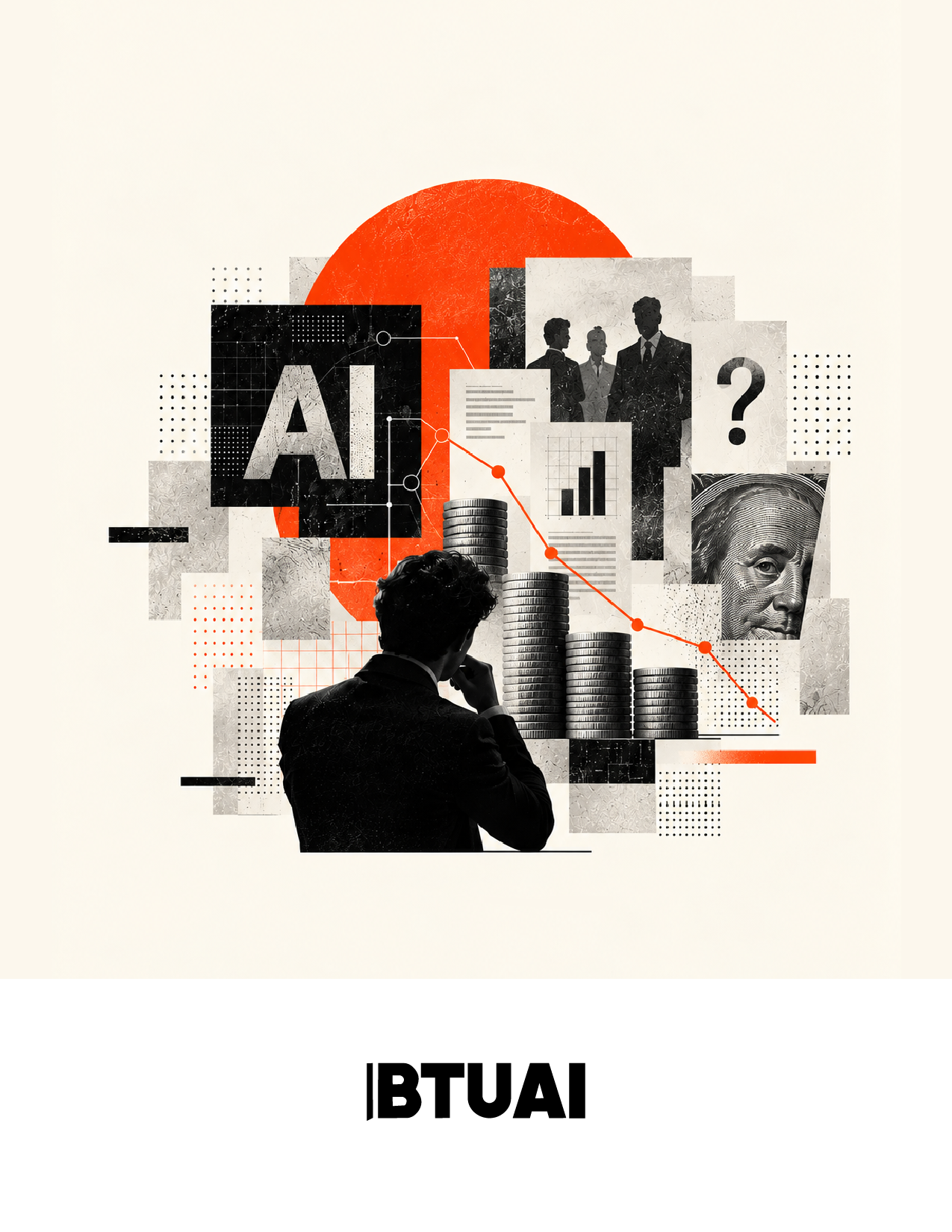
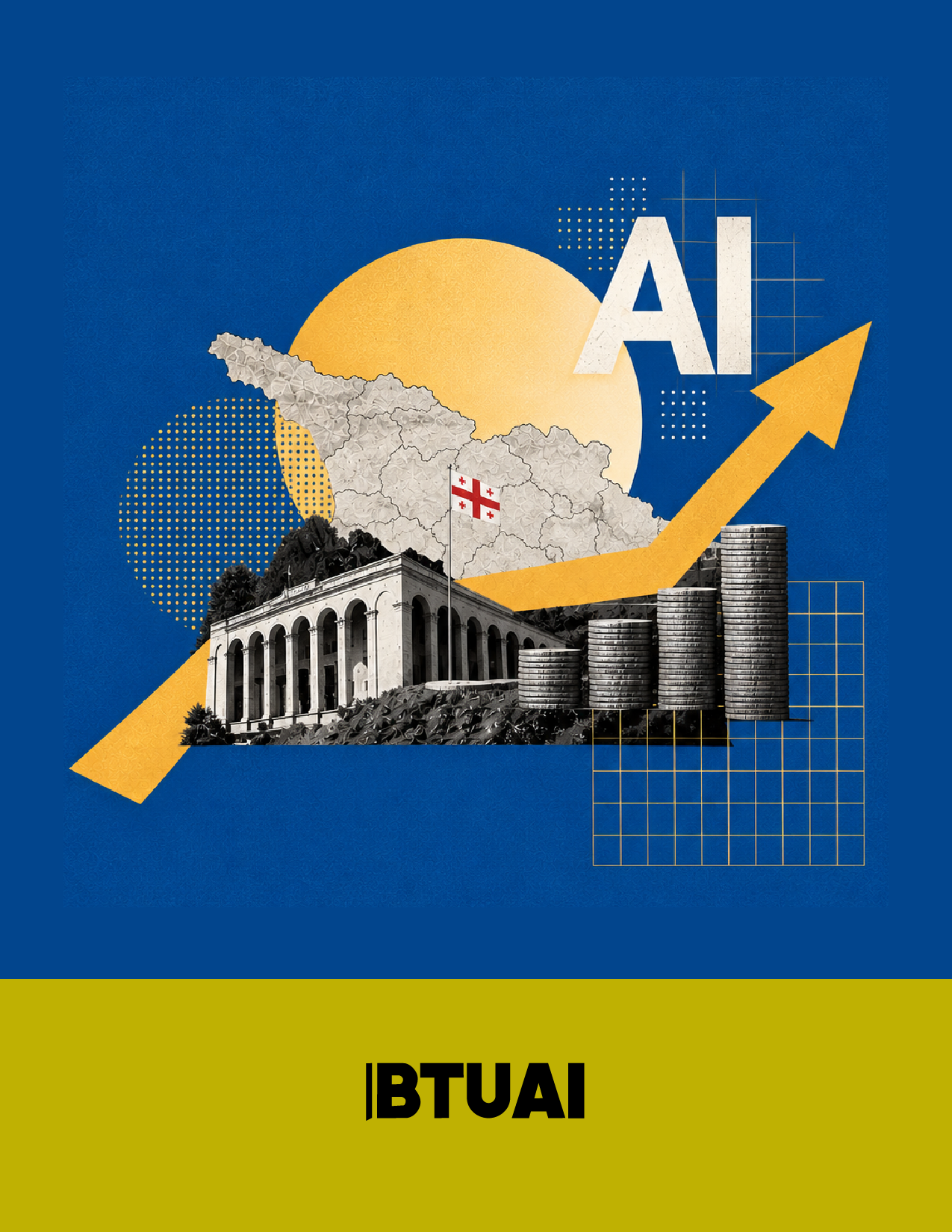


AI infrastructure is becoming so capital intensive that the boom is no longer only a technology story. Banks, insurers and reinsurers increasingly need to decide who bears the loss if expensive chips depreciate faster than expected, a borrower defaults or a data centre stops operating.
Key Takeaway
A September 29 Financial Times report describes Nvidia’s effort to bring insurers more deeply into AI-infrastructure finance. The company is discussing structures that could protect lenders when smaller cloud infrastructure operators, or neoclouds, default and pledged Nvidia chips cannot be resold for enough to cover the outstanding debt.
This is not yet a mature or standardized “AI insurance” product. The discussions remain at an early stage. Nvidia has been sharing data on chip depreciation and future computing value with insurers and working with Howden Re on potential risk-distribution structures. The broader significance is that physical AI infrastructure is becoming an asset class that requires not only technological forecasts but also credit and insurance risk models.
Swiss Re Institute provides the wider context. Construction costs for a single major data-centre location can reach USD 20 billion before technology is installed, and the value can rise further once GPUs and other equipment are added. Swiss Re expects global insurance premiums linked to data centres to rise to USD 24.2 billion by 2030 from USD 10.6 billion. This is a forecast, not an already-realized market size.
Why insurance is becoming part of AI infrastructure
Traditional data centres already require property and business-interruption cover, but AI infrastructure increases value concentration. GPUs are expensive, energy demand is high, cooling systems are becoming more complex and a growing amount of value is concentrated at individual sites. A single physical or operational failure can therefore affect several customers and revenue streams at once.
Swiss Re highlights natural catastrophes, water damage, power interruption, new cooling systems, fire and cyber risk. Power supply accounts for 45% of data-centre outages in the research cited by Swiss Re. AI servers can also require more than 100 kilowatts per rack, compared with 5–15 kilowatts for traditional servers. This illustrates why the insurance profile is changing alongside the technology.
| Risk | What can be affected | Insurance relevance |
| Rapid chip depreciation | Residual collateral value | Potential lender loss |
| Power interruption | Service continuity and revenue | Business-interruption exposure |
| Cooling-system failure | GPUs and other equipment | Property and operational loss |
| Natural catastrophe | Buildings, power systems, equipment | Large value concentration at one site |
| Cyberattack | Data and operational technology | Cyber loss and service disruption |
The chip is becoming a financial asset
The economic logic behind Nvidia’s initiative is to make the chip more than a technology product. If lenders can estimate residual value, secondary-market demand and revenue-generating capacity, GPUs can support financing. Jensen Huang has compared the concept with investable assets such as aircraft.
The analogy has limits. Aircraft have longer economic lives and deeper historical datasets. AI chips face much faster technology cycles, meaning residual values can change quickly. The insurer’s task is therefore not to predict the winning technology, but to identify measurable losses that can be priced and contractually defined.
Insurance distributes risk; it does not remove it
Insurance cannot turn a weak investment into a strong one. A data centre may lack customers, AI-service demand may disappoint, or hardware may become obsolete faster than expected. These events are not automatically insurable. Drawing a clear line between an insured event and ordinary investment risk will be one of the market’s central challenges.
If part of a lender’s risk moves to an insurer, the insurer can in turn distribute exposure through reinsurance or other capital providers. The financing chain becomes broader, but the underlying risk remains in the system and is redistributed across balance sheets.
The insurance opportunity around AI infrastructure is expanding
In September 2026, Swiss Re Institute estimated that investment in AI data centres and renewable-energy infrastructure could generate around USD 200 billion in cumulative commercial insurance premiums between 2026 and 2030. The figure covers several infrastructure categories and should not be interpreted as the size of a standalone “AI policy” market. Its importance is that the investment cycle is creating larger, more interconnected and more geographically concentrated exposures.
Georgia starts from a different insurance-market structure
Georgia should not mechanically import the Nvidia model. There is no public standalone dataset measuring AI data-centre insurance or loans secured by AI chips in the country. It would therefore be unsupported to claim that Georgia already has the same market emerging in the United States.
The domestic insurance sector is nevertheless growing. Georgia’s Insurance State Supervision Service reports that gross written premiums exceeded GEL 1.4 billion in 2025, 12% higher than a year earlier. The country had 19 registered insurers and 26 insurance brokers. Health insurance represented 43% of the market and motor insurance 21%, showing that the largest volumes remain concentrated in established lines.
| Georgia insurance market, 2025 | Indicator | What it shows |
| Gross written premium | More than GEL 1.4bn | Market continued to expand |
| Annual growth | 12% | Premium volume increased |
| Insurance companies | 19 | Domestic risk carriers |
| Insurance brokers | 26 | Risk-placement intermediaries |
| Health insurance | 43% | Largest market line |
| Motor insurance | 21% | Second-largest line |
A realistic opportunity for Georgia
Georgia’s nearer-term opportunity is broader technology-risk insurance rather than a direct copy of Nvidia’s financing model. A company dependent on cloud services, servers or AI systems can simultaneously face property, cyber, business-interruption and professional-liability exposures. Treating these risks in isolation may fail to capture the real economic loss.
Reinsurance is a second area. In a small market, rare but severe technology losses are difficult to retain entirely on domestic balance sheets. International reinsurance can distribute part of that exposure. Data is the third capability: equipment age, energy use, outage history, cooling architecture and cyber controls can become important inputs into future underwriting.
Four practical risk questions
According to an assessment by BTU researchers, a Georgian company or insurer can begin by asking four questions: How much value is concentrated at one location? How quickly can the core technology depreciate? What is the financial effect of several hours or days of downtime? And which losses remain with the company even after insurance responds?
| Diagnostic question | Lower-complexity case | Higher-complexity case |
| Is value concentrated at one location? | Limited concentration | High concentration |
| Does the asset depreciate quickly? | Stable secondary value | Fast technology cycle |
| Does downtime stop substantial revenue? | Low dependence | Critical continuity |
| Are loss types interconnected? | Separate exposures | Property, cyber and financial risks overlap |
This is a BTU analytical framework, not an official international insurance classification or scoring model.
What Georgian companies and insurers should consider
The first question should not be only how much it costs to insure hardware. Firms need a dependency map: which services rely on the infrastructure, how long the business can tolerate an outage, what alternative capacity exists and where responsibility sits among the technology supplier, data-centre operator, client and insurer.
For insurers, limited historical loss data is a major challenge. Next-generation AI data centres are changing faster than long loss histories can accumulate. Pricing will therefore require engineering assessment, scenario analysis and international reinsurance expertise in addition to historical statistics.
BTU Researchers’ Assessment
According to an assessment by BTU researchers, “AI insurance” is more likely in the near term to emerge as a convergence of existing insurance lines – property, business interruption, cyber, credit risk and reinsurance – around the specific exposures of AI infrastructure, rather than as one uniform new insurance class.
For Georgia, the key opportunity is to develop technology-risk assessment capabilities. The country does not yet have Nvidia-scale chip-backed financing, but dependence on digital infrastructure is increasing. Earlier development of risk data and underwriting expertise would leave insurers, brokers and corporate users better prepared for future growth in data-centre and AI infrastructure.
Conclusion
The AI boom is turning insurance into part of the financial architecture of technology growth. Nvidia’s discussions show that the next stage of competition will depend not only on who builds the best chips, but also on how easily those chips can be financed and who carries part of the downside if collateral values fall or borrowers default.
Insurance cannot eliminate the economics of AI risk. It can price defined losses, free capital and distribute exposure. For Georgia, the lesson is not to copy a foreign structure mechanically, but to develop the ability to see technology, cyber, operational and financial risks as one connected system.
Data and Main Sources
Financial Times, 29 September 2026 – Nvidia turns to insurers to spread the risk of AI build-out.
Swiss Re Institute – sigma insights 07/2026: Insuring AI: data centre value accumulation risks, 27 March 2026.
Swiss Re Institute – Global investment boom could create USD 200 billion commercial insurance opportunity amid rising accumulation risks, 5 September 2026.
Insurance State Supervision Service of Georgia – 2025 insurance-market results, 2026 update.
Prepared by the academic team of Business and Technology University and the BTUAI Research Team, Tbilisi, Georgia.