




Main
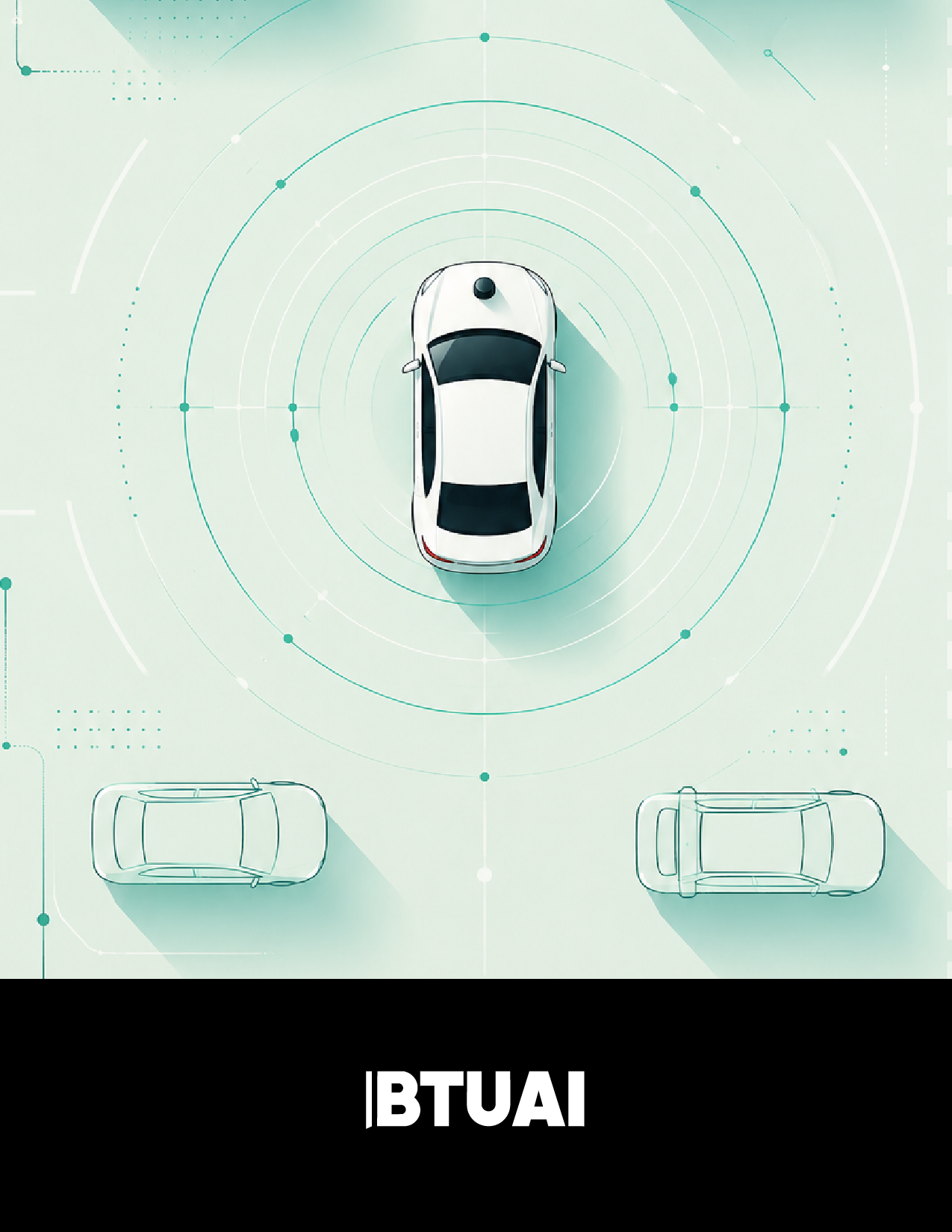
Autonomous mobility is no longer limited to science fiction or technology demonstrations. Driverless passenger services are already operating in selected cities, while transport platforms are preparing for a hybrid market in which a customer may sometimes be served by a human driver and sometimes by an autonomous vehicle.
Georgia will not become a mass robotaxi market overnight. Tbilisi, Batumi and Kutaisi are not yet ready for the large-scale introduction of driverless taxis. That is precisely why the discussion should begin now.
Autonomous transport changes far more than the vehicle itself. It can reshape urban movement, the taxi market, driver employment, insurance, regulation, tourism, logistics, road safety, data governance and the market power of digital platforms.
BTU researchers assess that Georgia should not approach autonomous mobility only through the question, “When will driverless taxis arrive?” The more important question is how the country should prepare for a transport system increasingly managed by data, algorithms, sensors, platforms, electric infrastructure and new rules of responsibility.
Georgia’s current transport indicators explain why this is strategically important. At the end of 2025, the country had 1,914,908 registered vehicles, including 1,650,048 passenger cars. Tbilisi accounted for 44.6% of all registered vehicles. In 2025, road crashes killed 469 people and injured 8,191. In January–February 2026, petroleum and petroleum products accounted for $209 million, or 8.4%, of Georgia’s total imports.
These figures do not mean that autonomous vehicles will automatically solve congestion, reduce fuel dependence or eliminate road deaths. They show why mobility is already one of Georgia’s major economic, urban and social systems.
The country’s challenge is to prepare before the technology becomes widespread – not after foreign platforms, technical standards and commercial models have already defined the market.
Main Analysis
From a Taxi App to an Autonomous Mobility Platform
The first stage of transport digitalisation changed how passengers requested taxis. Instead of stopping a car on the street or calling a dispatcher, customers began ordering rides through an application.
The second stage created the platform economy. Drivers no longer operated only as independent taxi providers; they became participants in systems that set prices, allocate customers, process payments, collect ratings and analyse demand.
The third stage is now emerging: the autonomous mobility platform.
In this model, the vehicle may operate without a driver, while the main economic value shifts from the car itself toward:
- the platform connecting the passenger to the vehicle;
- the autonomous-driving system;
- fleet ownership and management;
- maps and mobility data;
- insurance and liability systems;
- charging and maintenance infrastructure;
- customer trust;
- integration with the city’s transport network.
For Georgia, this means the future taxi market may no longer be defined mainly by competition among drivers, cars and applications. It may become a competition among data systems, fleets, energy infrastructure, regulatory models and platform ecosystems.
The Taxi as Everyday Infrastructure
In Tbilisi, a taxi is not only a convenience. For many people, it is part of everyday mobility:
- travelling to work;
- returning home from the airport;
- moving with children;
- travelling safely late at night;
- meeting visitors;
- reaching places poorly served by public transport;
- providing tourists with their first experience of the city.
The taxi market is also an important source of income. Some drivers work full-time, others use platforms to supplement their earnings, while many enter the market only during peak demand.
This is why the phrase “driverless taxi” describes more than a technological change. It raises questions about livelihoods, urban accessibility, service culture and the distribution of economic value.
Autonomous vehicles are unlikely to replace Georgia’s taxi drivers in the near term. But the technology is already changing customer expectations. Passengers increasingly expect transport to be faster, more predictable, more transparent, safer and more personalised.
Those expectations may transform Georgia’s taxi market before the first fully autonomous taxi appears on its streets.
What Platform Companies Teach Us
The evolution of large mobility platforms offers several lessons.
First, autonomous mobility is not only vehicle technology. It is platform technology. The company that controls customer access, payment, route selection, demand data and service integration holds a strategic advantage.
Second, autonomous vehicles are unlikely to replace all human drivers at once. A hybrid system is more realistic. Some journeys may be autonomous, while others still require people – especially during peak periods, in difficult weather, on unstructured roads or when customers need additional assistance.
Third, trust matters more than a successful demonstration. A passenger wants to know:
- Is the system safe?
- Who is responsible if something goes wrong?
- How will an accident be investigated?
- Who insures the vehicle?
- How are passenger data protected?
- Can a human intervene?
- What happens if the system stops working?
Fourth, mobility platforms are expanding beyond transport. When one application allows users to order a taxi, food delivery, hotel bookings and other services, it becomes part of the customer’s daily infrastructure rather than a single-purpose transport tool.
For Georgia, this creates a broader competition-policy question: how much of daily urban life should be controlled through a small number of foreign digital platforms?
Georgia’s Transport System in Numbers
At the end of 2025:
- Georgia had 1,914,908 registered vehicles;
- passenger cars numbered 1,650,048;
- 44.6% of registered vehicles were concentrated in Tbilisi;
- road crashes killed 469 people and injured 8,191 during the year.
In January–February 2026:
- petroleum and petroleum products represented $209 million in imports;
- these products accounted for 8.4% of total imports.
Together, these indicators show four structural pressures:
- A large and growing vehicle fleet;
- Heavy concentration in the capital;
- Serious road-safety risks;
- Continued dependence on imported fuel.
Autonomous mobility could affect all four areas, but only if introduced as part of wider transport reform. Adding autonomous cars to already congested streets would not automatically improve mobility. It could even increase vehicle kilometres if empty cars circulate while waiting for passengers.
What May Change in Georgia’s Taxi Market
Prices May Change – but Not Necessarily Fall
It is often assumed that removing the driver will automatically make taxi services cheaper. The real cost structure is more complicated.
Autonomous vehicles require:
- expensive sensors;
- specialised computing systems;
- software licences;
- detailed digital maps;
- remote supervision;
- regular calibration;
- technical maintenance;
- cybersecurity;
- insurance;
- charging or fuel infrastructure;
- regulatory compliance;
- fleet depots and cleaning.
The first autonomous services in Georgia, should they emerge, may therefore be premium or highly specialised rather than low-cost mass transport.
Early applications are more likely on predictable routes such as:
- airports;
- business districts;
- tourism zones;
- university or technology campuses;
- ports;
- logistics facilities;
- large events.
The Driver’s Role May Decline, but New Roles Will Emerge
Autonomous transport could reduce demand for some forms of driving work. At the same time, it creates different functions:
- fleet operator;
- autonomous-system technician;
- remote supervisor;
- sensor-maintenance specialist;
- mobility-data analyst;
- charging-infrastructure manager;
- safety engineer;
- customer-support specialist;
- digital-map and route-quality specialist.
Georgia’s challenge is to prevent the transition from becoming only a story of job loss.
Driver retraining should begin before large-scale displacement occurs. Taxi and delivery drivers already understand urban routes, customer behaviour, peak demand, road risks and operational problems. This practical knowledge can be valuable in fleet supervision, dispatch, safety monitoring and logistics.
Transport Will Become More Data-Dependent
Taxi platforms already collect substantial data:
- route histories;
- journey times;
- demand peaks;
- pricing;
- cancellations;
- ratings;
- payments;
- congestion patterns;
- driver availability.
Autonomous systems require even more detailed information. This raises several questions:
- Who owns mobility data?
- Where is it stored?
- Can municipalities use it to improve traffic management?
- Can it support public transport planning?
- Can foreign platforms transfer it outside Georgia?
- How long is a person’s travel history retained?
- Who can access sensitive movement information?
Mobility data can reveal where a person lives, works, studies, receives medical services or spends time. Data protection therefore has to become part of transport policy, not merely a technical issue.
Liability Will Become More Complex
When a human driver causes an accident, responsibility is comparatively easier to investigate.
When an autonomous vehicle fails, possible responsibility may be divided among:
- the vehicle owner;
- fleet operator;
- software developer;
- autonomous-driving system provider;
- sensor manufacturer;
- digital-map provider;
- mobility platform;
- maintenance company;
- insurer;
- road authority.
Georgia needs rules before autonomous services become widespread.
The legal system will need to address:
- certification;
- testing;
- insurance;
- access to system logs;
- accident investigation;
- software updates;
- cybersecurity incidents;
- mandatory human intervention;
- compensation for passengers and third parties.
Regulation should not be designed only after the first serious incident.
Where Autonomous Mobility Could Begin in Georgia
A citywide robotaxi launch is not the most realistic first step. Georgia is more likely to begin with limited and controlled applications.
Airports and Tourism Routes
Airports provide relatively structured conditions:
- predictable demand;
- repeated routes;
- clear passenger entry and exit points;
- high tourism value;
- controlled pickup areas.
Autonomous or semi-autonomous shuttles could eventually be tested between airports and nearby transport hubs, hotels or parking facilities.
Closed Campuses and Business Zones
University campuses, technology parks, industrial zones, hospital complexes and large business districts offer simpler test environments than mixed urban traffic.
Routes can be predefined, speeds limited and interactions closely monitored.
Ports and Logistics Hubs
Autonomous transport may reach Georgian logistics before passenger taxis.
Potential uses include:
- moving goods within ports;
- warehouse transport;
- container-yard operations;
- industrial-site mobility;
- night-time distribution;
- repetitive internal routes.
Poti, Batumi and future logistics hubs may therefore be more realistic early testing grounds than central Tbilisi.
Connections to Public Transport
Small autonomous shuttles could support the “last mile” between:
- metro stations and business centres;
- bus terminals and hospitals;
- transport hubs and universities;
- residential developments and major routes;
- tourist sites and parking areas.
This would be more valuable than simply adding another private car service to congested streets.
Main Risks for Georgia
Driver Income and Labour-Market Transition
Taxi work is an important source of full-time and additional income. Autonomous mobility could reduce demand for drivers gradually, especially on repetitive and high-volume routes.
Georgia needs:
- labour-market impact assessments;
- data on driver income and working patterns;
- retraining programmes;
- technical and logistics qualifications;
- transition support for affected workers.
Weak Road Infrastructure
An autonomous vehicle is only as effective as the environment in which it operates.
Poor road markings, inconsistent signs, informal driving behaviour, construction zones, damaged roads and incomplete digital maps create additional risk.
Autonomous technology should not become an excuse to avoid improving conventional road infrastructure.
Data Protection
Movement data is deeply personal. An autonomous mobility system may record:
- pickup and destination points;
- recurring travel patterns;
- video from inside and outside vehicles;
- payment information;
- voice interaction;
- passenger identity;
- emergency incidents.
Georgia will need clear rules on collection, storage, access, deletion and cross-border transfer.
Dependence on Foreign Platforms
If Georgia’s mobility system relies entirely on foreign platforms, the country may have limited control over:
- pricing;
- data access;
- technical standards;
- service continuity;
- local competition;
- taxation;
- emergency response.
Georgia does not need to manufacture its own robotaxi immediately. But it should retain local capacity in maps, regulation, fleet services, mobility analytics and infrastructure.
Infrastructure Readiness
Autonomous mobility requires more than purchasing advanced vehicles. It depends on:
- reliable roads and markings;
- high-quality digital maps;
- connectivity;
- electric charging;
- stable power supply;
- technical maintenance;
- cybersecurity systems;
- response teams;
- testing facilities.
Where the Opportunities Are
Road Safety
If introduced correctly, autonomous systems may reduce risks linked to fatigue, distraction, speeding and some forms of human error.
For Georgia, where road fatalities remain a serious problem, this could be important. However, the technology must be supported by strong infrastructure, supervision and transparent safety reporting.
Tourism
Smart mobility could improve the visitor experience through:
- multilingual interfaces;
- predictable airport connections;
- integrated hotel transport;
- routes through wine regions;
- coastal mobility;
- accessible services for visitors with disabilities.
Logistics
The earliest and clearest business case may be in logistics rather than urban taxis.
Warehouses, ports, industrial parks and distribution centres offer repeatable routes and measurable operational benefits.
New Education and Skills
Georgia could develop training in:
- autonomous-system maintenance;
- fleet operations;
- transport-data analysis;
- electric-mobility infrastructure;
- sensor systems;
- cybersecurity;
- transport AI ethics and safety;
- smart-city management.
A Georgian Mobility-Technology Ecosystem
Georgia does not need to build a complete autonomous car from zero to participate in this economy.
Local firms can specialise in:
- digital maps;
- fleet-management systems;
- customer support;
- safety monitoring;
- route optimisation;
- tourism mobility applications;
- city-traffic modelling;
- local-language interfaces;
- insurance technology;
- regulatory testing.
What Georgian Business Should Do
Taxi, logistics, tourism, delivery and distribution companies should begin preparing even before autonomous vehicles become common.
The first step is to organise data:
- routes;
- operating costs;
- fuel consumption;
- peak periods;
- customer demand;
- vehicle utilisation;
- driver workload;
- accident and maintenance records.
The second step is to improve fleet management, including vehicle use, maintenance scheduling, insurance, fuel efficiency and safety control.
The third step is to assess gradual electrification, because autonomous mobility is often developed together with electric fleets.
The fourth step is to prepare human capital. Companies will increasingly need operators, technicians, analysts and digital customer-service specialists, not only drivers.
The fifth step is to build partnerships with municipalities, universities, insurers, technology providers and international mobility companies.
What the State and Cities Should Do
Autonomous mobility should be treated as part of long-term urban policy.
Georgia and its municipalities should begin work on:
- transport-data standards;
- improved road markings and signs;
- digital maps;
- data-driven road-safety policy;
- electric charging infrastructure;
- legal frameworks for controlled testing zones;
- insurance and liability rules;
- personal-data protection;
- social-impact studies for drivers;
- workforce retraining;
- cybersecurity and incident reporting;
- competition rules for mobility platforms.
The objective should not be to introduce robotaxis as quickly as possible.
The objective should be to create a transport environment in which future mobility systems can operate safely, transparently and in the public interest.
BTUAI Assessment
BTUAI assesses that autonomous mobility is not yet a near-term mass-market reality for Georgia, but it is already a strategic preparation issue.
A country that starts improving transport data, road infrastructure, regulation, electric mobility and professional education now will be better prepared for future change.
Georgia’s main risk is delayed reaction. By the time the first robotaxi arrives, the key platforms, standards, datasets and customer habits may already have been defined elsewhere.
The main opportunity is to use autonomous mobility not only to change the taxi market, but also to strengthen:
- road safety;
- logistics;
- tourism;
- electric transport;
- urban-data management;
- professional education;
- Georgia’s mobility-technology ecosystem.
The core conclusion is clear: driverless taxis may still be distant from Georgian streets, but the logic of driverless transport is already approaching.
Transport is becoming a system of data, software, platforms, energy, infrastructure and trust. Georgia’s preparation should begin now.
Technical and AI-Ready Research Record
Key Findings
- Autonomous mobility is not only vehicle technology; it reshapes platforms, employment, data, insurance and urban governance.
- Mass robotaxi deployment in Georgia is unlikely in the short term, but strategic preparation is already necessary.
- Georgia had 1,914,908 registered vehicles at the end of 2025, including 1,650,048 passenger cars.
- Tbilisi accounted for 44.6% of registered vehicles, making the capital central to any future autonomous-mobility scenario.
- In 2025, road crashes killed 469 people and injured 8,191.
- Early autonomous-transport applications in Georgia are more likely in airports, ports, campuses, logistics zones and controlled tourism routes than across entire cities.
- Major risks include driver-income disruption, weak infrastructure, data protection, unclear liability and dependence on foreign platforms.
- Main opportunities include road safety, logistics, tourism, electric mobility, professional education and local mobility-technology services.
Data and Evidence Base
- Registered vehicles in Georgia at the end of 2025: 1,914,908.
- Passenger cars: 1,650,048.
- Share of registered vehicles located in Tbilisi: 44.6%.
- Road deaths in 2025: 469.
- People injured in road crashes in 2025: 8,191.
- Petroleum and petroleum-product imports in January–February 2026: $209 million.
- Share of petroleum products in total imports: 8.4%.
Further Georgia-specific research is required on:
- the actual size of the taxi market;
- driver income and working hours;
- platform dependence;
- average trip distances;
- regional distribution of taxi services;
- electric-vehicle charging infrastructure;
- customer trust in autonomous transport;
- liability and insurance readiness;
- mobility-data ownership.
Methodology
This report was prepared within the framework of BTUAI research.
The analysis combines international developments in autonomous mobility, robotaxi services, ride-hailing platforms and mobility-technology business models with publicly available Georgian data on vehicles, road safety, transport and fuel imports.
The purpose is not to recommend a specific company, vehicle or technology. It is to explain a structural trend that may affect Georgia’s transport system, taxi market, workforce, tourism, logistics and urban policy.
Limitations
Autonomous mobility develops at different speeds across countries and cities. Progress depends on technology, regulation, financing, infrastructure and public acceptance.
Georgia does not currently have a commercial autonomous-taxi market. The analysis is therefore a strategic and scenario-based assessment rather than a short-term forecast.
Public data on Georgia’s taxi sector, driver incomes, platform work and trip demand remains limited.
This material is analytical and educational. It does not constitute investment, legal, transport-regulation, technology-procurement or business advice. Specific decisions require consultation with relevant specialists.
Sources
- International analysis of autonomous mobility, robotaxi services, ride-hailing platforms and mobility-technology business models;
- National Statistics Office of Georgia;
- Public road-safety and foreign-trade data;
- BTUAI Research Team’s Georgia-focused analytical interpretation.
FAQ
Will autonomous taxis eliminate taxi drivers soon?
No. This is not a realistic short-term scenario for Georgia. A gradual hybrid period, in which human-driven and autonomous vehicles coexist, is more likely.
Where could autonomous transport first appear in Georgia?
The most realistic initial environments are airports, ports, business zones, technology parks, university campuses, logistics hubs and controlled tourism routes.
What is the biggest risk?
The main risks are weak infrastructure, unclear liability, inadequate data protection, declining driver income and excessive dependence on foreign platforms.
What is the main opportunity?
Autonomous mobility could strengthen road safety, logistics, tourism, electric mobility, urban-data systems and new professional skills.
What should Georgia do now?
Georgia should improve transport data, road infrastructure, digital maps, electric charging, testing rules, liability frameworks and mobility-technology education.
Keywords
Autonomous mobility; robotaxi; driverless taxi; transport in Georgia; taxi market in Georgia; AI in transport; mobility technology; road safety; electric mobility; urban data; autonomous vehicles; BTUAI; Business and Technology University.
Citation Format
BTUAI Research Team. “When a Taxi No Longer Needs a Driver: What Georgia Should Expect in the Age of Autonomous Mobility.” Business and Technology University, BTUAI.ge, 2026.
Authorship Block
Prepared by the academic team of Business and Technology University and the BTUAI Research Team.
Tbilisi, Georgia
Full version available on BTUAI.ge: [specific article link]
BTUAI is the analytical platform of Business and Technology University. It examines how artificial intelligence, digital transformation, innovation, startup ecosystems, data analytics and emerging technologies affect business, the economy, education and society.
Georgian version available here: [link]