


In modern sport, success is no longer measured only by performance on the field. The athlete, who was once defined mainly by matches, titles and clubs, can now become a global brand – a media product, business partner, investor, cultural symbol, tourism amplifier and carrier of a country’s image.
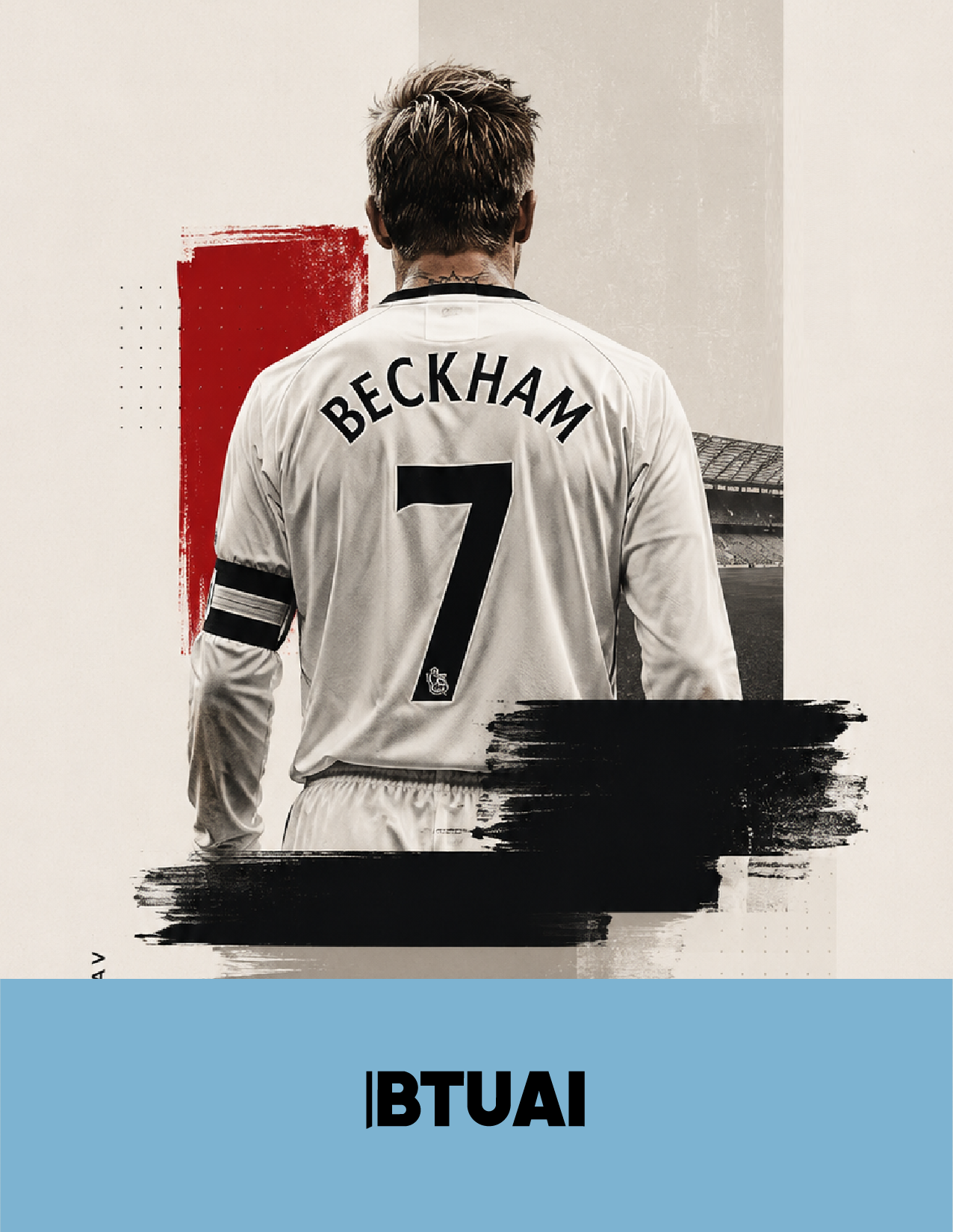
The David Beckham model is one of the best-known examples of this transformation. His career did not end with football results alone. Personal brand, social capital, media visibility, commercial partnerships, business interests connected to clubs and leagues, style culture and constant communication with a global audience became one integrated economic system.
For Georgia, this issue is important because the country has talented athletes, emotionally strong sports audiences, powerful individual success stories and strong traditions in football, rugby, basketball, judo, wrestling and other sports. But the transformation of athletes into brands is still rarely understood in a systematic way. Success often remains only a sports news story, a media interview or a one-time advertisement. The new sports economy requires something different: long-term brand management, social media, trust, audience analytics, sponsorship strategy, academies, licensed products, international partnerships and a post-career business model.
BTUAI assesses that Georgia’s main question is: how can individual sports success be turned into a systemic economic, educational and branding opportunity – so that the athlete, club, federation, brand and country all receive long-term value?
Main idea
In the modern economy, an athlete is no longer only a player. A strong athlete can become an owner of audience attention, a media partner, a brand ambassador, an investor, an academy founder, the face of a social campaign, a role model for young people and a driver of national visibility.
This is the essence of the Beckham model: a sports career became a larger platform. Football was the starting capital, but the final value was created across several fields – media, fashion, brand partnerships, international football markets, club economics and the promotion of cities and leagues.
For Georgia, this means that sports success should not be viewed only emotionally. Its economic architecture must also be understood: who the audience is, what the athlete’s value is, how trust is created, how the career continues after the field, and how this connects to youth, tourism, sports education, brands and the country’s international image.
Why the athlete became a brand
Sport has always created heroes, but the digital era has given athletes direct communication power. In the past, an athlete’s image was shaped mainly by clubs, television, newspapers and sponsors. Today, athletes can speak directly to millions of people through social media, video, podcasts, their own channels, documentary series or branded campaigns.
This changes the economics of sport.
The athlete’s value is no longer only salary, transfer fee or prize money. It is audience, trust, style, story, emotional connection, social influence and participation in global culture.
For brands, such athletes matter because consumers often trust human stories more than traditional advertising. For countries, they matter because successful athletes can become “living diplomacy” – people who carry a country’s name, culture and energy into the global space.
Key lessons from the Beckham model
- Sports success is only the beginning
The Beckham example shows that sports performance is the initial capital of trust. But building a brand requires consistent communication, visual identity, values, international partnerships and a plan for the next stage of the career.
In Georgia, an athlete’s success is often seen at its peak – a major match, a title, a medal or a transfer. But if a long-term brand structure does not follow, part of the opportunity is lost.
- A personal brand must be managed
A personal brand does not mean only being well known. It means clear answers to several questions:
- What does the athlete represent?
- What values do they carry?
- Who is their audience?
- What is their communication tone?
- Which brand partnerships are natural?
- Which topics should they avoid?
- How do they preserve trust?
- How will their career continue after sport?
Georgian athletes often have strong emotional capital, but less often have brand-management teams. This is a lost economic opportunity.
- Social media is the athlete’s own media
An athlete is no longer fully dependent on traditional media. They can tell their own story: training, failure, comeback, family, professional discipline, city, country, message for young people and social responsibility.
But this must be high-quality and strategic. Random posts alone do not create a brand. A content plan, visual style, authenticity, audience analytics and professional standards are needed.
- The athlete can become a business ecosystem
In global sport, successful athletes often create several income streams: sponsorship, licensed products, academies, media projects, events, investments, club partnerships, educational programs and social campaigns.
In Georgia, this direction is still underdeveloped. Many athletes do not use their knowledge, name and trust after their active careers in ways that create new economic and social value.
- A sports brand can become part of the country brand
A strong athlete makes a country visible internationally. But this effect should not remain spontaneous. If planned properly, an athlete’s brand can support tourism, investment, sports education, youth motivation and the country’s modern image.
This is especially important for Georgia, because the country needs global narratives that do not depend only on political or tourism campaigns. An athlete can be a more natural, emotional and trusted storyteller.
What this means for Georgia
Sports culture in Georgia is highly emotional. A successful athlete quickly becomes a symbol of shared joy. But from an economic perspective, this capital is often not fully used.
Georgia needs a new vision of athlete branding.
This applies not only to football. Rugby, basketball, judo, wrestling, weightlifting, fencing, swimming, winter sports, esports and other fields can become sources of individual stories, sports education, regional academies, international partnerships and brand economy.
Developing athlete brands in Georgia can:
- increase athletes’ income during and after their careers;
- strengthen the commercial potential of clubs and federations;
- attract sponsors;
- create new motivation for young people;
- support sports academies;
- encourage regional sport;
- support tourism and international awareness;
- create new professional fields in sports marketing, media production and data analytics.
The challenge for Georgia’s sports economy
Georgian athletes often achieve strong results, but their branding and commercial infrastructure does not develop at the same pace. Several problems are visible.
First, personal brand planning often begins late, when the athlete is already famous, rather than early in the career.
Second, athletes often do not have professional teams: managers, communication specialists, lawyers, financial advisers or social-media producers.
Third, sponsorship is often one-time rather than long-term partnership.
Fourth, athletes’ social media is often not based on data, strategy or audience development.
Fifth, the next stage after the athletic career is not planned in advance. Many athletes start thinking about what comes next only after their active career ends, although this should be prepared much earlier.
The economic model of an athlete brand
For a Georgian athlete, the brand can develop in several directions.
- Sponsorship and partnership
This is the most familiar model. But partnerships should be natural. The athlete’s image, values and audience should match the brand. Sports nutrition, health, technology, banking, insurance, education, tourism, cars and sports equipment can all follow different logics.
- Academies and learning programs
An athlete can create an academy, online course, physical camp, regional training program or sports school for children. This creates both economic and social value.
- Media and documentary content
Athletes’ real stories are powerful: work, failure, injury, comeback, family, coach, city and country. These can become series, podcasts, documentaries, YouTube formats or educational content.
- Products and licensing
An athlete can create their own sports product, clothing line, training program, book, children’s project, food product or digital platform. But it must be high-quality and based on real trust.
- Investment and entrepreneurship
Income during an active sports career is often short-lived. Proper brand management gives athletes the opportunity to become investors, entrepreneurs or participants in sports infrastructure development.
Why social media is decisive
An athlete’s social media should not be only a place for results or advertising posts. It should be the continuation of a story.
Good sports social media shows:
- Training;
- Discipline;
- The human side;
- Overcoming failure;
- Teamwork;
- Love for the country;
- Messages for young people;
- Career knowledge;
- Natural connection with sponsors;
- Social responsibility.
Many Georgian athletes have high emotional trust, but this trust is often not transformed into a media system. This is where professional content teams can become important.
The role of clubs and federations
Athlete branding is not only the athlete’s personal matter. Clubs and federations should understand that strong athlete brands strengthen the whole sports ecosystem.
A club should create content about players, not only match results. A federation should build the broader narrative of the sport: why it matters, who its heroes are, what path a child takes from a region to the national team, what professionalism looks like and what value sport creates for society.
If clubs and federations tell athletes’ stories properly, audience, sponsor interest, ticket sales, children’s participation and long-term trust in sport all increase.
The role of business
Georgian business often sees athletes as advertising faces. This can be useful, but it is not enough. A stronger model is long-term partnership.
A company should ask:
- Why does this athlete fit our brand?
- What value do we create together?
- Can there be a social campaign?
- Can there be a youth program?
- Can there be a regional sports initiative?
- How do we measure results?
- How do we protect the athlete’s trust?
- How do we avoid making the partnership feel artificial?
Partnership with an athlete should be based on trust, value and a shared story.
What Georgian athletes should learn
For Georgian athletes, the modern brand requires several skills:
- understanding their own story;
- professional use of social media;
- financial literacy;
- legal knowledge of contracts;
- communication with sponsors;
- public speaking;
- planning the next stage of the career;
- using AI and media tools;
- building a team;
- protecting personal trust.
An athlete’s talent begins on the field, but the brand is built outside the field.
AI and sports branding
AI can become an important tool for athletes. It can help with content planning, audience analysis, video editing, subtitles in different languages, communication with international audiences, sponsorship packages and media-archive management.
But AI cannot create true sports trust. Trust comes from human work, performance, character, discipline and honest communication. AI should therefore be a tool, not a replacement for the athlete’s voice.
Key risks for Georgia
- Short-term use of sports success
If a brand is built only on one successful match or medal, its economic life will be short. A long-term story is needed.
- Artificial advertising
Audiences quickly feel when an athlete promotes a product or message that does not fit their identity. This damages trust.
- Financial and legal unpreparedness
Athletes may sign unfavorable contracts or mismanage income if they lack professional support.
- Lack of post-career planning
Sports careers are often short. If the next stage is not planned in advance, athletes lose brand capital.
- Loss of regional talent
Many talented athletes come from regions but lack access to branding, media and professional management. This creates inequality.
Key opportunities for Georgia
- A new sports branding industry
Georgia can develop a professional market for sports marketing, athlete management, sports content and brand partnerships.
- Youth motivation
The story of a strong athlete can become an example of discipline, work, health and career vision for children and young people.
- Tourism and national image
Athletes can become natural ambassadors of the country. Through them, Georgia is seen not only as a tourist destination, but as a country of talent, energy and modern culture.
- Sports academies
Through the name and experience of well-known athletes, academies, camps, regional programs and new-generation sports education can develop.
- New partnerships between business and sport
Sponsorship can become a more valuable model: not only a logo on a shirt, but youth programs, health campaigns, regional sports support, content series and social impact.
What Georgian businesses should do
Georgian businesses should move cooperation with athletes from one-time advertising to strategic partnership.
This requires:
- analysis of the athlete’s audience;
- alignment with brand values;
- long-term cooperation;
- social-responsibility component;
- measurement of outcomes;
- professional content production;
- protection of the athlete’s trust;
- proper contract management.
Business should understand that an athlete is not only an advertising face. They carry trust, emotion and the energy of society.
What the state should do
For the state, the transformation of athletes into brands is an issue of sport, tourism, youth policy and national image.
Several steps are needed:
- a vision for developing the sports economy;
- career and financial education for athletes;
- support for sports academies;
- development of regional sports talent;
- professional standards in sports marketing;
- international communication of Georgian sports stories;
- integrated campaigns connecting sport and tourism;
- post-career education programs for athletes.
The state’s role is not to manage an athlete’s personal brand. Its role is to create an environment where sports success becomes long-term economic and social value.
What universities should do
Universities should see the sports economy as an intersection of business, technology, marketing, media, data and education.
Teaching and research directions should include:
- sports management;
- sports marketing;
- personal branding;
- sport and social media;
- sports data analytics;
- financial education for athletes;
- sponsorship economics;
- business models for sports academies;
- AI in sports content;
- sport, tourism and country branding.
For BTU, this direction naturally connects business, technology, data, media, youth careers and Georgia’s international positioning.
BTUAI assessment
BTUAI assesses that turning athletes into brands is a major but still underused economic opportunity for Georgia. The country has athletic talent, emotional audiences and success stories, but it still needs a system that turns success into long-term value.
The main lesson of the Beckham model for Georgia is that a sports career can become a platform – not only for advertising, but for business, education, young people, tourism, media and the country brand.
The main challenge is professionalization: athletes need teams, strategy, legal protection, financial education, media visibility, social-media management and post-career vision.
The main conclusion is that Georgian athletes can be not only champions, but creators of a new sports economy. For this to happen, sports success should not remain only an emotion. It should become knowledge, brand, product, academy, content and long-term national capital.
Key findings
- The modern athlete is no longer valued only by performance; value is also measured through audience, trust, media visibility and commercial opportunity.
- The Beckham model shows how a sports career can become a global brand and business ecosystem.
- Georgian athletes have strong emotional capital, but often lack systematic branding, management and post-career planning.
- Sports branding can support youth motivation, sports academies, tourism, national image and business.
- Social media is the athlete’s own media and should be managed professionally.
- AI can support athletes in content, analytics and international communication, but cannot replace trust.
- Businesses should move from one-time athlete advertising to long-term value partnerships.
- Universities and sports organizations should develop new fields in sports management, marketing and data analytics.
Data and evidence base
Several trends are visible in the global sports economy:
athletes build personal brands that continue economic life after their sports careers;
social media gives athletes direct communication with audiences;
brands increasingly seek not only famous faces, but trusted stories and real audience connection;
athletes create academies, products, media projects and investments;
sports content becomes part of tourism, country branding and youth culture;
AI and data analytics strengthen athlete media strategy, audience understanding and sponsorship evaluation.
For Georgia, additional research is needed: how much athletes earn from sponsorships, what commercial models sports federations use, how strategically athletes use social media, which brand partnerships are most effective in Georgia and how sports academy business models can develop.
Methodology
This report was prepared as part of BTUAI Research. The analysis is based on international trends in the sports economy, athlete personal branding, social media, sponsorship, sports management, sports academies and country branding.
The materials are processed using analytical methods applied by BTU researchers, with the support of BTUAI.
The purpose of the research is not to commercially evaluate any specific athlete, club or brand, but to explain a trend that may affect Georgian athletes, businesses, federations, universities, youth and the country’s international image.
Limitations
The outcome of sports branding depends on the athlete’s career, audience, communication, behavior, market size, sponsor interest and management quality.
This material does not recommend any specific athlete, club, brand, sponsorship or investment decision.
Public financial data on sports branding in Georgia is limited. The analysis is therefore based on international trends and strategic interpretation adapted to Georgia’s context.
This material is analytical and educational in nature. It does not constitute financial, legal, tax or investment advice. Before making a specific commercial or legal decision, consultation with a relevant specialist is required.
Sources
International business and sports-economy analysis of athlete personal branding, sports marketing and global sports business models.
Global trends in athlete social media, sponsorship, academies, licensed products, media projects and the commercialization of sport.
BTUAI analytical interpretation based on Georgia’s sports economy, business, media, tourism, youth and country-branding context.
Frequently asked questions
What does it mean that an athlete becomes a brand?
It means that the athlete’s value is no longer only in sporting performance. They create audience, trust, media, partnerships, products, academies and long-term economic opportunity.
Is this realistic for Georgia?
Yes. Georgia has talented athletes and a strong emotional sports audience. What is needed is a more professional system of branding, management, social media and sponsorship.
What does Georgia learn from the Beckham model?
The main lesson is that a sports career can become a larger platform – for business, media, youth, national image and sports education.
What is the risk in athlete branding?
The main risks are artificial advertising, loss of trust, bad contracts, financial unpreparedness and late planning for the post-career stage.
What is the main conclusion?
Georgia’s sports successes should become not only emotional pride, but long-term economic, educational and brand capital.
Keywords
athlete brand; sports economy; sports marketing; Beckham model; sports in Georgia; athlete and social media; sports sponsorship; sports academies; country branding; AI in sports content; BTUAI; Business and Technology University.
Citation format
BTUAI Research Team. “When an Athlete Becomes a Brand: What Georgia Can Learn from the Beckham Model.” Business and Technology University, BTUAI.ge, 2026.
Prepared by the academic team of Business and Technology University and the BTUAI Research Team.
Tbilisi, Georgia
BTUAI is an analytical platform of Business and Technology University that studies the impact of artificial intelligence, digital transformation, innovation, startup ecosystems, data analytics and emerging technologies on business, the economy, education and society. BTUAI materials are designed to explain complex technological and economic changes in a clear, reliable and Georgia-focused way.