




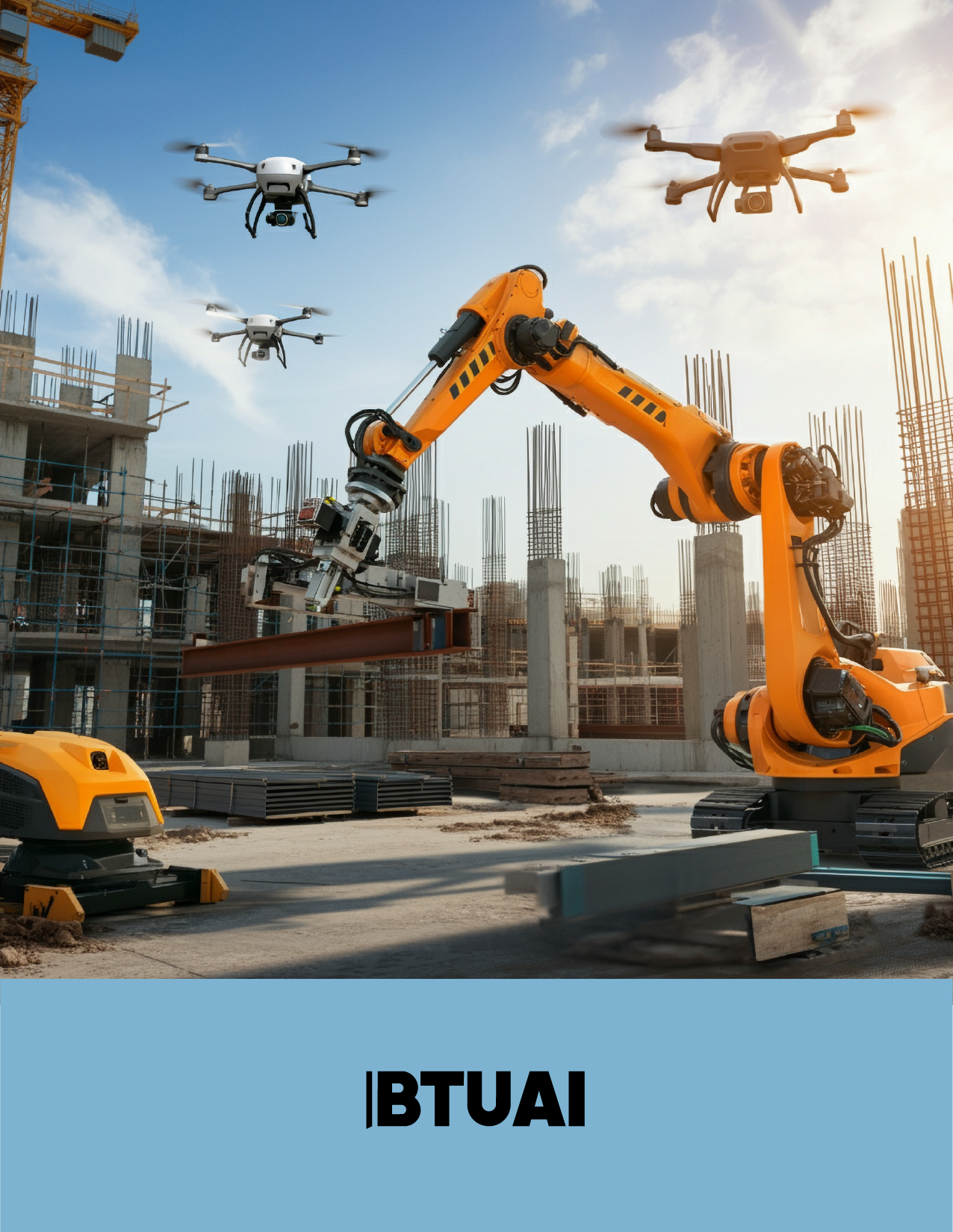
Construction has long been one of the slowest sectors to transform. While finance, retail, media, logistics and education have been reshaped by digital technologies, the basic process of building homes in many countries remains labor-intensive, expensive, time-consuming and vulnerable to errors.
This is beginning to change. Robotic construction, 3D printing, automated design, prefabricated modules, AI-assisted planning and new construction materials are creating the possibility of building homes and even entire settlements faster, with less waste, greater precision and more predictable costs.
For Georgia, this is not only a technological topic. It is connected to housing affordability, regional development, rural depopulation, construction costs, labor shortages, earthquake resilience, climate adaptation, energy efficiency and the quality of urban planning.
The central question of this research is: Can Georgia use robotic and automated construction not only to build individual houses, but to create a new type of regional settlement?
BTUAI’s assessment is cautiously positive: yes, but only if the technology is not treated as a “miracle machine.” It should be understood as a systemic tool that must work together with land policy, energy, transport, local economy, education and construction standards.
What robotic construction means
Robotic construction does not simply mean a humanoid robot standing on a construction site with a hammer. It is a broader concept that includes several directions.
The first is 3D-printed construction, where a specialized machine prints walls or structural elements layer by layer using concrete, earth-based mixtures or other construction materials.
The second is robotic support machinery – devices that perform heavy, repetitive or dangerous tasks such as bricklaying, material handling, surface treatment, marking, welding, drilling or assembly.
The third is prefabricated modular construction, where parts of a building are produced in a factory and then assembled quickly on site. In this case, robots and automation are often used in the production process.
The fourth is AI-assisted planning – analyzing land, climate, sunlight, transport, energy, costs and population needs before designing a settlement.
The fifth is digital monitoring of construction – using sensors, drones, digital maps and data analysis to check whether construction is progressing correctly.
Together, these technologies create a new model: construction is no longer only labor, materials and time. It becomes a data-driven, automated and precision-based process.
Why this topic matters now
Interest in robotic construction has grown for several reasons.
The first is the crisis of housing affordability. In many countries, home prices have risen to levels where it is difficult for middle-income people to buy an apartment or a house. If construction becomes faster and less wasteful, part of the cost may be reduced.
The second is a labor shortage. Construction sectors in many countries lack skilled workers. Young people are often less willing to enter physically demanding construction jobs, while older workers are leaving the labor market. Automation may partly compensate for this shortage.
The third is waste. Traditional construction often wastes materials. Robotic and digitally planned processes can be more precise and generate less waste.
The fourth is climate and energy efficiency. The home of the future must not only be built, but also be energy-efficient, durable, well-oriented and adapted to the local climate.
The fifth is the need for new types of settlements. The pandemic, remote work, overcrowded cities and regional development policies have raised a new question in many countries: can we create settlements where housing, workspaces, green areas, energy and digital connectivity are planned together?
This question is also relevant for Georgia.
Georgia’s context: why this matters
In Georgia, housing combines several parallel problems.
In Tbilisi, demand for apartments remains high, land and quality construction are becoming more expensive, urban space is often overloaded and city expansion does not always follow transport, schools, infrastructure and green spaces.
In the regions, the picture is different. Many places are losing population, villages have empty houses, young people move to cities and new housing and work environments are often not created.
At the same time, Georgia has diverse regional potential: mountain resorts, the Black Sea coast, wine regions, small towns, historical villages, proximity to protected areas and growing tourism interest.
In this context, robotic and automated construction may be interesting not only as a way to build a “cheaper house,” but as a new development model:
- fast and high-quality housing in the regions;
- energy-efficient small settlements;
- hybrid tourism and work environments;
- new rural housing models;
- structures better designed for seismic conditions;
- renewal of small towns;
- housing for students and young professionals;
- better social housing models;
- support for agritourism and rural economies.
Can Georgia create a new type of settlement?
It can, but under three conditions.
The first condition is that technology should not become an end in itself. If a robot builds a house in a poorly planned location with weak transport, poor water supply, bad internet and no work opportunities, the result will still be weak. Technology cannot replace urban and regional strategy.
The second condition is standards. A robotically built house must be safe, seismically resilient, energy-efficient, legally compliant and compatible with local climate.
The third condition is human capital. Georgia needs architects, engineers, construction technologists, programmers, robotics specialists, urban planners and public-policy experts who can use this technology properly.
With the right approach, robotic construction can become not just a technological experiment for Georgia, but a new instrument of regional development.
Where Georgia could begin
- A pilot energy-efficient village
Georgia could create a small pilot settlement where energy-efficient homes are built using robotic or partly automated methods.
Such a village could be designed for young families, remote-working professionals, agritourism or programs encouraging people to return to the regions.
The main idea should not be only building houses. It should be creating an environment: internet, workspaces, a small learning center, energy-efficient infrastructure, transport links and connection to the local economy.
- Housing for students and young professionals
In Tbilisi and other large cities, one of the main challenges is affordable housing for students and young professionals.
Robotic or modular construction could be used for student campuses, small residential blocks, co-living spaces and university-linked housing.
This is especially important for universities, which increasingly need to think not only about teaching, but also about student life, socialization and living environments.
- Regional tourism cottages
Mountain and rural tourism requires small, high-quality, environmentally compatible and quickly built accommodation.
Robotic and prefabricated modular construction can be used for cottages, eco-hotels, wine tourism spaces and seasonal settlements.
Here the main challenge is not only construction technology, but also harmony with the landscape and the control of environmental impact.
- Social housing
If introduced responsibly, the technology could help the state or municipalities create faster and higher-quality social housing models.
But this area requires special caution. Social housing must not become a low-quality experiment. On the contrary, this is where high standards, durability, energy efficiency, human-centered environment and access to services are most needed.
- Earthquake-resilient housing
Georgia is located in a seismically active region. Therefore, any new construction technology must be evaluated not only by price and speed, but also by seismic safety.
Robotic construction may be used for structures that are pre-calculated, digitally modeled and standardized. But this requires strict local engineering norms, testing and certification.
Impact on the construction sector
Robotic construction does not mean people will no longer be needed in construction. A more realistic picture is that professions will change.
The share of some heavy, repetitive and low-skill tasks may decline. Demand will grow for specialists who operate machines, check designs, control materials, work with digital models, evaluate safety and connect technology with real construction processes.
This means construction education in Georgia should change.
The builder, engineer and architect of the future should understand:
- digital modeling;
- basics of robotics;
- new material technologies;
- energy-efficient design;
- seismic analysis;
- data monitoring;
- drone-based inspection;
- automation of construction processes.
Economic effects for Georgia
The possible economic effect of robotic construction should be considered at several levels.
The first is cost. Automation may reduce certain labor costs, waste and time. However, the initial technological investment is high. Therefore, in the short term, it will not always be cheaper.
The second is time. Faster construction of homes or modules may be especially important for tourism, social housing programs, regional projects and post-crisis reconstruction.
The third is quality. A digitally controlled process can be more precise than traditional manual work. But this works only if materials, design and monitoring are correct.
The fourth is the regional economy. If new settlements are properly planned, they can create jobs in services, agriculture, tourism, education and digital work.
The fifth is import dependence. If the technology depends entirely on foreign equipment and materials, Georgia may simply become dependent on a new type of import. Therefore, local materials, engineers and services should be included.
Key risks
- Technological fashion without real need
There is a risk that robotic construction will be used only as a spectacular innovation. The technology may look impressive, but if it does not address housing, quality, price, energy efficiency or regional development, its value will remain limited.
- Ignoring safety standards
In construction, mistakes are connected to human lives. New technologies must therefore be introduced through certification, testing, engineering standards and clear responsibility.
- Repeating regional isolation
If a new settlement is built without roads, schools, clinics, internet, jobs and social spaces, it may become another isolated project.
- Labor displacement
Automation may reduce some types of work, but it can also create new professions. Without retraining systems, part of the workforce may be left behind.
- Aesthetic and cultural uniformity
Robotically built houses should not become identical, soulless and disconnected from local architecture. Georgia’s regions have different architectural, climatic and cultural identities. Technology should strengthen these differences, not erase them.
What the state should do
The state should treat robotic construction not as a separate technology project, but as part of housing, regional development and construction standards.
Several steps are needed:
- a legal framework for pilot projects;
- seismic and safety testing systems;
- energy-efficient construction standards;
- cooperation with municipalities;
- high-quality models for social housing;
- encouragement of local materials;
- modernization of vocational education;
- use of drones, sensors and digital monitoring;
- data-driven urban planning.
What business should do
For Georgian construction companies, this is a signal that future competition will not be only about more square meters. Competition will shift toward speed, quality, energy efficiency, data, design and the user’s living experience.
Businesses should begin studying:
- modular construction;
- pilot tests of 3D printing;
- digital design modeling;
- new material technologies;
- energy-efficient packages;
- robotic inspection;
- cooperation with universities and startups;
- offering not only apartments, but living environments.
What universities should do
Universities have a critical role. Robotic construction requires the integration of architecture, engineering, computer science, robotics, data analysis, business and public policy.
New educational modules are needed:
- construction automation;
- robotics in the construction sector;
- 3D printing and new materials;
- digital architecture;
- seismic resilience;
- energy-efficient settlements;
- data-driven urban planning;
- AI in construction;
- economics of regional development.
For BTU, this topic is especially relevant because it connects business, technology, AI, urban development and a new vision for regional economies.
BTUAI assessment
BTUAI assesses that robotic construction should be seen as one possible instrument for the future of housing and regional development in Georgia. Its main value is not only that a robot can build a wall. Its real value is that construction can become more precise, faster, data-driven, energy-efficient and better connected to planning.
For Georgia, this is especially important because the country faces urban overload, regional depopulation, housing affordability pressures, rising construction costs, seismic safety challenges and the need for energy-efficient development.
But technology alone is not a solution. If robotic construction is introduced without standards, education, urban vision and regional economic planning, it will remain only an interesting experiment.
With the right approach, Georgia could become one of the first countries in the region to use automated construction not only to build structures, but to create new types of human-centered and economically viable settlements.
The main conclusion is that building homes may become more automated in the future, but creating settlements will still require human vision. Robots may build the walls, but Georgia must decide what kind of life will exist between those walls.
Key findings
- Robotic construction includes 3D printing, modular production, automated machinery, digital planning and data monitoring.
- For Georgia, the main opportunity is not only a cheaper house, but a new type of regional settlement.
- Technology may support housing affordability, faster construction, reduced waste and energy efficiency.
- Robotic construction is especially relevant for student housing, regional cottages, social housing and pilot energy-efficient villages.
- The main risks are weak safety standards, technological fashion, labor displacement and repetition of regional isolation.
- Georgia needs pilot projects, testing systems, vocational education and models adapted to local materials.
- Robots may accelerate construction, but a high-quality settlement still requires human strategy, cultural context and long-term vision.
Data and evidence base
International experience in robotic construction shows that the technology develops most actively in markets where housing affordability problems, construction labor shortages, high material prices, climate requirements and rapid urban growth exist at the same time.
The main technological directions include:
- 3D-printed construction systems;
- prefabricated modular elements;
- robotic construction equipment;
- drone and sensor-based monitoring;
- AI-based design and planning;
- energy-efficient and low-carbon materials;
- digital twins in construction and urban planning.
For Georgia, the evidence base should be strengthened through pilot projects that measure time, cost, energy efficiency, seismic safety, user satisfaction and environmental impact.
Methodology
This report was prepared as part of BTUAI Research. The analysis is based on international architectural, construction and technological trends related to robotic construction, 3D printing, modular housing, automated construction and new settlements.
The materials are processed using analytical methods applied by BTU researchers, with the support of BTUAI.
The purpose of the research is not to promote a specific technology, but to explain a trend that may affect Georgia’s construction sector, regional development, housing affordability, education and urban policy.
Limitations
Robotic construction is a rapidly developing field, and its economic effect depends strongly on local materials, technology prices, seismic regulations, workforce skills, land policy and infrastructure.
This material does not claim that robotic construction is always cheaper or better than traditional construction. Each project should be evaluated by cost, safety, quality, energy efficiency and social effect.
The implications described for Georgia are analytical scenarios, not guaranteed forecasts.
This material is analytical and educational in nature. It does not constitute investment, financial, legal, construction, architectural or public-policy advice. Before making specific decisions, consultation with a relevant specialist is required.
Sources
International architectural and construction trends related to robotic construction, 3D printing and automated settlements.
Global analysis of data-driven urban planning, energy-efficient construction and construction automation.
BTUAI analytical interpretation based on Georgia’s construction, regional, educational and technological context.
Frequently asked questions
Does robotic construction mean people will no longer be needed in construction?
No. A more realistic expectation is that professions will change. Some heavy and repetitive tasks may decline, while demand will grow for engineers, operators, designers, robotics specialists, seismic experts and digital-monitoring professionals.
Can a robotically built home be cheaper?
It can be, but not always. Cost depends on technology, materials, project scale, logistics, standards and workforce skills. In the first stage, pilot projects may even be more expensive.
Is this safe in a seismic country?
It can be safe if projects are checked through strict seismic standards, material testing and engineering certification. Safety must be the first condition.
Where could Georgia use this technology first?
The most realistic pilot areas are student housing, small tourism cottages, energy-efficient villages, high-quality social housing models and regional housing projects.
What is the main conclusion?
Robotic construction can become a new instrument for Georgia, but not a magic solution. The key is connecting technology with standards, regional development, education and human-centered planning.
Keywords
Robotic construction; 3D-printed homes; automated construction; modular housing; regional development; affordable housing; energy-efficient housing; seismic safety; construction in Georgia; urban planning; new settlements; BTUAI; Business and Technology University.
Citation format
BTUAI Research Team. “When Robots Build Homes: What Robotic Construction Could Mean for Georgia’s Construction Sector and Regional Development.” Business and Technology University, BTUAI.ge, 2026.
Prepared by the academic team of Business and Technology University and the BTUAI Research Team.
Tbilisi, Georgia
BTUAI is an analytical platform of Business and Technology University that studies the impact of artificial intelligence, digital transformation, innovation, startup ecosystems, data analytics and emerging technologies on business, the economy, education and society. BTUAI materials are designed to explain complex technological and economic changes in a clear, reliable and Georgia-focused way.