


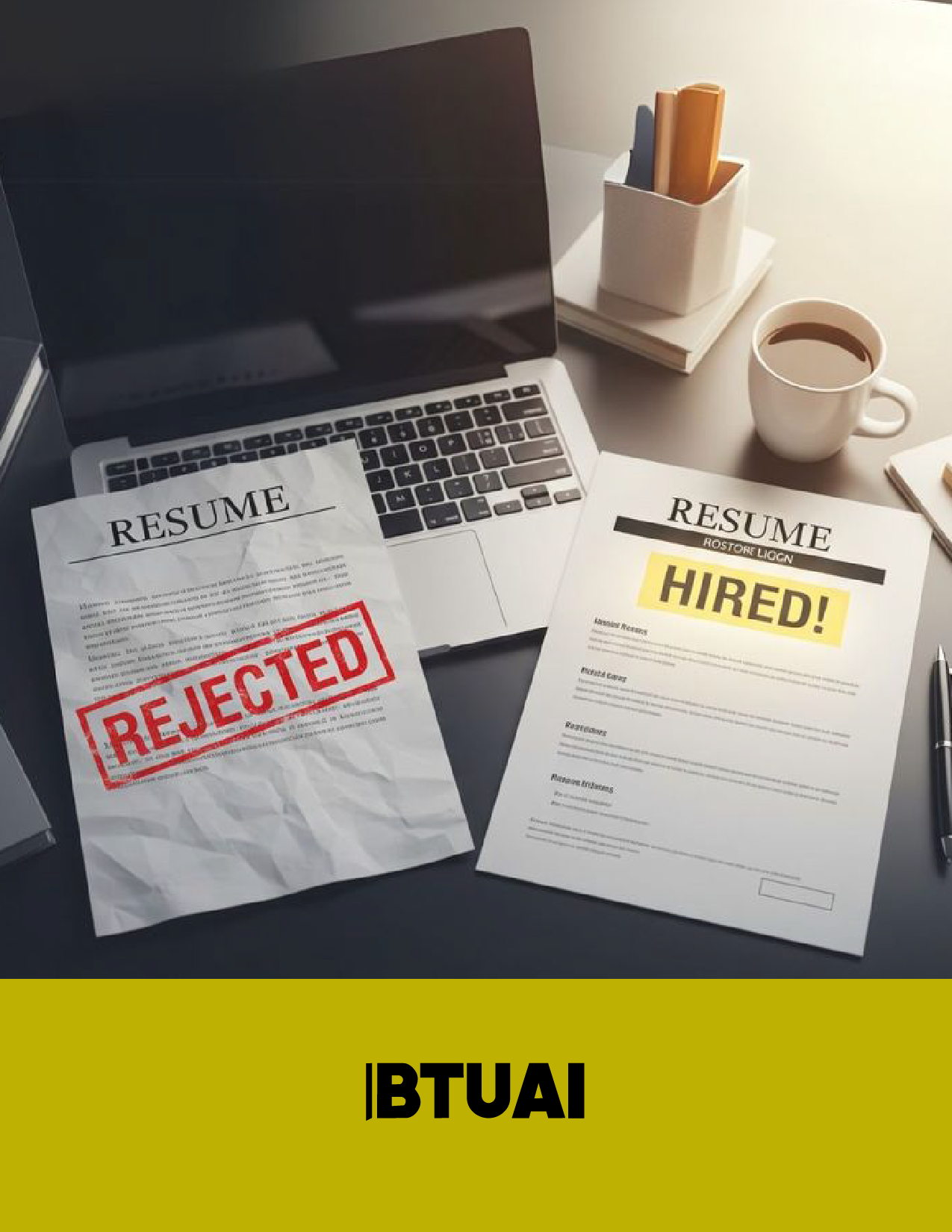
Artificial intelligence in the labor market is no longer only about whether jobs will change. It is increasingly about whether people can be rejected before a human even reviews them – through automated filters, résumé screening, keyword analysis, education records, candidate scoring or algorithmic comparison with a job profile.
This creates a new question: if an algorithm says no to a job candidate, how can we know whether the decision was fair?
International experience shows that AI screening can help companies save time and sort through large volumes of applications. But for candidates, it can become an unclear, closed and potentially unfair process. A person may never know why they did not move forward: Was their experience insufficient? Did the system misread the text? Did it interpret a career break negatively? Did it misunderstand health-related, family-related or regional context? Or did the algorithm simply make a mistake?
One case described in international technology reporting involved a candidate who applied to 82 programs and suspected that language in his documents may have caused an automated screening system to interpret medically necessary leave in a harmful way. A later simulation he built suggested that, among otherwise similar candidates, those whose medical leave was described more accurately were 66% more likely to enter the top 12% of selected applicants. This did not prove discrimination by a specific system, but it demonstrated a key problem: in algorithmic screening, one phrase can affect a person’s chances more than they realize.
For Georgia, this issue is especially important because the labor market is already becoming more digital. Companies increasingly use online applications, automated forms, HR platforms, AI-assisted tests and data-based evaluation. If this process is not transparent, fair and adapted to the Georgian context, AI may not improve the labor market. It may reproduce old inequalities faster and less visibly.
BTU researchers assess that the key question is this: how can Georgia use AI in hiring so that companies find the right people more effectively, while candidates retain the right to fair evaluation, explanation, correction, appeal and human review?
Georgia context: “I sent my résumé and never heard back”
Many people in Georgia know this experience: you send a résumé, wait for a reply and nothing happens. No rejection, no explanation, no indication of what went wrong. In the past, this was often explained by overloaded HR departments, weak communication or informal networks. Now a new invisible actor is entering the process – the algorithm.
A candidate may not even know that their résumé was first read by a system rather than a person. They may not know that a platform ranked candidates, flagged keywords, assessed experience, compared the profile with job requirements or automatically selected who moves to the next stage.
This is especially sensitive for young people, career changers, people with career breaks, candidates from regions, persons with disabilities, parents who left the labor market temporarily and anyone whose professional biography does not follow a standard path.
AI can help the labor market. But if it reads complex human life as a set of keywords, fairness becomes a problem.
What changes in hiring
AI enters hiring in several ways.
The first is résumé filtering. A system reads thousands of applications quickly and identifies those that appear to match job requirements.
The second is candidate-profile comparison. AI examines experience, education, skills, previous roles, projects and sometimes writing style.
The third is keyword analysis. If a résumé does not contain a specific term, the candidate may appear weaker even if they have relevant experience.
The fourth is automated assessment of tests and tasks. This may include writing samples, code, logical tests or professional cases.
The fifth is internal employee evaluation. AI may be used not only in hiring, but also in performance assessment, promotion decisions or risk prediction.
All of this can help companies. But it also raises the question: who is responsible if the algorithm is unfair?
Why AI screening is attractive for companies
For companies, algorithmic screening is attractive for several reasons.
First, time. If hundreds of applications arrive for one position, human review becomes difficult. AI quickly reduces the volume.
Second, cost. Automation allows the company to process more candidates with fewer resources.
Third, standardization. In theory, AI applies the same criteria to everyone and reduces human subjectivity.
Fourth, data. The system collects information on where candidates came from, what skills they have, what stage they reached and how the hiring process performed.
But the problem begins here. If the criterion is wrong, AI spreads the inaccuracies faster and at scale. If historical data is biased, the system can reproduce bias. If Georgian-language text, local universities, regional experience or non-standard career paths are poorly interpreted, a candidate may be unfairly excluded.
What algorithmic unfairness means
Algorithmic unfairness does not always look like obvious discrimination. It often appears in small details.
For example, a system may reward résumés written with English-language terminology while undervaluing experience described in Georgian. It may prefer uninterrupted career paths and penalize breaks related to health, family, military service, childcare or regional conditions. It may rely too heavily on the name of a university and not enough on real skills. It may downgrade a candidate simply because their experience does not resemble the “average successful candidate” in past data.
The problem with algorithms is that they rarely say: “I am unfair.” They simply return a score, rank or recommendation. The unfairness can remain silent.
BTU researchers assess that this is why AI in the labor market requires a new standard of fairness: not only “the system said so,” but “why did the system say so, and how can we check it?”
The black-box problem
One of the main challenges of AI screening is opacity. A candidate may not understand the criteria used to evaluate them. Even HR teams may not know exactly why the system selected one candidate and rejected another.
This is especially problematic when the decision affects a person’s future: employment, career entry, internship, promotion or professional opportunity.
If a candidate is rejected, a fair process should include at least several elements:
- knowing whether an automated system was used;
- receiving a general explanation of the criteria;
- having the ability to correct an error;
- having access to human review;
- knowing how personal data is protected.
Without these elements, AI can become not a tool of fairness, but a closed gate.
Georgia’s context: small market, large impact
Georgia’s labor market is relatively small. This means that the hiring system used by one large company, bank, telecom operator, retail chain, university or public agency can have a significant impact on specific professional groups.
If several major employers use similar AI filters, one type of candidate may consistently appear “suitable,” while others may systematically remain outside the process. This can happen without either companies or candidates fully seeing the pattern.
For Georgia, language is another issue. Many AI systems work better in English than in Georgian. If candidates describe their experience in Georgian, if the system does not recognize local universities, professions, regions, public-sector roles or Georgian company names, the evaluation may be inaccurate.
This is why fairness in AI screening in Georgia is not only an HR issue. It is also a question of the Georgian language, data quality, digital sovereignty and social mobility.
Why this matters for young people
AI screening is especially influential at the beginning of a career. Young candidates often do not have extensive experience. Their chances depend on internships, projects, small jobs, university activity, motivation and potential.
If AI searches only for standard forms of existing experience, young people may find it harder to get a first opportunity.
International labor-market data also shows that AI’s impact is especially visible in entry-level roles. Declines in entry-level postings and rising demand for AI-related skills suggest that career entry is becoming more competitive and more complex.
In Georgia, this matters even more because the first job is already difficult for many young people. If AI screening enters this process without transparency, the barrier to career entry may rise.
Why this matters for business
For business, fair AI is not only an ethical requirement. It is good management.
If an algorithm unfairly excludes strong candidates, the company loses talent. If candidates feel that the process is unclear, employer trust weakens. If the system is biased, the company faces legal, reputational and organizational risk.
Fair AI screening helps companies find better people. This does not mean that companies should avoid AI entirely. It means they should use AI with control.
A company should have rules:
- which decisions may be automated;
- where human review is required;
- how the system is tested for bias;
- how candidates are informed about AI use;
- how candidate data is stored and protected;
- how candidates can report an error.
What Georgian business should do
First, companies should not use AI as an invisible gate. Candidates should know when an automated system is involved in evaluating their application.
Second, criteria should be job-related. The system should not evaluate features that are not relevant to job performance.
Third, bias testing is necessary. Companies should periodically check whether the system unfairly excludes any group, region, age category, people with career breaks or candidates whose experience is described in Georgian.
Fourth, final human oversight is essential, especially where the decision significantly affects a person’s career opportunity.
Fifth, there should be an appeal or explanation process. Candidates should be able to point out an error, update information or request human review.
Sixth, Georgian-language quality should be tested. If a system poorly processes Georgian text, it cannot be considered reliable for the Georgian labor market.
What candidates should know
For candidates, several practical points become important in the age of AI screening.
First, a résumé should be clear. Experience should be described concretely, using job-related language, but without artificial keyword stuffing.
Second, career breaks should be explained accurately. If a break was caused by health, family, education or other reasons, the wording should be calm, precise and less open to misinterpretation.
Third, skills should be evidenced. A project, portfolio, certificate, practical result or short example works better than a generic phrase.
Fourth, AI skills should be shown realistically. Not only “I use AI,” but in what process, for what result and with what responsibility.
Fifth, candidates should know their data rights. If the process is unclear, they may seek information on what data was used and how the application was evaluated, within the legal framework of the relevant country.
What Georgia should do
Georgia needs a minimum fairness framework for AI screening. This does not mean restricting innovation. On the contrary, good rules create trust and support responsible technology use.
Such a framework may include:
notification that AI is being used;
the right to human review in high-impact decisions;
periodic testing for algorithmic bias;
quality testing for Georgian-language data;
clear protection of candidate data;
minimum transparency standards for public and large private employers;
involvement of universities and vocational education in developing new labor-market skills.
This would allow Georgia to introduce AI in the labor market not as invisible control, but as a better hiring tool.
Where the opportunities lie
AI can also make the labor market fairer if used properly. It can reduce human bias, broaden candidate search, better match skills with jobs, help regional candidates access remote work and give companies a wider view of talent.
For Georgia, this is especially important because one labor-market problem is not only the number of jobs, but information asymmetry: companies do not know where good candidates are, and candidates do not know where the right opportunities are.
Fairly used AI can strengthen that bridge.
Where the Risks lie
The main risk is opacity. If candidates cannot understand how they were evaluated, trust is lost.
The second risk is automated bias. If historical hiring was unfair, AI may reproduce it.
The third risk is poor processing of the Georgian language. If the system weakly understands Georgian experience, local candidates may be unfairly harmed.
The fourth risk is a harder career entry for young people. If entry-level roles are strictly filtered by AI, the first opportunity becomes harder to obtain.
The fifth risk is loss of responsibility. A company should not say: “The system decided.” Final responsibility must remain with the organization.
BTUAI assessment
BTUAI assesses that AI in the labor market is both an opportunity and a new test of fairness. It can help companies hire faster and more efficiently, but if the process is opaque, unaudited and not adapted to the Georgian context, AI may close doors for candidates more invisibly than before.
For Georgia, the goal should not be to reject AI screening. The goal should be to create a responsible framework: transparency, human oversight, bias testing, Georgian-language quality, data protection and the possibility of appeal.
BTU researchers assess that fairness in the future labor market will no longer be only a matter of human interviews. Fairness must also be built into system design: how AI reads résumés, what data it uses, how it weights criteria, how it checks errors and how it gives people a second chance.
The main conclusion is this: if an algorithm says no at work, a person should still have the right to understand why, correct errors and receive fair human review.
Key findings
- AI screening is already changing how candidates are evaluated.
- Algorithmic rejection becomes especially problematic when candidates do not understand the reason.
- AI can reduce HR workload, but it can also amplify invisible bias.
- For Georgia, the key risks are opacity, weak Georgian-language processing, misreading career breaks and harder career entry for young people.
- Fair AI screening requires candidate notification, human oversight, bias testing and appeal mechanisms.
- For companies, fair AI is not only an ethical issue; it helps find better talent and reduce reputational risk.
- Candidates need clear résumés, specific skills, portfolios and realistic evidence of AI-related competence.
- Georgia needs minimum standards for responsible use of AI in the labor market.
Data snapshot
In one case described in international reporting, a candidate applied to 82 programs.
In a simulation where candidate groups were otherwise similarly qualified, the group with medically accurate language was 66% more likely to enter the top 12% of selected applicants.
International labor-market analysis suggests that U.S. entry-level job postings have declined by around 35% since January 2023.
Highly AI-exposed entry-level postings have declined by more than 40%.
Research indicates that 66% of enterprises expect to slow entry-level hiring because of AI-related restructuring.
91% report that roles are already changing or disappearing because of AI.
More than one-third of entry-level roles now explicitly require AI-related skills.
Further Georgia-focused research is needed on how many companies use AI screening, how Georgian-language processing works in HR systems, how candidate data is protected, whether appeal processes exist and how AI affects early-career hiring.
Methodology
This report was prepared as part of BTUAI Research. The analysis is based on demographic, regional, economic and behavioral data, as well as general trends observed in publicly available sources. The materials are processed using analytical methods applied by BTU researchers, with the support of BTUAI.
The purpose of the research is not to provide personal assessments, but to identify broader trends and practical directions for business, education and society.
This material uses international technology and labor-market trends related to AI screening, algorithmic evaluation, candidate rights, early-career transition and labor-market fairness. In the Georgian context, the analysis evaluates the relevance of Georgian business practices, HR processes, digital transformation, the Georgian language and data protection.
Limitations
This material is analytical and educational in nature. It does not constitute financial, investment, legal, HR, labor, technology procurement or data-protection advice. Before making specific decisions, consultation with a relevant specialist is required.
AI screening systems are changing rapidly. Platform functionality, accuracy, transparency, legal requirements and usage rules may differ significantly. This material explains the significance of the trend and does not evaluate the compliance of any specific HR platform.
Georgia needs additional local research on the use of AI screening in companies, candidate experiences, Georgian-language data quality, transparency in HR processes and appeal mechanisms.
Sources
WIRED, July–August 2026, Corporate AI-America special section, materials on AI hiring screeners, algorithmic decision-making, candidate experience and labor-market fairness.
The Wall Street Journal, June 2026, analysis on AI and entry-level labor-market restructuring.
National Statistics Office of Georgia – relevant public labor market and business sector data.
BTUAI analytical processing for the context of AI, the Georgian labor market, HR practices, digital transformation, the Georgian language and fair employment.
Frequently asked questions
What does it mean when an algorithm says no at work?
It means a candidate’s application may have been filtered, scored or ranked by an automated system before a human fully reviewed it.
Is AI screening always unfair?
No. Properly used AI can reduce HR workload and improve matching. The problem appears when the system is opaque, unaudited and gives candidates no way to correct errors.
What is the main risk for Georgia?
The main risks are weak Georgian-language processing, unclear candidate data protection, misreading career breaks and making entry-level opportunities harder for young people.
What should companies do?
Companies should disclose AI use, test systems for bias, keep final human oversight and give candidates a way to request explanation or review.
What should candidates do?
Candidates should prepare clear résumés, describe skills and experience concretely, show practical results and carefully explain career breaks.
Why does this matter for education?
If entry-level roles are filtered more strictly by AI, universities and vocational education need to provide students not only degrees, but portfolios, projects, AI skills and practical labor-market preparation.
Keywords
AI hiring Georgia; algorithmic hiring; labor market fairness; AI screening; candidate rights; résumé screening; HR technology; Georgian labor market; Georgian language AI; data protection; entry-level jobs; AI and employment; BTUAI; Business and Technology University.
Citation format
BTUAI Research Team. “When an Algorithm Says No at Work: AI and Labor Market Fairness in Georgia.” Business and Technology University, BTUAI.ge, 2026.
Prepared by the academic team of Business and Technology University and the BTUAI Research Team.
Tbilisi, Georgia
BTUAI is an analytical platform of Business and Technology University that studies the impact of artificial intelligence, digital transformation, innovation, startup ecosystems, data analytics and emerging technologies on business, the economy, education and society. BTUAI materials are designed to explain complex technological and economic changes in a clear, reliable and Georgia-focused way.