


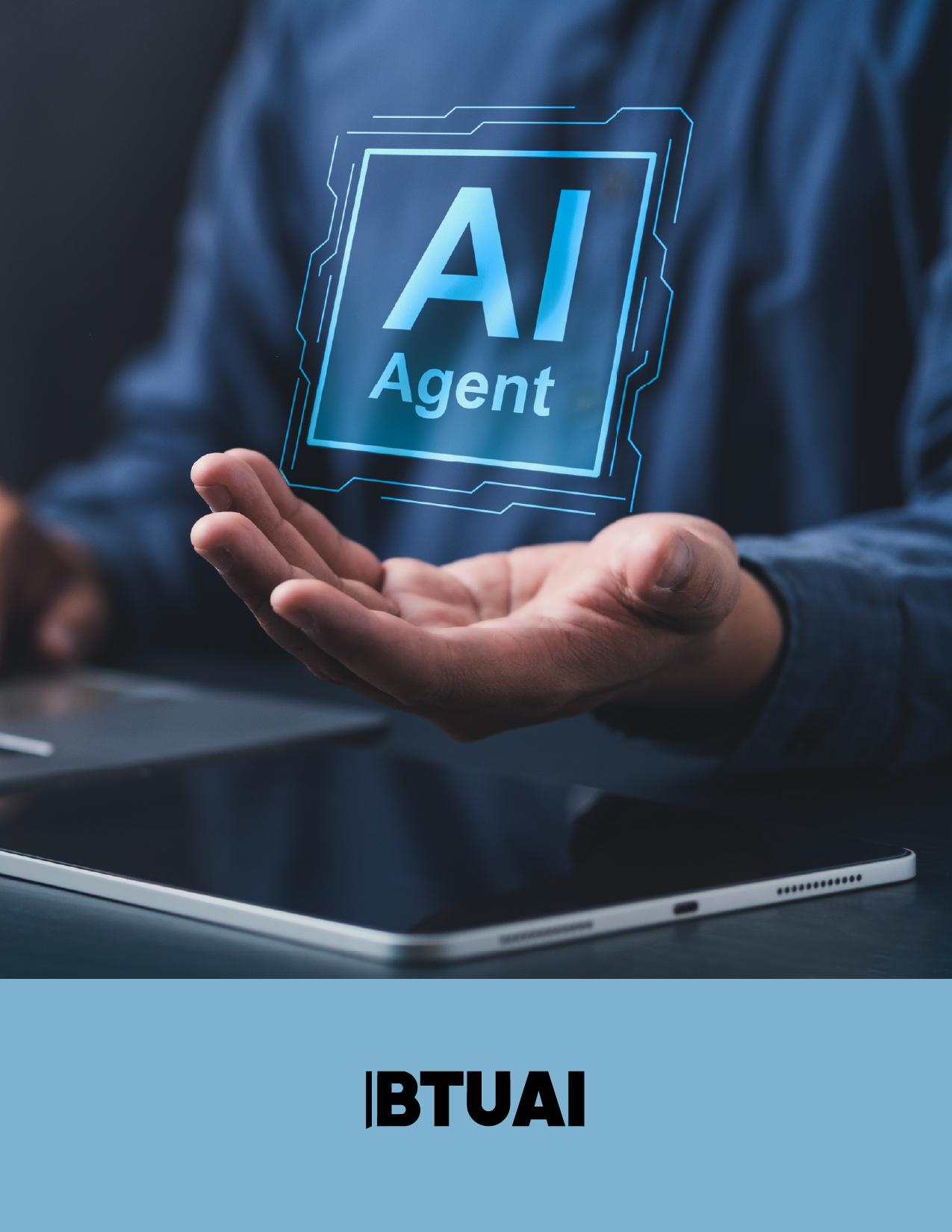
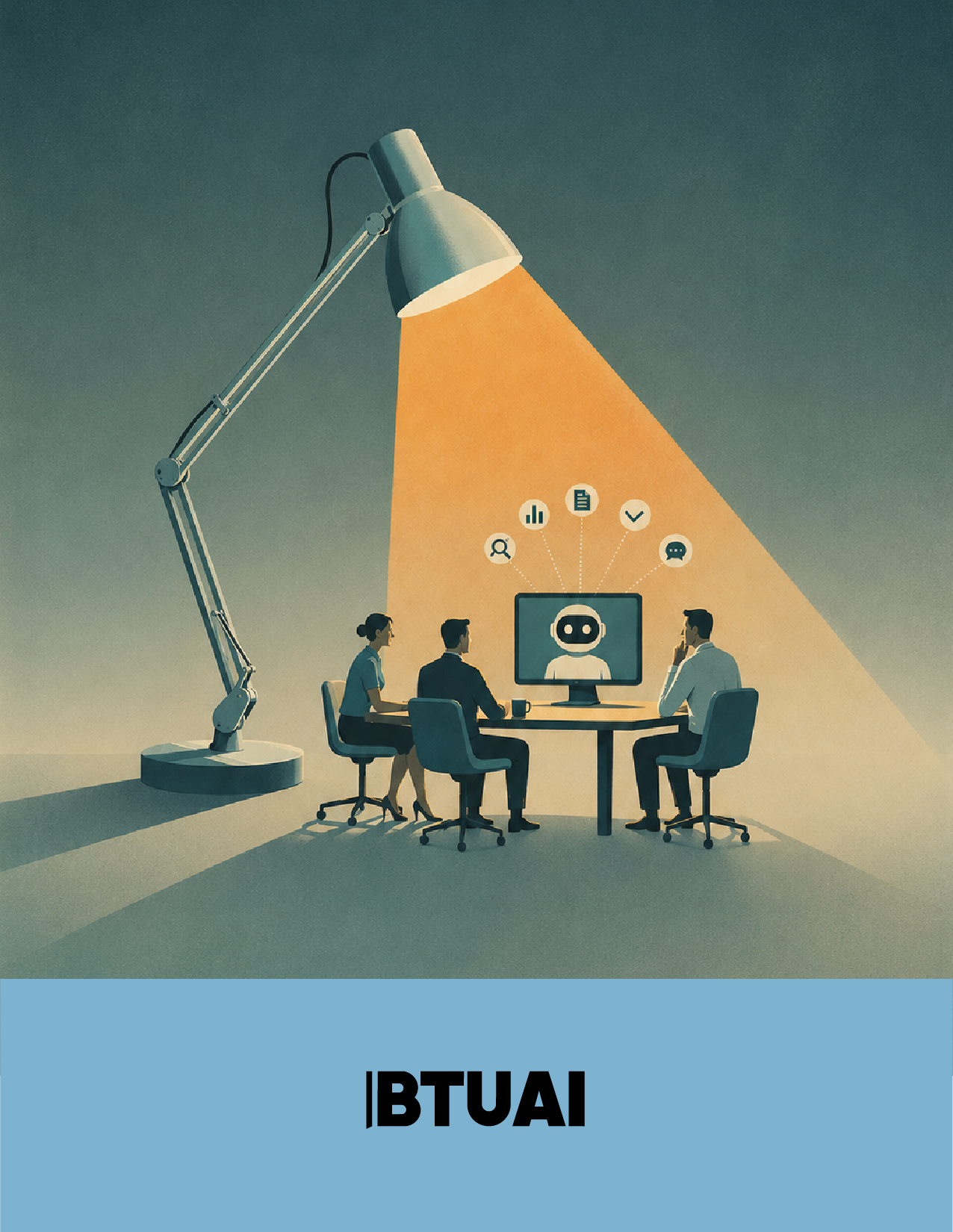
Artificial intelligence is changing the role of the computer. A computer is no longer only a device used to open software, create files or process data. The new generation of AI is turning it into a digital colleague – a system that can receive a task, plan steps, move across applications, check results and propose the next action.
This shift is often described as agentic AI. In simple terms, agentic AI is artificial intelligence that does not only respond, but acts. It can search for information, work with files, compare data, generate code, prepare reports, monitor a process and, in some cases, continue working in the background.
International technology communities are already testing this shift in practice. One open-source personal AI agent project, OpenClaw, received more than 100,000 GitHub stars in less than two weeks and reached around 366,000 by early May. This is not only a sign of enthusiasm among developers. It shows that users are already looking for a new way to work with computers – not only using applications, but assigning tasks to digital agents.
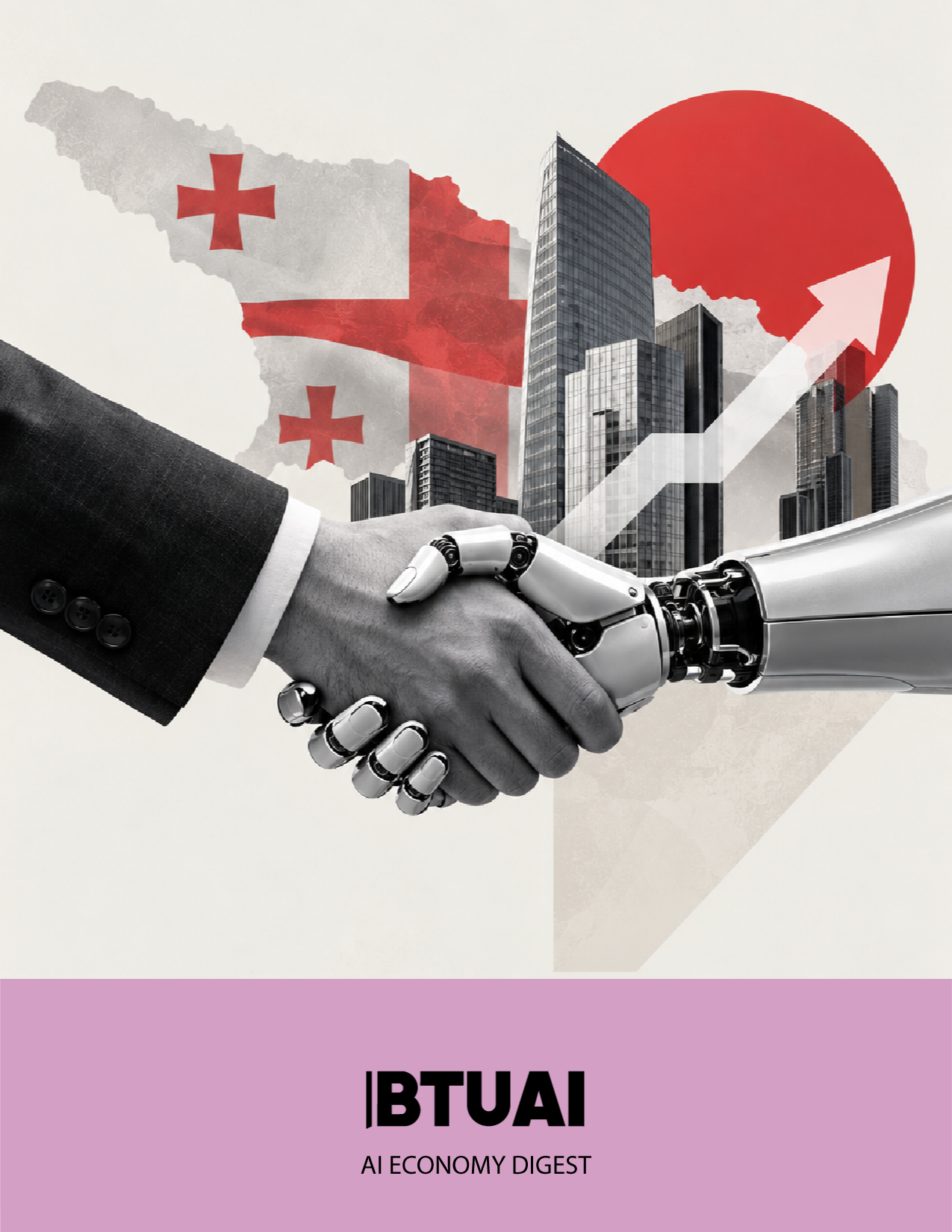
For Georgia, this shift is especially important. In the first quarter of 2026, the information and communication sector accounted for 11.7% of business sector output in Georgia. In the same quarter, the sector received USD 37.2 million in foreign direct investment, equal to 13.7% of total FDI. This means that the technology economy in Georgia is no longer only a future topic; it is already visible in economic data.
BTU researchers assess that the key question is this: will Georgia only be a user of foreign AI agents, or will it turn agentic AI into a tool for its own businesses, education system, Georgian language, data infrastructure and productivity growth?
A large share of Georgian businesses operate with small or medium-sized teams. One person often performs several roles at once: answering customers, preparing offers, checking reports, managing social media, looking at sales tables, speaking with suppliers and trying to attract new clients.
In this environment, the main problem is often not a lack of ideas, but a lack of time, organization and attention. There are many tasks, the team is small, data is scattered and decisions are often delayed.
Agentic AI appears precisely in this space as a new opportunity. Imagine a Georgian company where a manager opens the computer in the morning and sees that a digital agent has already summarized yesterday’s sales, identified the most repeated customer question, flagged delayed orders, prepared a short note for the team and suggested three possible actions.
This does not mean that the human becomes unnecessary. On the contrary, the human takes on a more important role: setting the goal, checking the result, taking responsibility and deciding when to intervene.
What agentic AI means
Agentic AI is a form of artificial intelligence that can receive a task and plan several steps to complete it. A conventional AI assistant often answers a question. Agentic AI tries to complete the task.
For example, a person may ask a conventional AI system: “How can I increase sales?” But with agentic AI, the task may be: “Review sales data from the last three months, identify the weakest category, compare it with advertising spending, prepare a short report and suggest three actions for next week.”
The difference is action. AI is no longer only a text generator. It becomes a participant in the work process.
Agentic AI is especially effective where work is digital and can be divided into steps: financial reports, customer communication, HR, marketing, research, programming, media monitoring, logistics, e-commerce, administrative tasks and project management.
Why this is a new stage in computing
The history of computing can be read through several major shifts. The personal computer brought computing power to the desk. The internet opened information through networks. The smartphone placed the computer in the pocket.
Now a new stage is emerging: the computer is beginning not only to show information, but to act.
This means that people will increasingly work less with individual applications and more with tasks. Previously, a person had to open email, spreadsheets, CRM, accounting software, calendar and messaging systems separately. In the agentic model, the person defines the goal and the AI agent uses the relevant tools.
BTU researchers assess that this shift is not only technological. It is organizational. Companies will need to learn not only how to use AI, but how to manage AI agents – just as they manage teams, processes and responsibilities today.
What international experience shows
Interest in agentic AI is growing rapidly. OpenClaw is a useful signal: more than 100,000 GitHub stars in less than two weeks and around 366,000 by early May show that the technology community increasingly sees this direction not as a distant experiment, but as a working model.
The same experience also shows risks. An agent may have access to email, files, applications, calendars, databases or even financial actions. This means that an error is no longer only a wrong answer. It may be a wrongly sent email, a deleted file, leaked data or an unwanted action.
This is the key difference between a chatbot and agentic AI. When the system only responds, the main risk is informational accuracy. When the system acts, the risk becomes about security, permissions, control and responsibility.
What this means for Georgian business
Agentic AI may become a new source of productivity for Georgian business. This is especially important for a small economy where companies often do not have large teams, large budgets or complex technology infrastructure.
Agentic AI can support Georgian companies in four main ways.
First, it can save time. Many routine tasks can be prepared automatically: reports, summaries, email drafts, classification of customer questions and meeting materials.
Second, it can improve decision quality. If an agent works with reliable data, a manager can see more quickly where the problem is, where growth is happening and what next step is preferable.
Third, it can strengthen small businesses. A small team can perform work that previously required an additional employee, consultant or developer.
Fourth, it matters for the digital future of the Georgian language. If agentic AI does not work well in Georgian, Georgian business will remain dependent on foreign-language tools. Georgian data, terminology, documents and local context therefore become strategically important.
Where adoption can begin
In Georgia, agentic AI can start most quickly in sectors where work is already digital.
In retail, an agent can monitor inventory, sales trends, prices and customer questions.
In tourism, it can manage bookings, reviews, seasonal demand, customer emails and multilingual communication.
In finance, it can prepare preliminary report analysis, compare costs and flag unusual transactions.
In education, it can support the search for materials, structure assignments, summarize learning progress and prepare personalized explanations.
In media and communications, it can monitor topics, summarize sources, prepare questions and help verify parts of the data.
In public services, it can reduce administrative burden, although transparency, rights and final human oversight are especially important.
Jobs: replacement or new roles
Agentic AI will change the labor market. The greatest impact will be on tasks that require writing, summarizing, classifying, searching for data, comparing tables and preparing standard documents.
But this does not mean that work disappears entirely. It is more realistic that many jobs will be divided into two parts: one part performed by an AI agent, and another part remaining with humans.
Humans will continue to define goals, understand context, make ethical judgments, negotiate complex situations, manage relationships, provide creative direction, apply critical thinking and carry final responsibility.
This means that the worker of the future will not only be an “AI user.” The worker of the future must become an AI agent manager – someone who knows how to assign tasks, check results, protect data and turn automation into real value.
The main risk: if we cannot manage the agent, the agent manages us
The main risk of agentic AI is control. If a company does not know what data an agent can access, what actions it can perform, who checks the output and how the system is stopped when something goes wrong, the technology can become a problem instead of a productivity tool.
The risks appear in several areas.
First, data protection. An agent may work with sensitive customer, employee or business data.
Second, mistaken action. An agent may misunderstand a task and perform a real action.
Third, cost. Agentic AI can use significant computing resources. If a company does not monitor the process, costs can rise quickly.
Fourth, overdependence. If employees stop learning how to reason, check and make decisions, the organization may become too dependent on AI outputs.
Fifth, loss of local context. Foreign-language AI agents may not understand Georgia’s legal, cultural, linguistic and business environment well enough.
What Georgian business should do
For Georgian business, the adoption of agentic AI should begin not with buying software, but with organizing processes.
The first step is to list tasks: what repeats every day, what takes too much time, where mistakes are frequent and where data is already digitally available.
The second step is to organize data. An AI agent cannot work well if files are scattered, names are inconsistent, tables are incomplete and responsibilities are unclear.
The third step is to define security rules. A company must decide what the agent can access, what it can do independently and where human confirmation is required.
The fourth step is a small pilot. There is no need to automate the whole company in one day. It is better to start with one process: customer email summaries, daily sales reports or meeting preparation.
The fifth step is employee training. Working with an AI agent is a new skill. Employees must know how to assign a task, read the result and detect errors.
What Georgia should consider
For Georgia, the age of agentic AI is not only a business technology issue. It is a question of national digital competitiveness.
If Georgian businesses learn to use AI agents early, small teams will be able to do more work, offer better services and work faster with international markets.
If the education system adapts, students will learn not only how to use AI, but how to work with AI agents, check results, understand data and take digital responsibility.
If the Georgian language becomes stronger in AI systems, the country will be able to build its technological future in Georgian, not only through foreign-language tools.
If this does not happen, the risk is clear: Georgia will become a consumer of agentic AI, but not a creator; Georgian businesses will use tools that do not fully understand local context; and the labor market will face change later and more painfully.
BTUAI assessment
BTUAI assesses that agentic AI is not just another technology trend. It is a new model of working with computers. Its main significance is that AI is moving from response to action, from tool to digital collaboration.
For Georgia, this can become a major productivity opportunity. Small and medium-sized businesses can receive digital support that previously belonged mainly to large companies. Universities can teach students not only to use AI, but to manage AI agents. Public and private organizations can reduce routine and administrative burden.
But the opportunity comes with clear risks: data protection, security, over-automation, rising costs, changing job roles and dependence on foreign technology systems.
BTU researchers assess that agentic AI should not become a fashionable tool in Georgia. It should become a managed infrastructure. The country needs AI-ready businesses, AI-ready education, AI-ready Georgian data and an AI-ready work culture.
The main conclusion is simple: The company of the future will not be defined only by employees and software. The company of the future will be one that can make humans and AI agents work as one system – safely, in the Georgian context and for real productivity.
Key findings
- Agentic AI changes the role of the computer: it becomes a participant in work processes, not only a tool.
- Agentic AI means action – task planning, use of digital tools and delivery of results.
- OpenClaw’s rapid growth shows strong technology-community demand for AI agents.
- For Georgia, the opportunity is especially important for SME productivity.
- The main risks are data protection, mistaken actions, rising costs and overdependence.
- Adoption should begin with process organization, not only with software purchases.
- The Georgian language and Georgian data are essential for AI agents to work properly in the local context.
- The worker of the future must become a manager of AI agents, not only a user of AI tools.
Data snapshot
OpenClaw received more than 100,000 GitHub stars in less than two weeks.
By early May, OpenClaw had reached around 366,000 GitHub stars.
In the first quarter of 2026, the information and communication sector accounted for 11.7% of Georgia’s business sector output.
In the same quarter, the information and communication sector received USD 37.2 million in foreign direct investment.
This represented 13.7% of total FDI in Georgia in the first quarter of 2026.
Information and communication ranked among the top three FDI sectors.
Further Georgia-focused data is needed on AI adoption in companies, employee digital skills, the quality of Georgian-language AI tools, data-protection practices and AI-related cost structures.
Methodology
This report was prepared as part of BTUAI Research. The analysis is based on demographic, regional, economic and behavioral data, as well as general trends observed in publicly available sources. The materials are processed using analytical methods applied by BTU researchers, with the support of BTUAI.
The purpose of the research is not to provide personal assessments, but to identify broader trends and practical directions for business, education and society.
This material uses international technology experience on the development of agentic AI, examples of AI agent adoption, economic data on Georgia’s ICT sector and BTUAI analytical assessment in the context of Georgian business, education, the labor market and the Georgian language in the digital future.
Limitations
This material is analytical and educational in nature. It does not constitute financial, investment, legal, technology procurement or cybersecurity advice. Before making specific decisions, consultation with a relevant specialist is required.
Agentic AI is a rapidly developing field. The capabilities, prices, safety rules and terms of use of individual platforms may change quickly. This material explains the analytical significance of the trend, not instructions for using a specific product.
For Georgia, additional local data is needed on the use of AI agents in companies, digital skills among employees, the quality of Georgian-language AI systems and data-protection practices.
Sources
WIRED, July–August 2026, Corporate AI-America special section, “Agents of Chaos” and related materials on AI agents, Claude Code, OpenClaw, AI and work.
National Statistics Office of Georgia – Business Sector Results, Q1 2026.
National Statistics Office of Georgia – Foreign Direct Investment, Q1 2026.
BTUAI analytical processing for the context of agentic AI, Georgian business, the ICT sector, education, the labor market and the digital future of the Georgian language.
Frequently asked questions
What is agentic AI?
Agentic AI is artificial intelligence that does not only respond, but plans and performs steps toward completing a task using digital tools.
Will AI agents replace employees?
Some routine tasks will be automated, but the human role does not disappear. It changes. Humans define goals, check results, make judgments and carry responsibility.
Where should Georgian businesses begin?
They should begin by identifying repetitive tasks where time is lost: reports, emails, customer questions, sales summaries, inventory checks or meeting preparation.
What is the main risk?
The main risk is loss of control. If a company does not know what the agent can access, what it does independently and who checks the result, the tool can become unsafe.
Why does the Georgian language matter?
If AI agents work poorly in Georgian, Georgian business, education and public services will remain dependent on foreign-language systems. Georgian-language data and local context are therefore strategic.
What does this mean for education?
Students need to learn not only how to use AI, but how to work with AI agents: assigning tasks, checking outputs, understanding data, making ethical judgments and taking digital responsibility.
Keywords
agentic AI Georgia; AI agents; artificial intelligence in Georgia; Georgian business; digital transformation in Georgia; ICT sector Georgia; Georgian language AI; digital sovereignty; AI and work; AI productivity; SMEs; data protection; cybersecurity; BTUAI; Business and Technology University; AI adoption in Georgia.
Citation format
BTUAI Research Team. “When the Computer Becomes a Colleague: Agentic AI for Georgia.” Business and Technology University, BTUAI.ge, 2026.
Prepared by the academic team of Business and Technology University and the BTUAI Research Team.
Tbilisi, Georgia
BTUAI is an analytical platform of Business and Technology University that studies the impact of artificial intelligence, digital transformation, innovation, startup ecosystems, data analytics and emerging technologies on business, the economy, education and society. BTUAI materials are designed to explain complex technological and economic changes in a clear, reliable and Georgia-focused way.